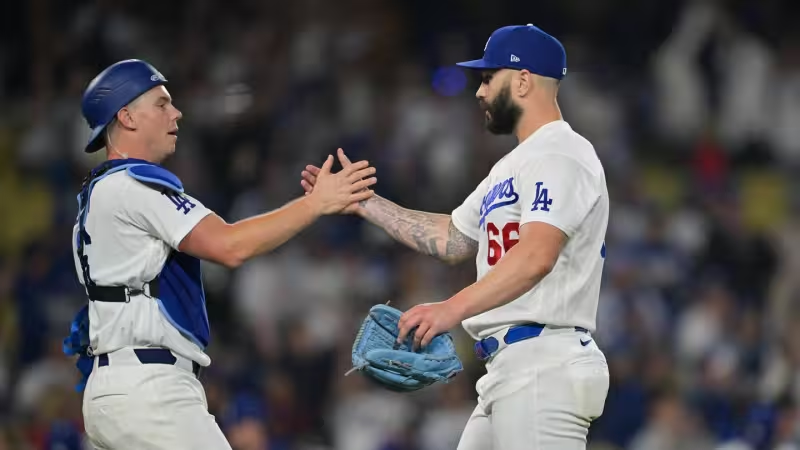
Tanner Scott has been the clearest example of the Dodgers’ bullpen flip this season: through 21 appearances he carries a 1.37 ERA, recent outings that have helped Los Angeles’ relievers run a 29‑inning streak without allowing a run.
The numbers behind the run are stark. Scott’s strikeout rate sits at 32.5 percent and his walk rate is 3.9 percent; he’s missing bats at a 17.9 percent swinging‑strike rate while averaging near a 97 mph heater. His first‑pitch strike rate is roughly three out of every four batters, and the underlying metrics back the eye test — a 2.97 xERA and a 2.39 FIP through his May 24 outing in San Diego.
The turnaround is striking next to what he delivered last year. Scott signed a four‑year, $72 million deal with the Dodgers after they had just won the championship, then struggled in 2025: a 4.74 ERA, 11 home runs allowed and 61 appearances. He recorded 23 saves in 33 opportunities but lost the closer role and did not throw a pitch during the postseason. Scott doesn’t hide how he felt about last season: "I sucked," he said bluntly.
He says he tried to wipe the year clean. "I just tried washing it away," Scott said of the start of the calendar year, adding that on Jan. 1 he reset mentally: "Literally, when January 1 happened, new year, new — just going back to what I used to do and just being yourself and trusting your ability and believing your stuff. [It’s] kind of going out there with a ‘F you, F it,’ like mindset, and just rolling." He also acknowledged a mechanical and sequencing problem last season: "I’d get the two strikes, and I’d leave the ball in the heart of the plate, and it was causing a lot of damage."
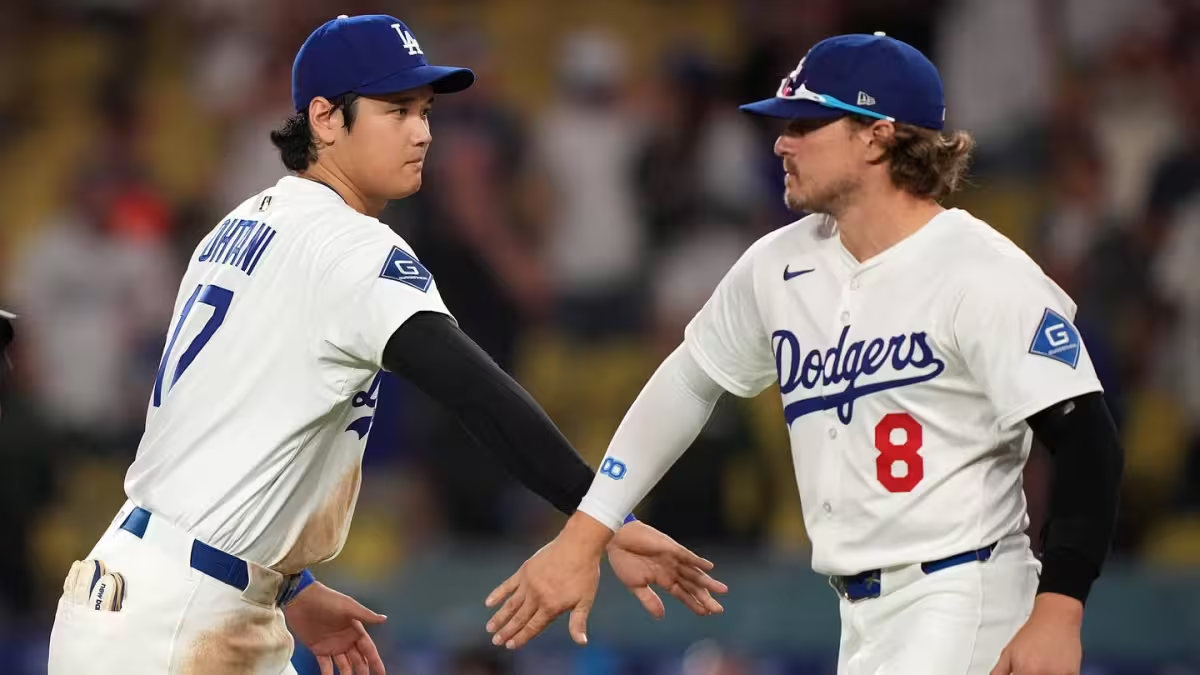
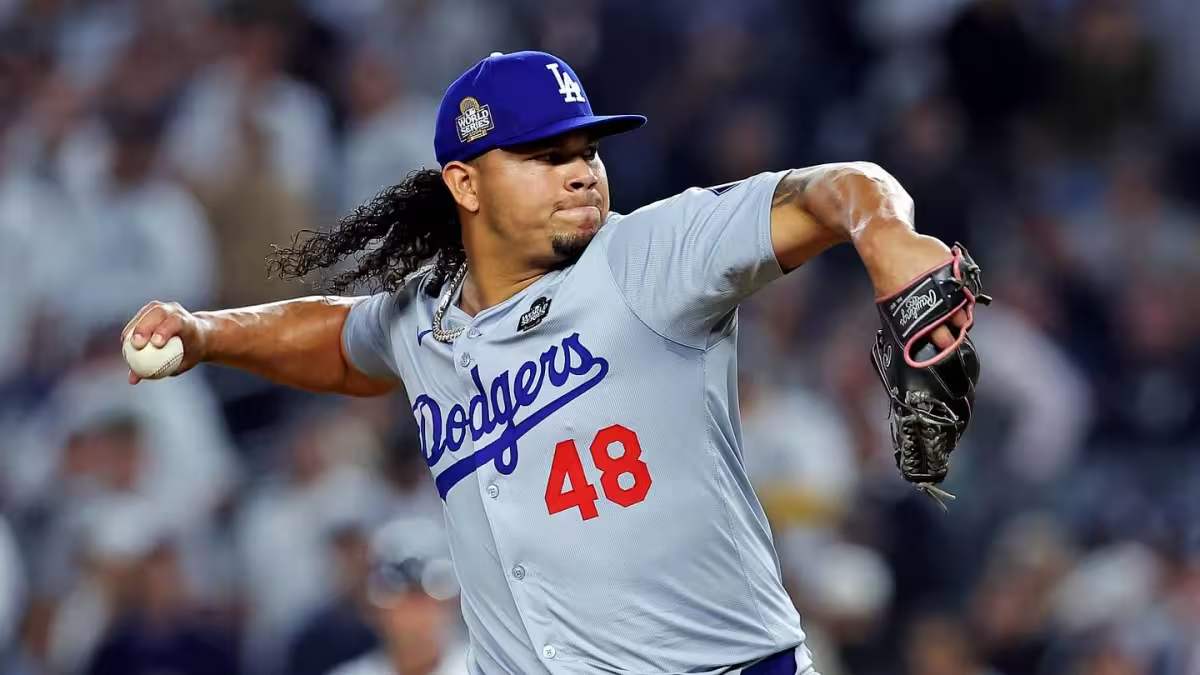
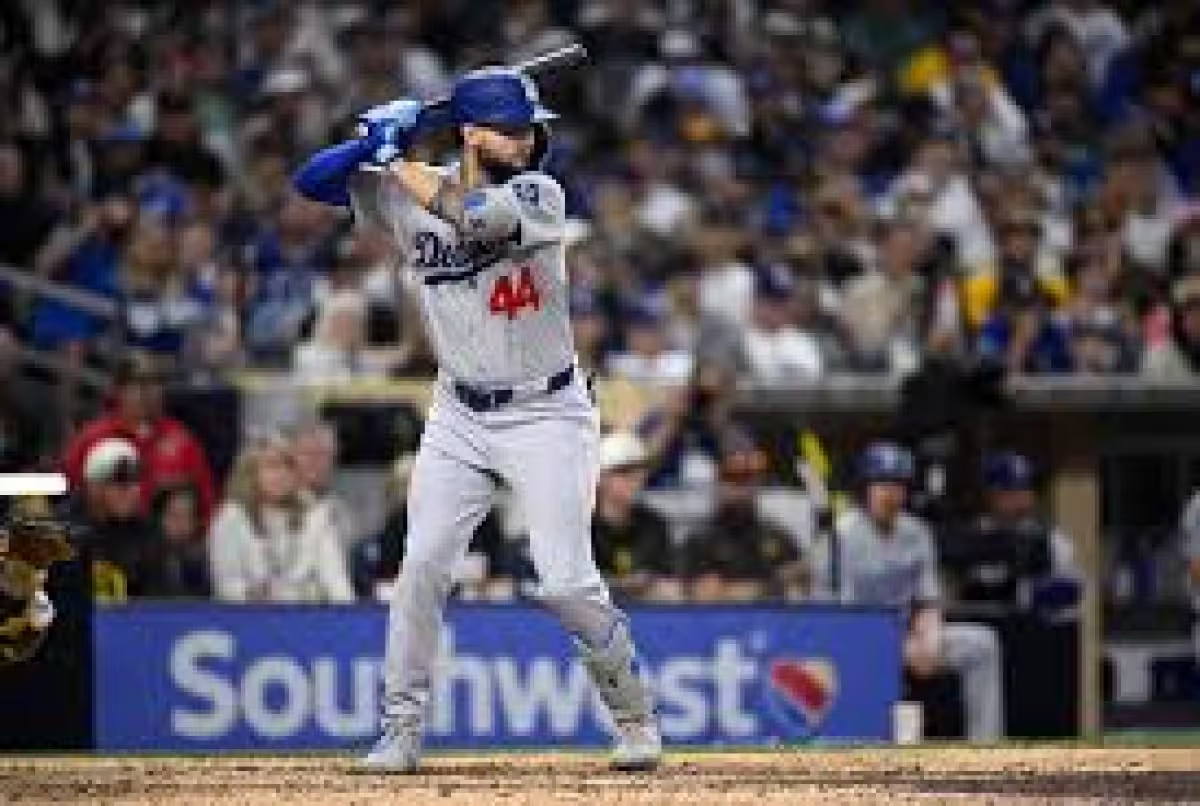
Those adjustments have mattered to a Dodgers staff that spent the winter reshaping its late innings. The club added Edwin Díaz on a three‑year, $69 million deal over the winter; Díaz is recovering from elbow surgery, which left openings in higher‑leverage spots. Scott has filled them quietly, and first‑year bullpen coach Mark Prior credited Scott’s role: "He’s been a very important, stabilizing force," Prior said, while manager Dave Roberts said Scott "has helped us out big."
The tension under the surface is that the 2026 Scott still carries the memory — and the proof — of volatility. Last September he surrendered a walk‑off home run to Samuel Basallo in Baltimore on a two‑strike pitch, a blemish that crystallized the inconsistency that followed into 2025. Pitching coach Prior noted the nuance: "Last year was weird because he came in and he was throwing a ton of strikes," and, importantly, "Problem is, he was throwing strikes at the wrong times." That split between aggressive strike‑to‑strike pitching and leaving meat over the plate explains how a reliever can post 23 saves yet finish with a 4.74 ERA and no postseason appearances.
What separates this spring and early summer is the way the peripherals line up with results. Scott’s swinging‑strike rate, strike‑out percentage and first‑pitch‑strike frequency suggest his success is not a mirage. Dodgers relievers collectively have not allowed a run in 29 consecutive innings, an uncommon run of dominance that has softened the blow of Díaz’s absence and reshuffled high‑leverage roles.
This season’s best test is durability and repetition: can Scott keep missing bats and avoid the mistakes that turned two‑strike counts into damage last year? If he does, he will have completed a rare professional reset — from a reliever who "sucked" and watched October go by in 2025 to the stabilizing force Prior and Roberts describe. If he doesn’t, the memory of last September and the 11 homers he yielded in 2025 will be waiting as proof that the bullpen’s current serenity can still be unsettled.