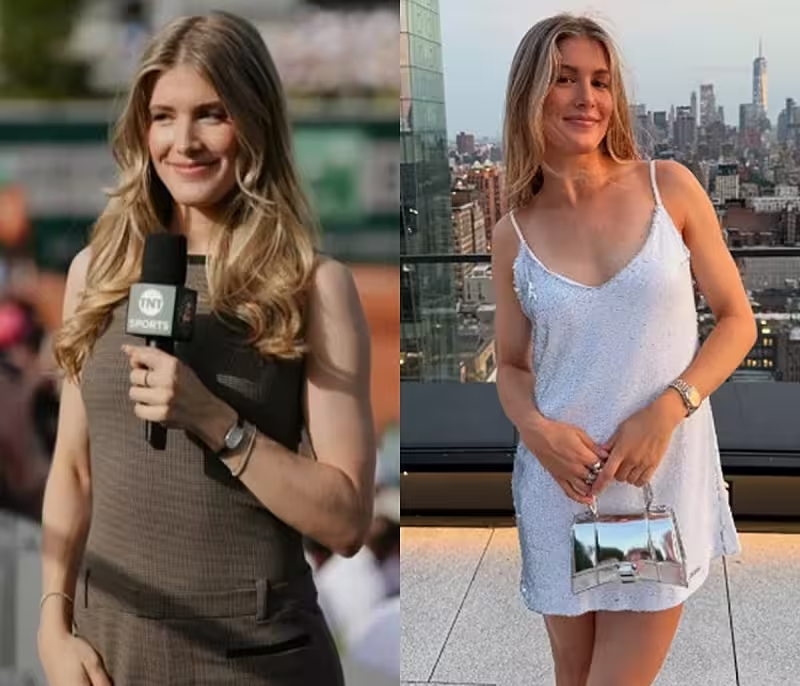
Eugenie Bouchard, 32, joined TNT Sports' French Open broadcast team and stood beside the Roland Garros clay on the 26th, Korea time, posting photos from court that prompted a wave of enthusiastic fan reaction.
On her social account with 1.4 million followers, genie bouchard posted images showing her in a mini dress with a vibrant pattern while working the broadcast line. She wrote, "Hello Roland Garros. It's truly a joy to be here with you." The post drew hundreds of comments, including: "This photo should be hung in the Louvre Museum," "I'm going to change my name to Roland Garros," "Truly dazzlingly beautiful," and "Looks like it tore straight out of a comic book."
The numbers and the responses are the handweight of the story: a former top-five player, now a media presence, reappearing at one of tennis's most visible stages. Bouchard reached a career-high world ranking of No. 5 in 2014, the year she reached the Wimbledon final — where she lost to Petra Kvitova — and made semifinal runs at both the Australian Open and the French Open. Her profile from that run has carried into her media opportunities.
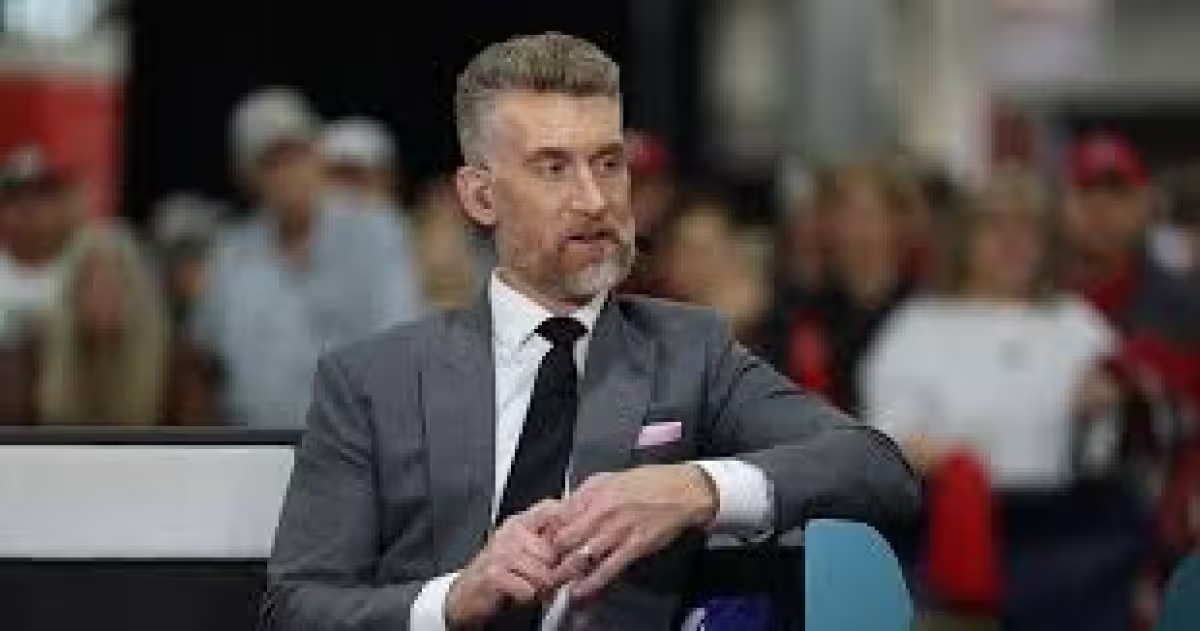
Context matters: Bouchard left the tennis court at the end of 2025 and moved into another sport, transitioning to become a pickleball player. Her presence at Roland Garros follows a first step into broadcasting in March, when she made her debut as a tennis commentator at the Indian Wells Open. The French Open appearance is an extension of that new media role and a return to the center of tennis coverage for a player best known for her 2014 breakthrough.
The friction in the story is plain on its face. Fans greeted her broadcast-side photos as if she had arrived as a celebrity guest rather than a working commentator, and the social buzz focused on glamour as much as on analysis. At the same time, Bouchard is navigating three identities at once: former top-5 tennis professional, active pickleball player, and now a member of a tennis broadcast team. Each role carries different expectations from audiences and from the sport she once played full time.
What happens next is straightforward and consequential for how Bouchard will be judged in the short term: her conduct on air. If she leans into analysis and reporting, this appearance will be an early step toward a steady post-playing media career; if public attention remains fixed on appearance and celebrity, the broadcast assignment risks being read primarily as a publicity moment. For now, she has the platform. She used it to say, "Hello Roland Garros. It's truly a joy to be here with you," and to remind viewers who follow her — all 1.4 million of them — that she has returned to tennis coverage after testing other sporting paths.
Bouchard's presence at Roland Garros frames a simple fact: a player who shot to global attention in 2014 has left the tour, tried another sport, and is now back in the commentary box, where fans will decide whether they want her voice, her insight, or the images she shares beside the clay.