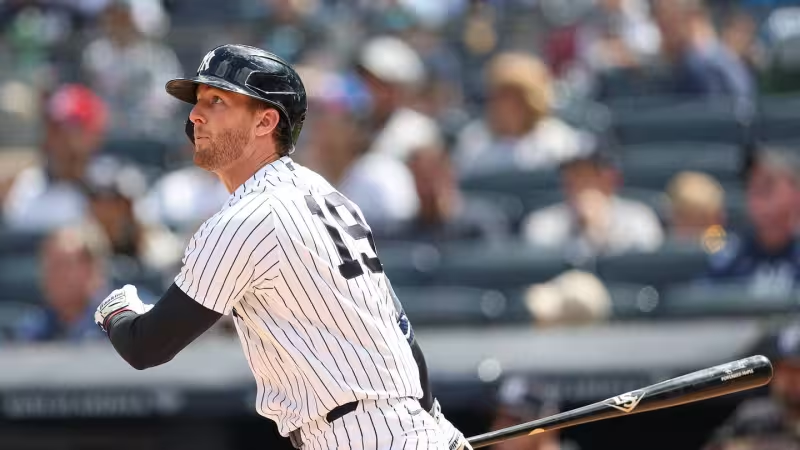
Ryan McMahon looked like one of the worst trade‑deadline acquisitions in New York Yankees history after a frigid start to the 2026 season, and a benching in Kansas City on Monday underscored how little his recent burst has changed the calculation.
McMahon’s problem is simple and numerical: after being limited to pinch‑hitting duty April 21–23 when the Red Sox started a trio of lefties, he ripped a productive run once the Yankees traveled to Houston on April 24. From April 24 through the series finale against the Texas Rangers on May 7 he slashed.311/.340/.511 and hit two home runs, and starting May 1 he hit.400/.400/.700 with eight hits in his first 20 plate appearances of the month.
Those stretches included a three‑run homer off Dylan Cease — one of the loud moments that hinted at a turnaround — and they came after McMahon narrowed what had been one of baseball’s widest stances heading into 2026. For a handful of games it looked like the mechanical tweak had worked.
But the weight of the season still leans the other way. Over his last 28 days, including that early‑May surge, McMahon hit just.197 with a.557 OPS. His overall line for the year sits at.190 with a.562 OPS. That cumulative production is why, despite the occasional big hit, the Yankees have continued to explore alternatives.

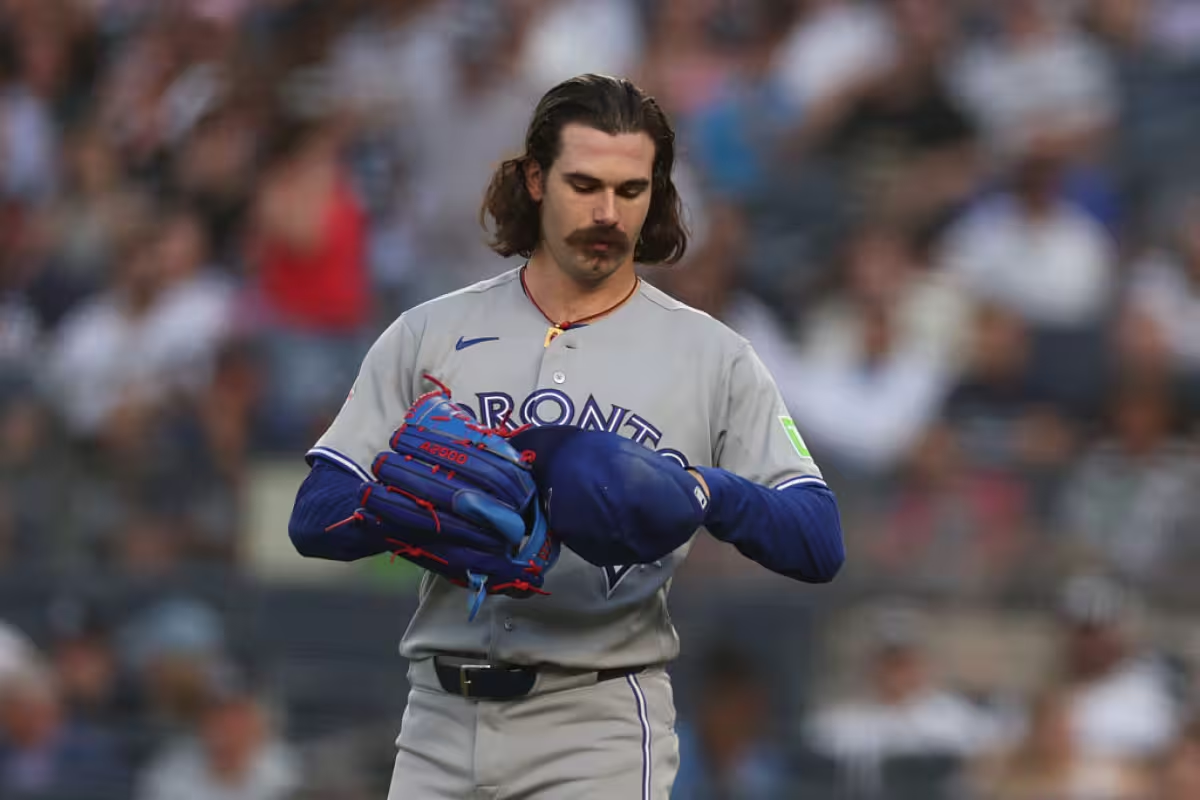
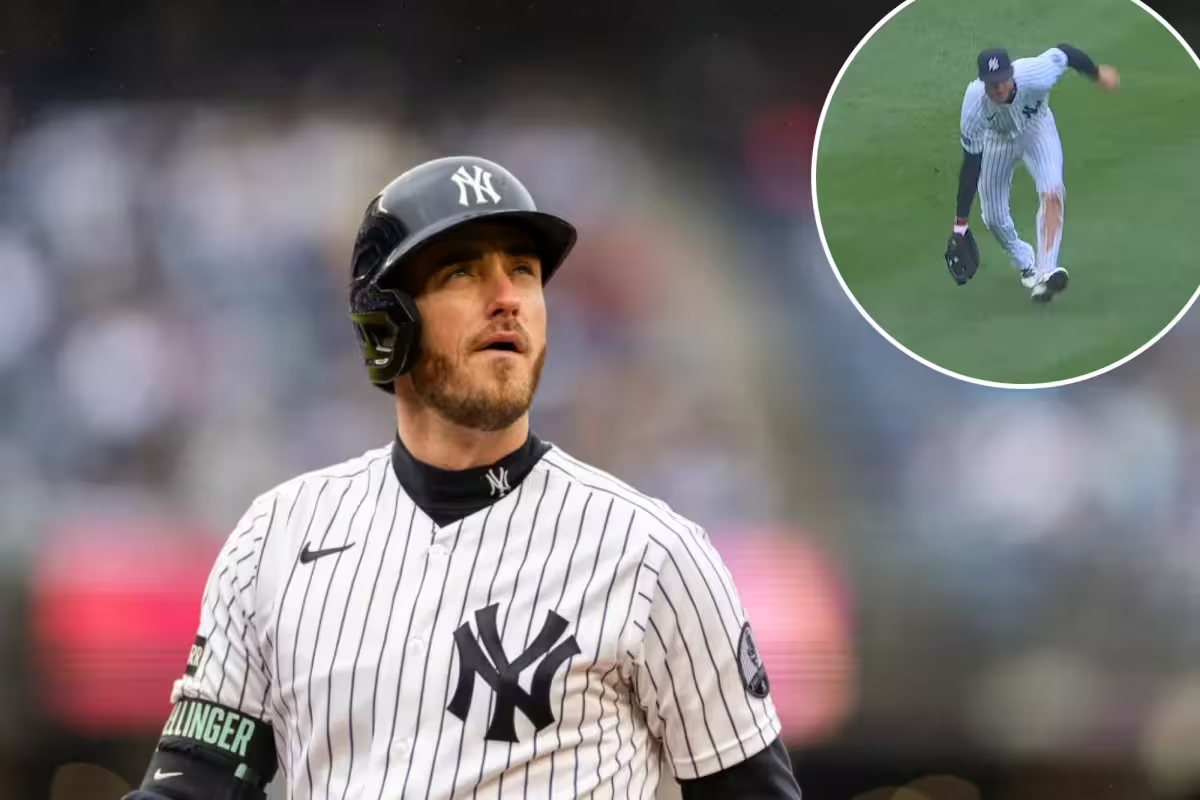
That exploration is concrete: the club has considered other options to replace or complement McMahon, including Matt Shaw. The discussion intensified because the team had already been viewing McMahon as a poor trade‑deadline acquisition from July 2025 onward, and his prolonged cold spell gave roster decision‑makers little cover.
Tension between short bursts and season‑long results is the story’s engine. McMahon delivered a handful of high‑leverage plays — the Cease homer among them — yet those moments did not erase the larger pattern of underperformance. He himself characterized part of the problem as unplayable, a terse assessment that underscored the frustration around his swing and approach. Still, one brief stretch does not reverse a batting line that the Yankees consider unacceptable.
The immediate sign that patience is thin came Monday, when McMahon was not in the lineup in Kansas City against right‑hander Michael Wacha. That omission was not an isolated tactical decision tied to a single matchup; it was the clearest public indication that the team is prepared to withhold regular at‑bats if production does not follow promise.
Conclusion: McMahon’s mechanical change and his April 24–May 7 numbers prove he can still impact games, but the season‑to‑date numbers make a sustained return to the everyday role unlikely unless he immediately and consistently produces. The Yankees have alternatives available and have already entertained them — the club’s next moves will hinge on whether McMahon can turn a short, convincing streak into reliable offense rather than episodic heroics.