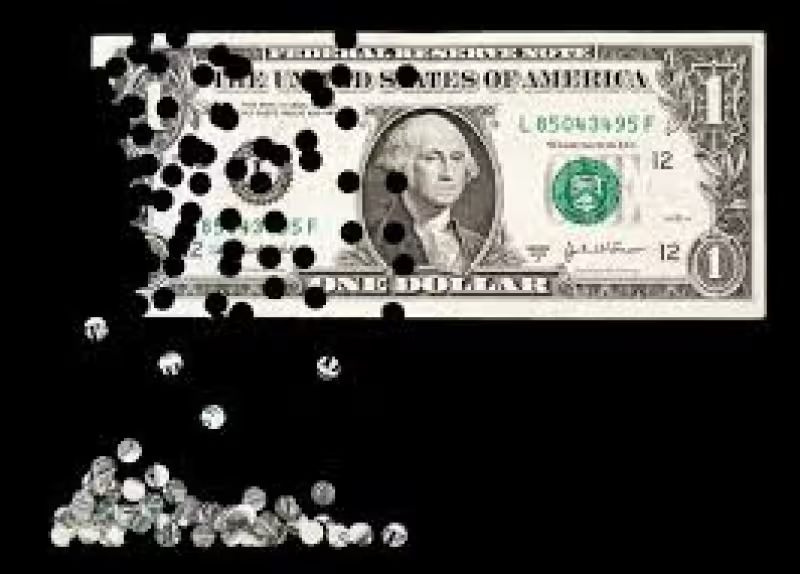
The first inflation report under new Federal Reserve chief Kevin Warsh landed on Thursday and it was worse than recent months: the Commerce Department said April personal consumption expenditures prices rose at an annual rate of 3.8%, the highest level in almost three years.
That April reading outpaced March's 3.5% pace and February's 2.8%, and came in just below economists polled by FactSet, who had expected annual PCE inflation to rise to 3.9%.
The raw numbers give the new chief a clear problem: the Fed's preferred inflation gauge is not cooling to levels that would comfortably allow the central bank to begin easing. The April PCE reading climbed to 3.8% at a time when policymakers earlier this year had penciled in one interest rate cut in 2026.
Markets moved fast. CME FedWatch showed a 40% probability that the Federal Reserve will hike rates at its December meeting, up sharply from a 3% probability at the Fed's June meeting.

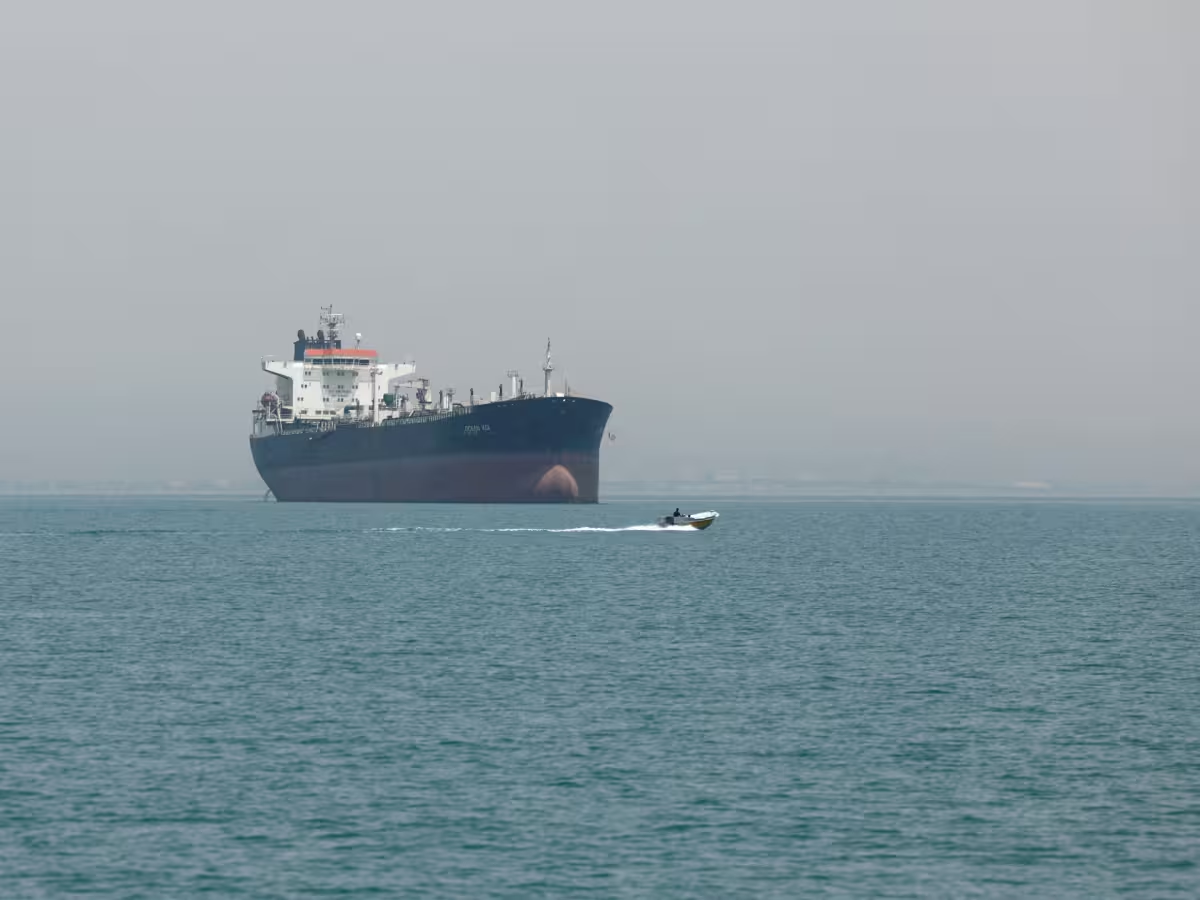

Analysts trace the flare-up in inflation to higher energy costs tied to the Iran war and to a broader set of price pressures that have persisted despite aggressive rate hikes in prior years. At the same time, President Trump has pushed publicly for lower borrowing costs for consumers and businesses, a political pressure on a central bank that Warsh now leads.
The pce report matters now because it changes the arithmetic for both markets and governors in real time. A sequence of monthly readings that rose from 2.8% in February to 3.5% in March and 3.8% in April closes off room for a prompt move toward rate cuts; it opens room instead for the unusual possibility that policymakers might consider higher rates later this year if inflation does not relent.
That split between official forecasts and market pricing is the day's tension. The Fed earlier forecast a single cut in 2026, signaling a belief that inflation would slow enough to permit easier policy. The markets now assign a 40% chance of a December hike — a swing that reflects traders' suspicion that the Fed's timeline is too optimistic if inflation is stubborn. Economists are beginning to pencil in the remote but real possibility of a rate increase before year-end.
For Warsh, the numbers force a choice he will have to explain: stay the course and argue that a climb to 3.8% is temporary and does not warrant a policy change, or acknowledge that the path to the Fed's previously forecast 2026 cut is narrowing. Either option will shape expectations for borrowers, savers and markets between now and the December meeting.
Plainly, the April pce report makes the Fed's messaging harder. It hands markets a justification for pricing higher odds of tighter policy and strips away some of the certainty that accompanied the Fed's earlier projection of a single cut in 2026. How Warsh responds — with words, votes and eventually with decisions at FOMC meetings — will determine whether this spring's uptick in inflation is a pause or the start of a new upward leg.