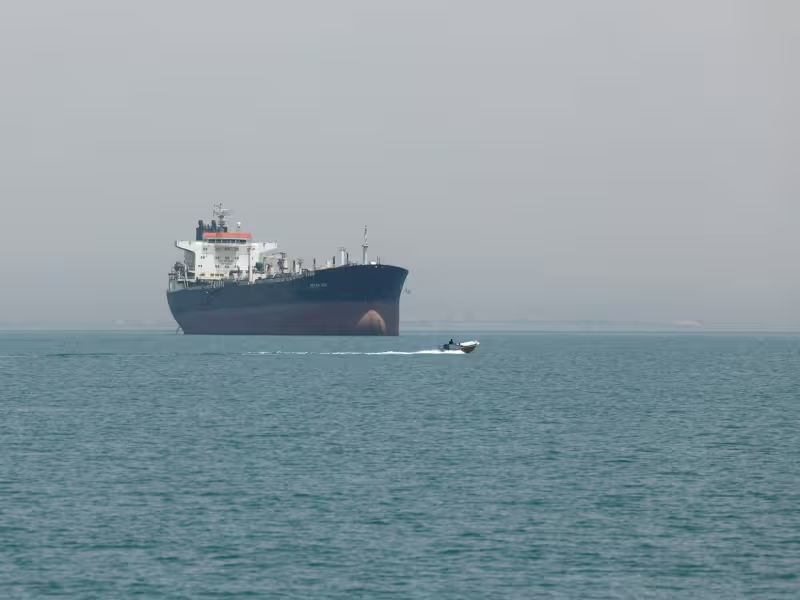
Oil prices hit two-week lows on Monday as growing hopes for a US‑Iran agreement to reopen the Strait of Hormuz sent traders rushing back to the long side of risk, a move market watcher June Goh said did not erase the underlying supply damage.
Brent crude futures fell $4.71, or 4.55%, to $98.83 a barrel by 2234 GMT, while U.S. West Texas Intermediate lost $4.57, or 4.73%, to $92.03 a barrel. Both benchmarks touched their lowest levels since 7 May earlier in the session. Brent for July stood at $98.47 a barrel as of 01:05 GMT, and July Brent is down about 9 percent from a month ago but remains more than a third higher than levels before the start of the war.
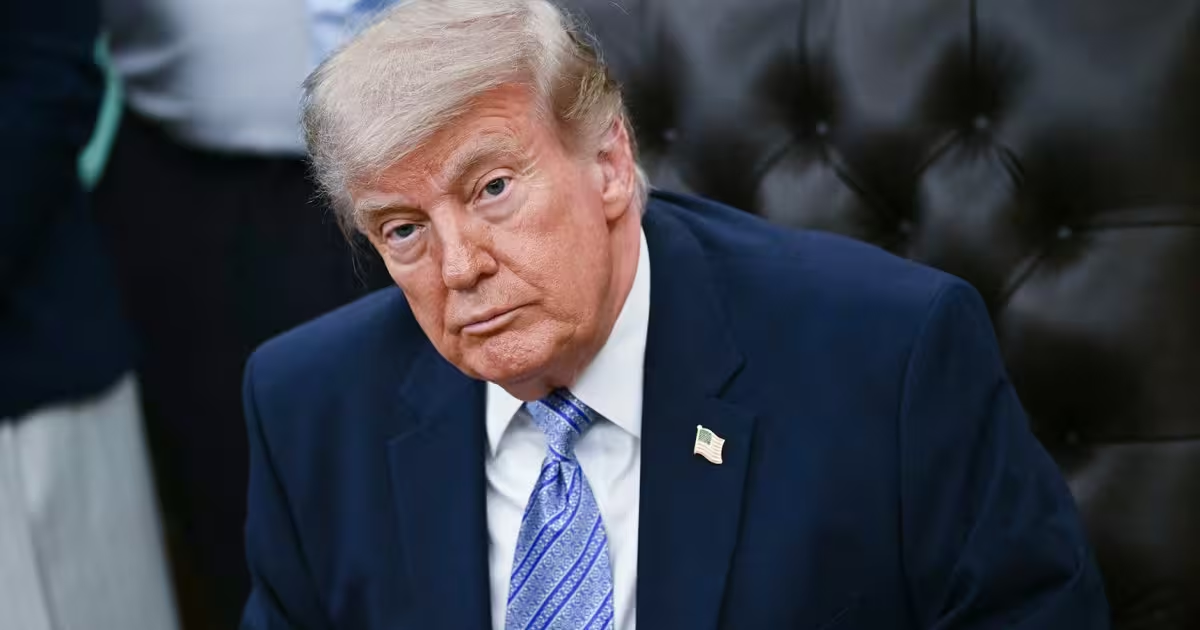
Traders priced in the possibility of a rapid release of cargoes. Japan’s Nikkei 225 rose more than 3%, trading up 3.2% around 0145 GMT, as regional markets rallied on comments from U.S. political leaders. Donald Trump said on Saturday a deal had been "largely negotiated" and that the terms included reopening the Strait of Hormuz. On Sunday he added negotiations with Tehran were proceeding in an "orderly and constructive manner" and told officials "not to rush into a deal." He warned, "Both sides must take their time and get it right. There can be no mistakes!" and said "if I make a deal with Iran, it will be a good and proper one." He also said "the final aspects and details" of a memorandum of understanding "will be announced shortly."
The backdrop to the crude oil price drop is a supply shock that has not gone away. Iran effectively blockaded the Strait of Hormuz since the war began in late February, a disruption that at its peak affected about one‑fifth of the global oil trade. The United States imposed its own blockade of Iranian ports in mid‑April, and the US blockade would remain "in full force and effect until an agreement is reached, certified, and signed." June Goh warned: "Fundamentally, there is no change to the underlying picture, where 10-11 million barrels per day of crude oil continue to be shut-in for every day the Strait of Hormuz remains shut."
That disconnect — a sharp near‑term fall in prices and a persistent physical bottleneck — creates the central tension for markets. Gushing cargoes expected to move quickly once an agreement is signed fuel optimism: "However, markets are expecting a gush of 100 million barrels of crude oil from the stranded ships to flow out once the deal is in place," she said. Yet the operational reality is slower. As Goh noted, "Sparta estimates still about three to six months required to get everything back to status quo, including time to bring production and refineries back online."
The immediate effect is visible: a crude oil price drop that pared some of the premium built into oil since the conflict began. But that relief is likely temporary if flows cannot be restored quickly. The most consequential fact now is not the single‑session move to two‑week lows but the timetable for returning shut‑in output to world markets — a three‑ to six‑month window that will keep prices vulnerable to renewed volatility even if a memorandum of understanding is signed in the coming days.
For traders and consumers the takeaway is plain: the market is trading on optimism about a deal and the prospect of 100 million barrels of stranded crude easing tightness, but the physical imbalance that shut in 10-11 million barrels per day will not vanish overnight; the path back to equilibrium will take months and sustain price swings in the meantime.