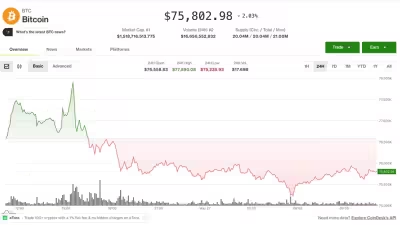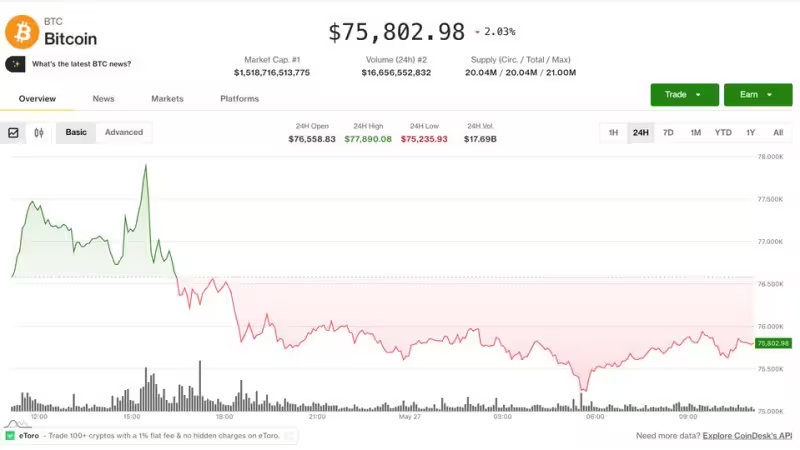
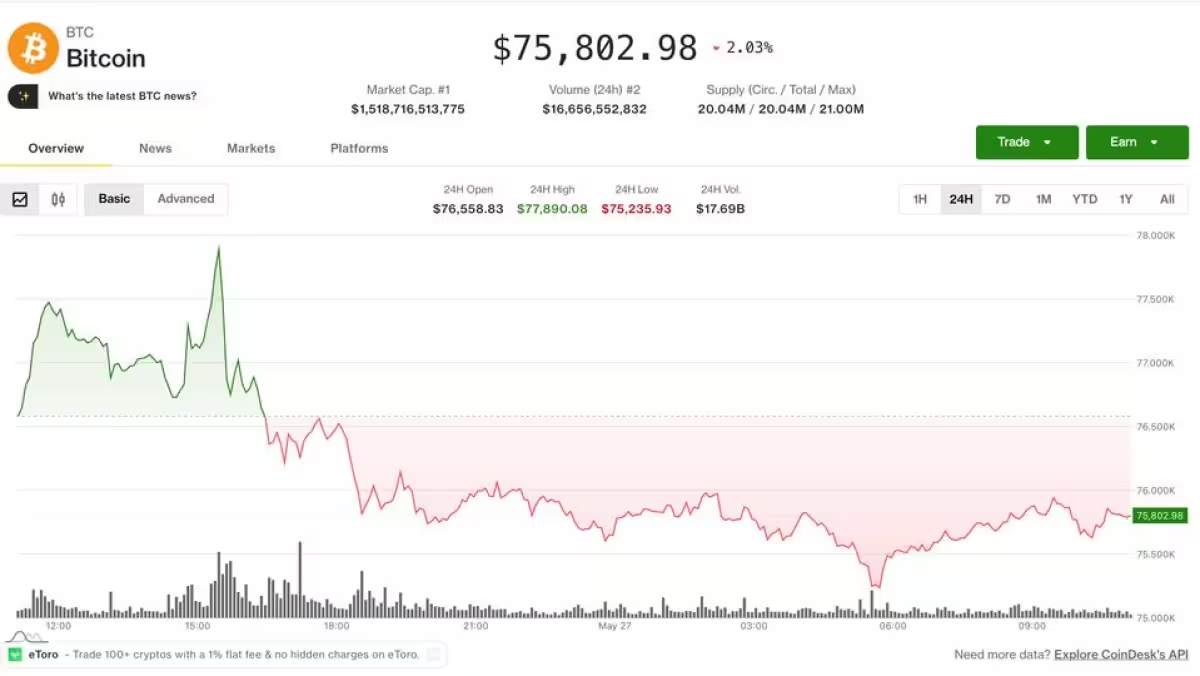
Bitcoin dropped roughly 2% on Wednesday and was trading near $75,500 per token as investors parsed a week of mixed signals: big off‑exchange activity, continued ETF outflows and a high‑profile buyer stepping back.
Sean Farrell, a market analyst who has been watching the move, said the pattern of recent trading suggests more volatility ahead — in his view, a few choppy weeks are likely as the market absorbs those competing forces.
The immediate weight behind Wednesday’s slide was technical and calendar pressure. Bitcoin had climbed above $81,000 earlier this month but has fallen about 7% over the past two weeks. It failed to push through the $78,000 area on Tuesday and was trading close to the $75,000 level of support on Wednesday, keeping it below the $76,000 line put forward by Bitmine Chairman Tom Lee. Lee has said that a month‑end close above $76,000 would signal the end of a bear market — a threshold the market has not yet reached.
Traders are also still digesting last week’s pause in purchases by Strategy, a move that signaled the firm may be prioritizing debt reduction. Wall Street has closely tied bitcoin’s price swings to Strategy’s buying activity; earlier this year Bernstein analysts even labeled the firm as the cryptocurrency’s ‘‘central bank of last resort.’’ At the same time, US spot bitcoin ETFs continued to see investor outflows, underscoring a persistent mismatch between headline buying and actual fund flows.


Complicating that picture was a $1.3 billion trade involving BlackRock’s iShares Bitcoin Trust ETF on Tuesday morning — one of the largest off‑exchange bitcoin ETF transactions since the funds launched more than a year ago. The trade shows that large blocks are still moving through institutional channels even as retail and ETF investors step back, a tension that has contributed to the recent stops and starts in price action.
The wider markets painted a divergent picture. The S&P 500 and Nasdaq 100 index futures both hit record highs on Wednesday after rising about 0.3%, evidence that bitcoin has decoupled from a tech‑led rally even as semiconductor gains pushed the Nasdaq to fresh records. Ether’s price action tracked a weaker tone in crypto: it was rejected near $2,150 on Tuesday, bounced off $2,050 at 05:30 UTC on Wednesday and was trading around $2,080 soon after.
Smaller pockets of the market showed the same tug of war. AI‑linked tokens that surged on Tuesday gave back ground Wednesday — RENDER, FET and NEAR each fell between about 1% and 3% since midnight UTC — and the broader crypto majors sold off roughly 3% to 4% after U.S. airstrikes on an Iranian military site near the Strait of Hormuz reignited risk priced out of markets days earlier. That escalation wiped out nearly $1 billion in leveraged positions, amplifying the move lower.
There is a clear contradiction at the center of this market: large institutional activity still takes place — evidenced by the $1.3 billion BlackRock block — while visible ETF flows are negative and a major buyer has paused purchases. That split helps explain why volatility has returned even as U.S. equities march higher, and why analysts like Farrell expect more erratic trading rather than a smooth trend.
The pivotal question for the rest of the month is straightforward: can bitcoin reclaim and hold the technical threshold around $76,000 while spot ETF flows remain out of sync and Strategy’s next steps are uncertain? How that plays out will determine whether the market stabilizes or simply trades sideways through a series of sharp intraday moves. Investors tracking ether and other tokens can find more on the recent ether drop in our coverage of Ethereum Price Slides as Bitcoin Drops 3% amid ETF Outflows and HTX Sanctions, and the interplay between crypto and AI themes is reflected even in culture, from token rallies to entertainment stories like Mark Zuckerberg’s reported role in Doug Liman’s AI satire Bitcoin.