President Trump believes Cuba’s government could collapse by the summer, and multiple insiders told Axios the administration is pressing a stepped campaign of sanctions, energy pressure and contingency planning officials describe as meant to speed an expected unraveling.
Jeff Seal, an American who has watched Cuba’s troubles from the islands and the United States, put it plainly: "Americans should feel ashamed," he said, adding of the Cuban people, "This city is still theirs."
Inside the White House, senior officials described the strategy with a single, striking word. A senior administration official said, "The best way to describe it is ‘accelerationism,’" and argued the objective now is not immediate conquest but to quicken what they see as an inevitable societal collapse in Havana and beyond.
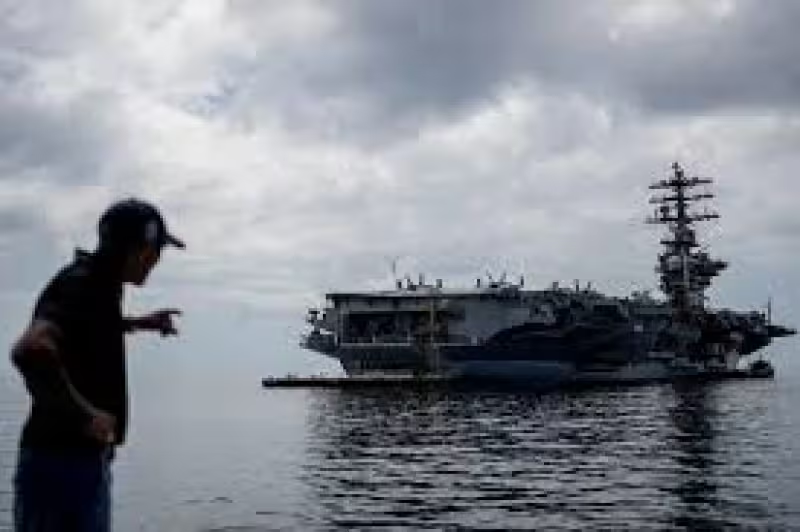
The administration has concentrated on economic levers rather than a ground invasion so far: officials have moved to tighten sanctions and cut off oil supplies from Venezuela as the primary pressures. U.S. Southern Command recently ran a multiagency tabletop exercise for potential military action in Cuba, a senior administration official told Axios — a rehearsal that underlines how contingency planning has moved beyond diplomacy and financial pressure.
That official framed the approach this way: "But we don’t want to kill off the regime just yet. There’s a method to this. It’s in stages." He added, "Trump wants to exhaust all the levers that he can. But at this point, there aren’t as many levers as before," and warned, "More is on the way." At the same time, the administration insists restraint — "Everything is on the table, but no invasion is planned or imminent," the official said. "Iran’s not finished, and the president is not in a rush."
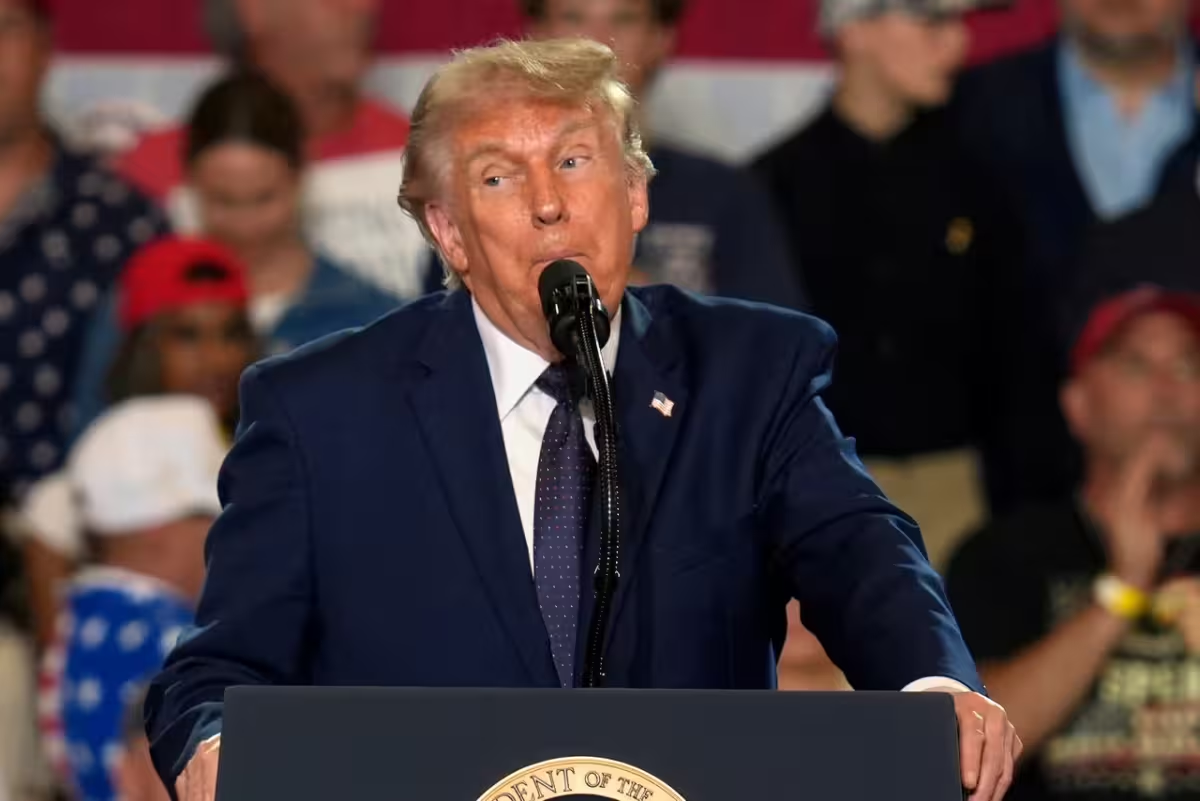
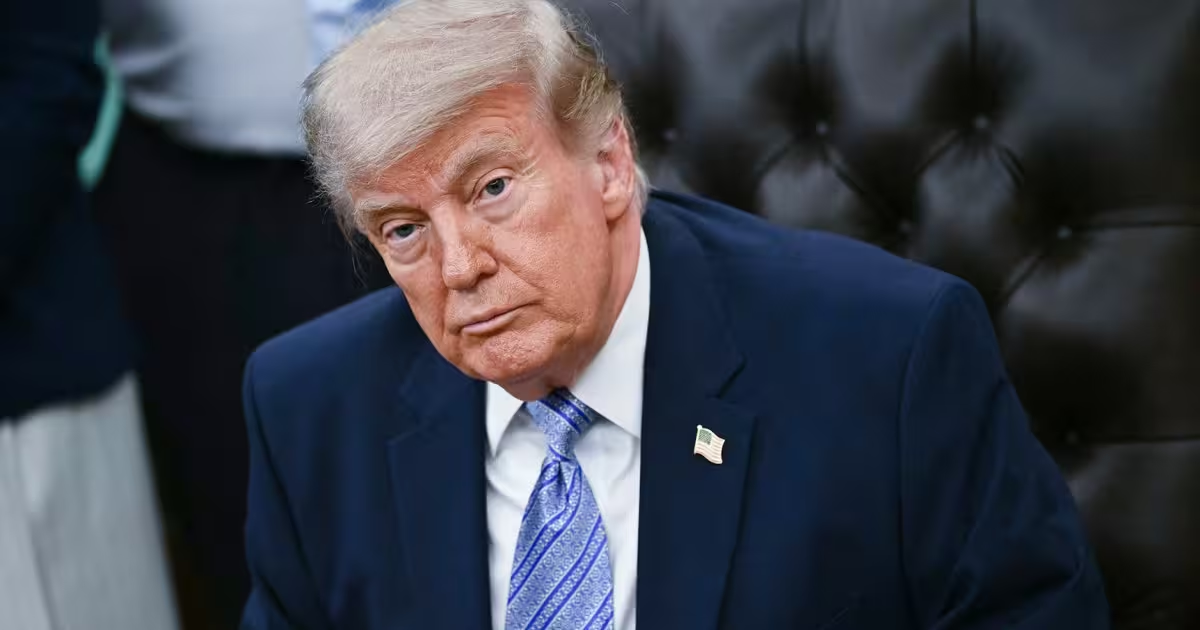

Those mixed signals have produced a narrow but consequential window for policymakers. A Trump adviser told Axios the president is unlikely to launch an all-out war against Cuba, and another adviser said the president "does not want boots on the ground for more than 48 hours." Yet other advisers counseled caution. One warned bluntly, "It’s a quagmire in the making. This could get messy." Another advocated pressure as an iterative tactic, saying: "Push your enemy off balance. It’s pressure, watch the response, apply more pressure, watch the response, apply more pressure," — a description that reads like a plan to calibrate chaos rather than control it.
The arithmetic of the moment gives this reporting weight. By the summer — roughly three months away — multiple insiders told Axios Trump expects results. The timeline has prompted debate inside the administration and among outside analysts about whether a campaign of sanctions and energy denial will produce collapse or accelerate humanitarian and geopolitical crises.
Context matters: the White House has repeatedly insisted there are no immediate plans to invade Cuba, and public actions so far have focused on sanctions and squeezing Venezuelan oil shipments that sustain the island. Observers also place the current push inside a longer history. A New York Times opinion video framed Trump’s drive as the latest phase in a nearly 70-year campaign against Cuba’s Communist government, and noted that many Cubans historically have not seen socialism and capitalism as totally irreconcilable — pointing to China and Vietnam as examples of Communist states that adopted market mechanisms.
The friction in this story is obvious. Officials say their aim is staged pressure and a political unraveling they can manage, but the same quarters that deny imminent invasion are running war games and entertaining military options reported earlier this month to range "from a limited U.S. airstrike to a full-scale invasion," according to reporting by another outlet. The tension between a declared preference for economic measures and preparations for force creates a high risk of miscalculation: if pressure produces unrest, the administration will face hard choices about how — and how quickly — to respond.
For now the White House is leaning into compression of Cuba’s economy and diplomatic isolation while keeping military plans on the shelf and promising readiness. A senior administration official put it coldly: "When POTUS says go, we’re ready for anything." That posture means the next three months will likely determine whether the United States can achieve the accelerated outcome it seeks without tipping the island into wider conflict or humanitarian collapse — and whether the policy, in practice, will look more like calibrated pressure or the first step toward something far riskier for the region.