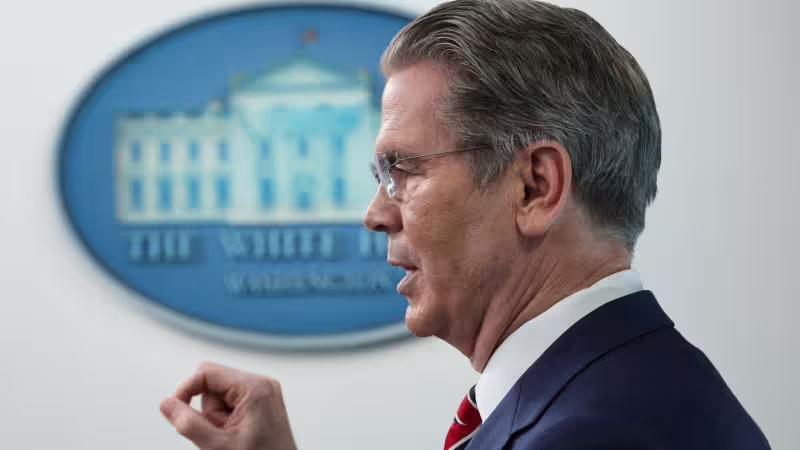
Treasury Secretary Scott Bessent used Thursday’s White House briefing to deliver two messages at once: the administration is still grappling with the economic fallout from the Iran war, and Treasury has already prepared a mockup of a $250 bill bearing President Trump’s face.
Bessent said the note was only a contingency, and that it could not be printed unless Congress passes legislation allowing a living person to appear on U.S. currency. He did not say whether the mockup had been shown publicly, but he made clear that the plan exists inside Treasury if lawmakers ever change the law.
He was expected to face questions about the administration’s handling of the economy and the rising cost of living tied to the war, which has unsettled energy markets and put fresh pressure on households. The timing mattered because the White House was also weighing a tentative agreement that would extend the Iran ceasefire by 60 days, if President Donald Trump and Iran’s leadership both accept it.

Officials familiar with the talks said the proposal would keep the truce in place while both sides begin negotiations focused on Iran’s nuclear activities, sanctions relief and broader regional security concerns. It also includes steps aimed at reopening the Strait of Hormuz and restoring commercial shipping, a move that would matter well beyond the Middle East.
The briefing put Bessent at the center of a political moment that has stretched far past Treasury’s usual lane. In recent weeks he has played a key role in negotiations involving international trade, sanctions policy and the administration’s broader economic strategy, even as Vice President JD Vance and Secretary of State Marco Rubio have also stepped in during Press Secretary Karoline Leavitt’s maternity leave.
That broader economic backdrop is already under strain. Bessent has repeatedly defended the administration’s tariff policies, arguing that Trump’s approach will strengthen domestic manufacturing and reduce reliance on foreign supply chains. But the latest inflation readings give critics fresh ammunition: the Personal Consumption Expenditures index rose 3.8 percent from a year earlier in April, its fastest annual pace since May 2023, while core inflation increased at a 3.3 percent annual rate, the quickest since November 2023.
For Bessent, Thursday was less about unveiling a new currency idea than about showing how tightly the administration’s economic and foreign policy lines are now tied together. The ceasefire talks, the shipping lanes, the tariffs and the cost of groceries are all feeding the same political argument in Washington, and Treasury is no longer standing at the edge of it.