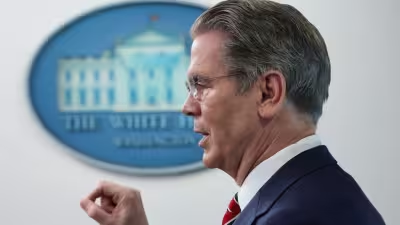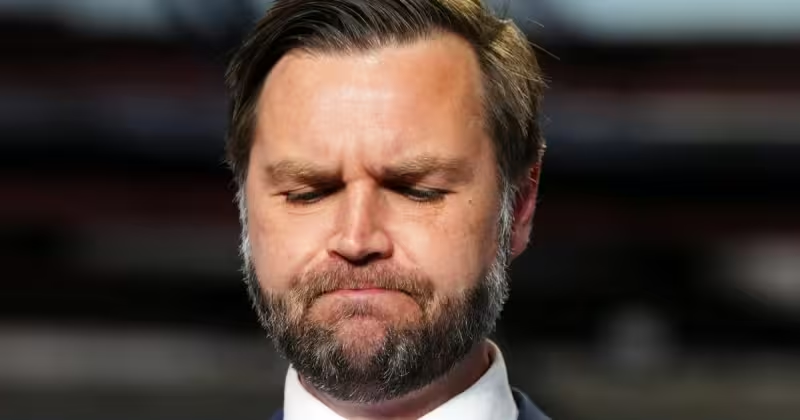
Vice President JD Vance hosted a White House roundtable on fraud on Tuesday as he pressed the administration’s Task Force To Eliminate Fraud, drawing more than a dozen Republican state attorneys general and a broad boycott from Democrats who said they were given too little notice to take part.
Vance said the task force had already “exposed billions of dollars in benefits that have been stolen from the American people” since it was launched in March. He also argued, “This should not be a partisan effort – everybody should care about fraud,” even as 23 states and Washington, D.C., skipped the meeting.
The split captured the political fight around an initiative President Donald Trump put in motion twice this year. Trump said in his State of the Union address in February that he was putting Vance in charge of waging a war on fraud, then formalized the effort with an executive order in March. That order gave the vice president the chair and directed the task force to coordinate and accelerate a comprehensive national strategy to stop fraud, waste and abuse within federal programs.
Democratic attorneys general said the invitation came with “less than one business day’s notice with no agenda,” making it impossible to do more than show up in name. In a letter to Vance signed by 24 state attorneys general, they said, “We are committed to stopping fraud, waste, and abuse in all government programs across our states, and are proud of our continued partnership with the federal government in this mission,” while objecting to the way the event was handled.
New York Attorney General Letitia James said the exclusion went beyond short notice. “My deputy attorney general went to Washington DC today, and unfortunately was not allowed access to the meeting,” she said. California Attorney General Rob Bonta declined the last-minute invitation, and New Jersey Attorney General Jennifer Davenport also passed, saying, “Eliminating fraud cannot be a partisan effort or politically motivated,”
Vance said representatives from the Democratic state attorneys general offices in Oregon and Connecticut were present, but the broader no-show underscored the mistrust surrounding a task force the White House has billed as bipartisan. The administration’s fraud push has also already been tied to sharper action on spending, including a temporary halt to Medicaid funding and child care funds for Minnesota and a separate freeze of $10 billion for social services programs in five Democratic-led states, including Minnesota, both moves cited by the administration as responses to alleged fraud.
For now, the politics of the fraud fight are as central as the fraud fight itself. Vance has the title, the task force has the mandate, and the administration says it has found billions. But the absence of most Democratic state attorneys general on Tuesday makes clear that winning cooperation across party lines may be harder than finding the money.