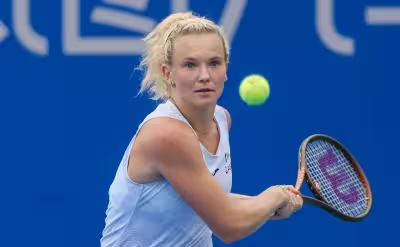
Cari Champion told Jemele Hill on a podcast this week that she does not like Caitlin Clark and accused the WNBA and sports media of treating Clark with "blatant favoritism."
"That type of blatant favoritism annoys the hell out of me," Champion said, adding that she was unsure whether Clark herself was to blame. "I don’t know if this is her fault, because I think it might be unfair for me to say that this is her fault. But at the same time, it’s like, why is she getting this special treatment? It’s, yet again, another example of the league and its fans being so precious with her."
The comments came after a late change surrounding Clark last week: she was listed out less than two hours before a home game after the Fever ruled her unavailable, a decision that prompted scrutiny and discussion. Champion referenced Clark dismissing controversy tied to that late scratch and used the episode to broaden a critique of how Clark is covered and treated by the league and some media voices.
Champion — identified in the interview as a former host — did not stop at favoritism. She moved to critique Clark’s on‑court demeanor directly: "The more we get to catch these glimpses of Caitlin Clark, I’m like, 'I don’t like you. I don’t like the way you behave on the court,'" Champion said. She continued, "The way that you behave, this entitlement, the way you are talking to your coaches… you enjoy that. So if that’s what you enjoy, if you want to be the villain, if you want to be the tough person, then let it be. Because we’re coming at you the same way we could come at anyone else."
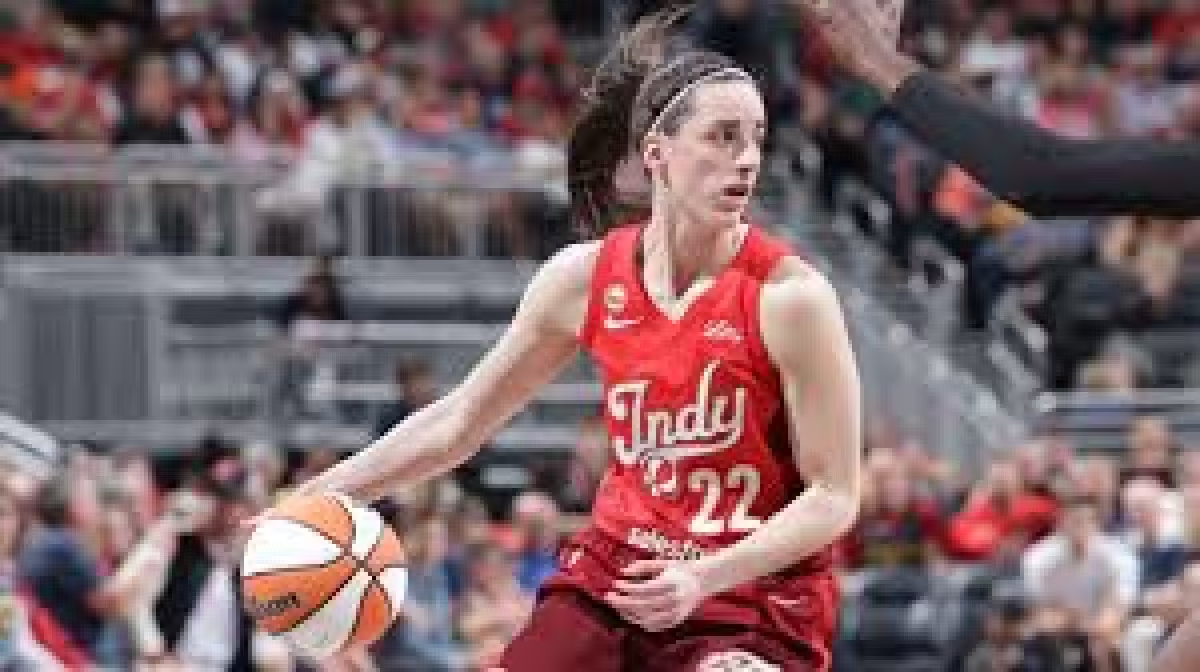
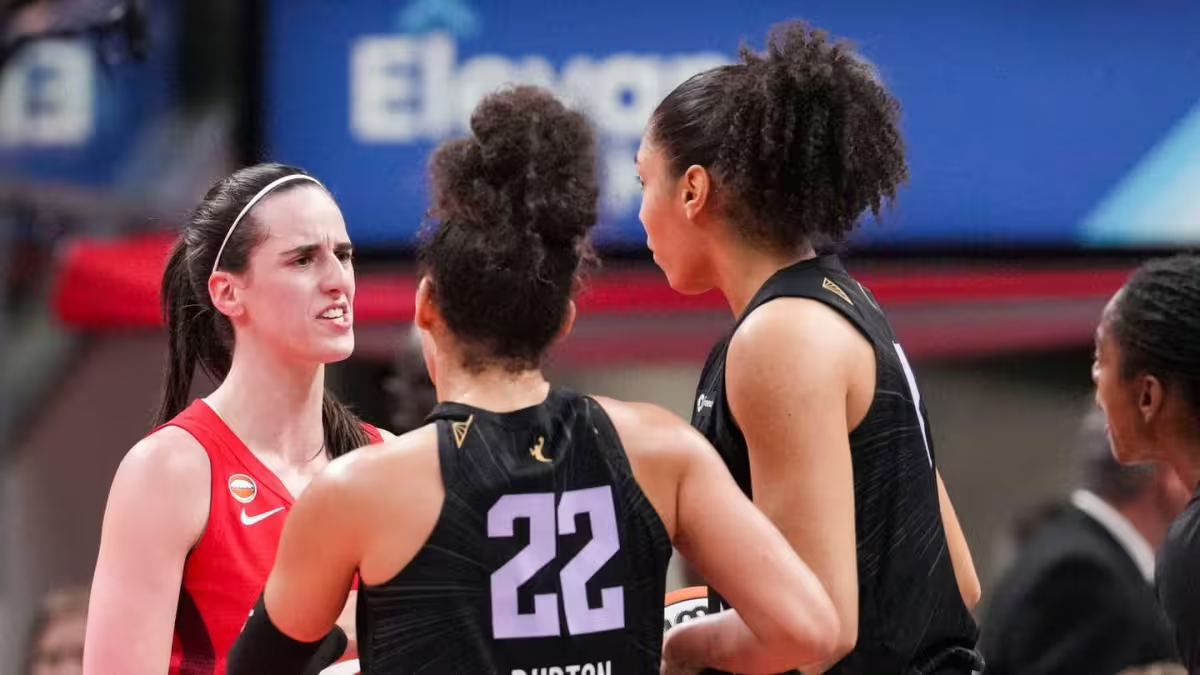
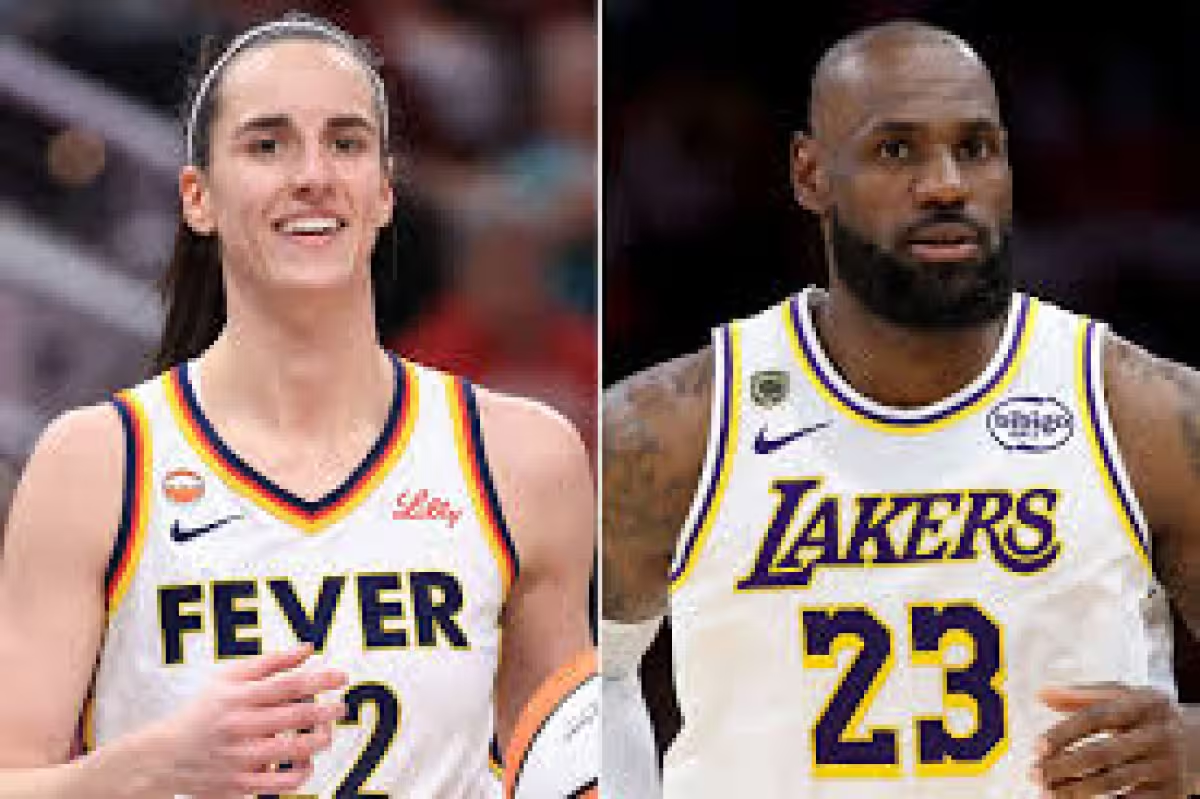
Those words landed as Caitlin Clark returned to action and produced numbers after the incident: she scored 22 points, hit four 3s and finished with nine assists in the game that followed the late scratch, according to the supplementary article about the game.
The exchange with Hill frames Champion’s remarks against a broader media narrative. The primary article situates her comments amid a history of critique and resentment toward Clark from some players and analysts, even as the WNBA and portions of sports media have previously denied harboring disdain for the rookie star. Champion’s on‑air bluntness breaks with those public denials and puts an explicit judgment on record: she does not like Clark’s behavior and believes Clark benefits from uneven treatment.
There is tension between Champions’s argument about special treatment and the immediate, observable response on the court. The late scratch sparked controversy over process and transparency, yet Clark’s statistical return — 22 points, four 3s and nine assists — offered a ready counterpoint to claims that the episode harmed her or her team. Champion acknowledged ambiguity about responsibility when she said, "I don’t know if this is her fault," even as she asked, "why is she getting this special treatment?" That mix of admission and accusation is the story’s friction: a blunt personal dislike lodged against a player who keeps delivering results.
Champion’s intervention matters now because it removes a cloak of collective evasiveness: a prominent media voice openly admits personal dislike while singling out favoritism as a problem. By doing so on a podcast with Jemele Hill and using stark language — "That type of blatant favoritism annoys the hell out of me" and "I don’t like you" — she forces a reckoning the league and some commentators have largely resisted. Clark's on‑court performance after the scratch further complicates any simple narrative that she is being unfairly protected or damaged.
The consequence is immediate and tidy: the record now contains an explicit media admission of dislike alongside the facts of Clark’s late scratch and her productive return. That combination will sharpen debate inside the WNBA and among analysts — not by inventing new facts, but by making plain how raw opinion and performance coexist in public coverage of Caitlin Clark.