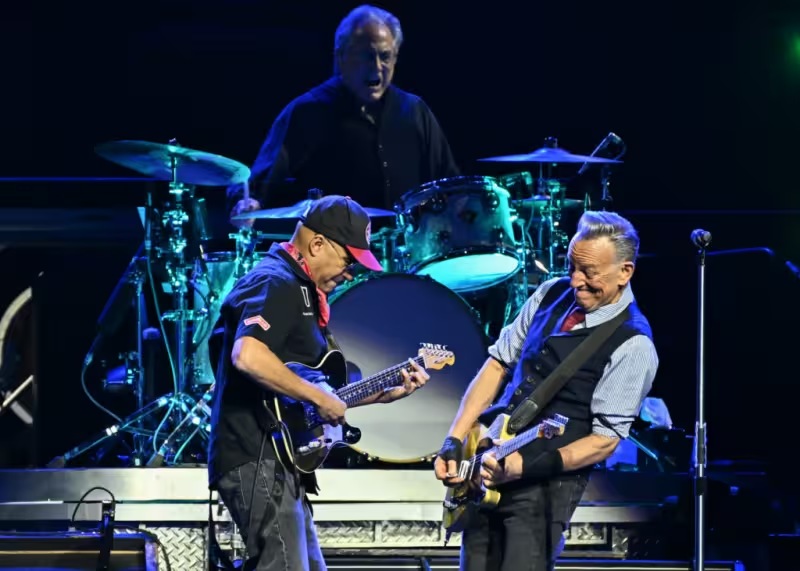
Bruce Springsteen stood on the Nationals Park stage Wednesday and, alongside Tom Morello, announced a one-day protest festival — Power to the People — scheduled for Oct. 3 at Merriweather Post Pavilion in Columbia, Maryland.
The lineup reads like a political greatest-hits package: Springsteen will headline alongside the Foo Fighters, Dave Matthews, Brittany Howard and Joan Baez; the bill also includes Dropkick Murphys, Jack Black, Serj Tankian, Killer Mike, Taylor Momsen and the Linda Lindas. Organizers say the two-stage event will be about freedom, justice, equality and rock 'n' roll, and that a portion of proceeds from all ticket sales will benefit VoteRiders and HeadCount.
The announcement was forceful and plainly political. Springsteen told the crowd, "The Gestapo tactics of this president and this administration will not stand here," and later led the stadium in an "ICE out!" chant. He continued: "This American tragedy can only be stopped by the American people: you. There is no one coming to save us. We've got to do it ourselves," and added, "Our democracy, our constitution, our rule of law are being challenged right now as never before by a reckless, racist, incompetent, treasonous president and his ship of fools administration." Morello framed the festival as collective action: "It's about the power everyday human beings have when they come together through music, art, community and action," he said.
The scale and timing sharpen the festival's significance. It is a one-day, two-stage event set for Oct. 3 — roughly a month before the midterm elections — and it brings multiple generations of politically minded artists to a single arena. That makes Power to the People a deliberate intervention into the national conversation at a moment when voter-registration groups and civic organizations are campaigning hard; the choice of beneficiaries, VoteRiders and HeadCount, underlines that intent.
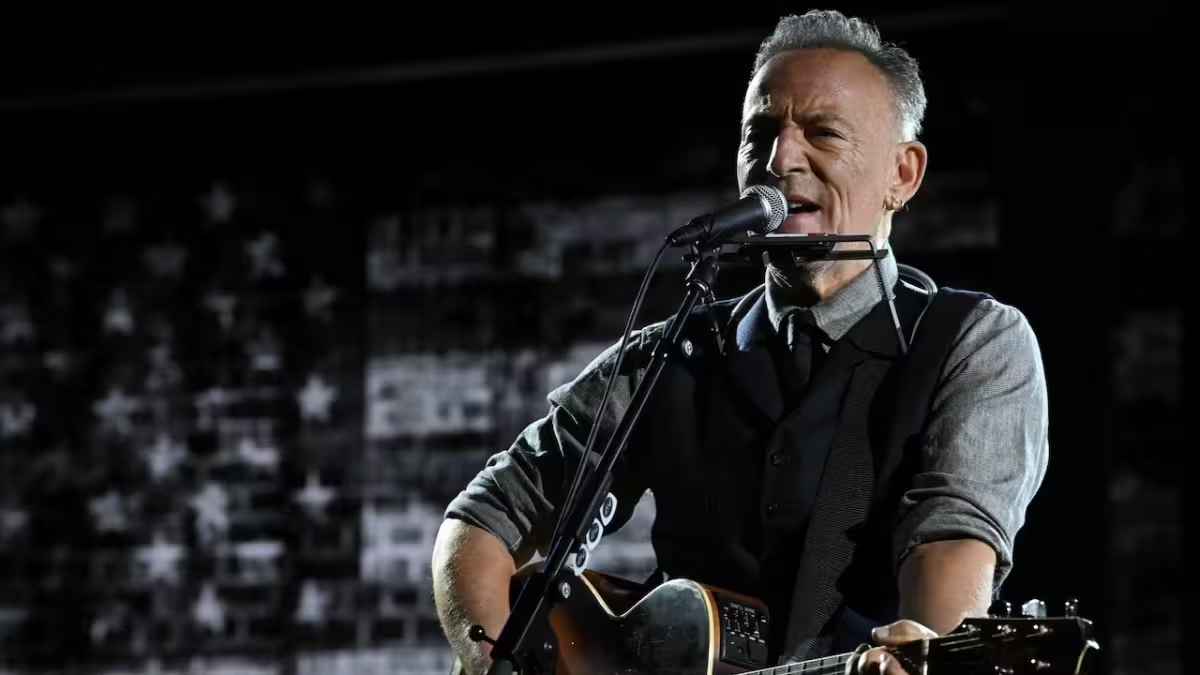
The announcement itself generated friction. President Trump has publicly called for a boycott of Springsteen's shows, calling him a "total loser who spews hate," and Springsteen's language onstage sharpened the clash between artist and administration. That tension points to two different risks for the festival: that the political framing will deepen polarization and, conversely, that a vocal backlash could amplify its reach. Either outcome keeps the event from being merely another concert.
Springsteen is mounting Power to the People as he winds down the Land of Hope and Dreams American tour, and his long record of criticizing the president makes this next step predictable even as it is audacious. Promoters have presented the festival as a protest festival and a day for freedom, justice, equality and rock 'n' roll — a description that will appeal to some and repel others, and that turns a music bill into a political act.
The festival's practical details are straightforward but consequential: one day, two stages, and a high-profile roster that crosses rock, punk, hip-hop and roots music. For fans and volunteers who treat concerts as civic spaces, the event will be a rallying point; for opponents, it will be another front in the cultural conflict roiling American politics. Readers tracking other contentious demonstrations will recognize a pattern — from a hunger strike and clashes with ICE in Newark to protests over business closures and taxation — that shows protest taking many forms across the country (see related coverage: and
What happens next is concrete: tickets, logistics and the political fallout. The festival is set for Oct. 3, and organizers will soon sell tickets and publicize the program; VoteRiders and HeadCount will begin receiving pledged proceeds only once sales are tallied. The event's effectiveness as a civic mobilizer will come down to turnout and whether its message translates into registration, turnout or broader civic engagement at the ballot box a month later.
Springsteen left the crowd with a direct call to action: "So join us and let's fight for the America that we love. Do you hear me, Washington?" The line was not a closing flourish; it was the point. This festival will be judged not by guitar solos but by whether it moves people off the lawn and into voting booths.