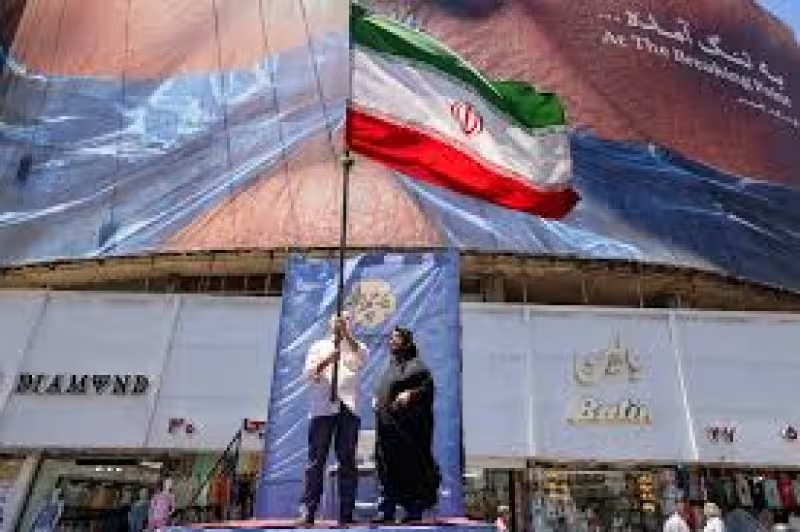
Iran said on Thursday it had targeted an American military base in retaliation for U.S. strikes in Iran the day before, a claim that landed on President Trump as he and administration officials continued to say an agreement is close.
The exchange is the second between the two countries in three days, and U.S. officials reported that four Iranian drones were knocked down on Wednesday after they posed a threat to American forces and to commercial shipping through the Strait of Hormuz. The flurry of activity pushed Brent crude higher by more than 2 percent to about $95 a barrel for August delivery and sent West Texas Intermediate up more than 2 percent to $91 a barrel for July delivery on Thursday.
Markets outside oil also felt the pressure. Futures on the S&P 500 pointed to a modest decline when U.S. trading resumed on Thursday. In Asia, stocks in Japan and South Korea fell about half a percent after earlier recoveries, and Hong Kong shares were down more than 1 percent.
The move in crude prices came even as pump prices ticked lower: the national average for regular gasoline fell 3 cents on Thursday to $4.43 a gallon, and the average price of diesel slipped slightly to $5.55. Those small declines mask a larger picture — both gasoline and diesel remain nearly 50 percent higher since the war began.


Analysts and traders say the immediate risk from the Wednesday drone episode was contained by the knockdowns, but the incident underlined how quickly local actions can ripple through global energy and financial markets. The Strait of Hormuz, a critical transit route for oil and gas tankers, remained the central concern for traders watching supply routes.
The latest confrontation renewed doubts about the prospects for the peace deal the administration has been touting. President Trump and administration officials have continued to say that an agreement is close, but two exchanges of hostilities in three days suggest the environment for a negotiated settlement is fragile.
Tension is evident in the mixed market signals: crude futures jumped more than 2 percent as traders priced in supply risk, while U.S. gasoline and diesel averages moved only marginally. The U.S. official’s account that four drones were knocked down on Wednesday both reassures — U.S. defenses were effective — and alarms, because the drones had to be engaged at all. That contradiction is pressing on investors who had been encouraged by recent diplomatic language.
The confrontation also compounded other sources of market pressure beyond oil. Cryptocurrency and broader risk assets have shown sensitivity to geopolitical shocks (see coverage: Bitcoin slips near $75,500 as ETFs, Strategy pause and geopolitics pressure markets — and Btc Price slips to $75,500 as $1.3B BlackRock trade and outflows pressure market — Political developments on other fronts have added to the noise; for example, Michelle Wu withdrew from Harvard Law Class Day after union pressure ( a reminder that domestic political pressures can add to global market unease.
The immediate facts are narrow: Iran says it struck back, U.S. officials say four drones were downed, and oil jumped toward the mid-$90s a barrel. What matters next is whether those facts presage a wider campaign of reprisals or remain isolated incidents. Can the Trump administration still secure the near-term deal it insists is close while exchanges of fire continue?