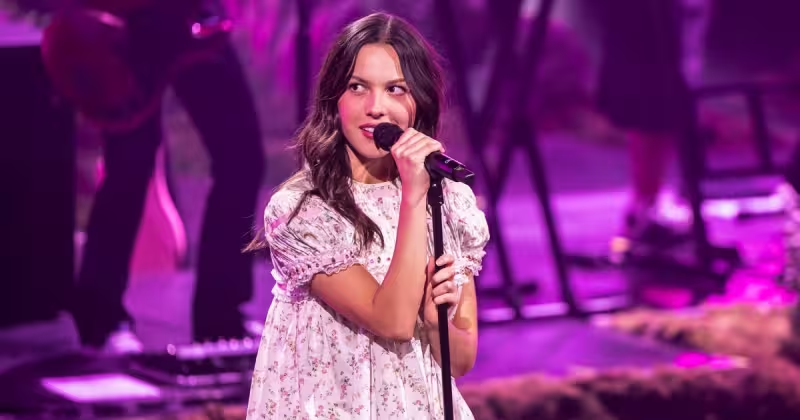
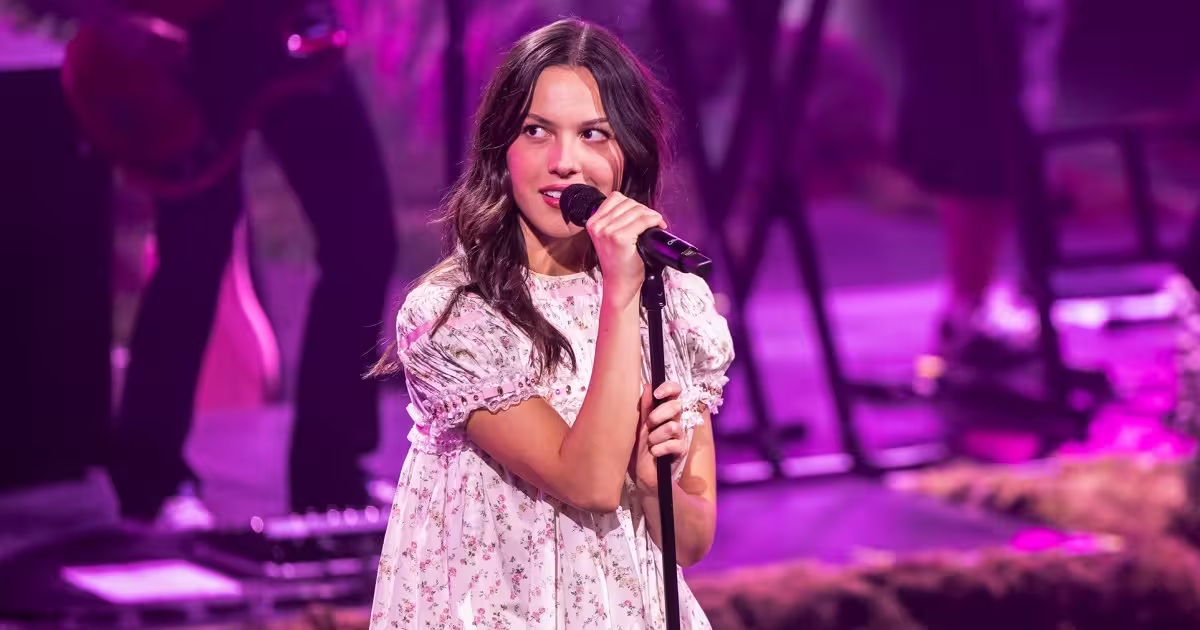
Olivia Rodrigo responded this week to a backlash over a short puffy floral dress she wore on stage in Barcelona, saying the criticism “has been making me so upset.”
Rodrigo, 23, wore the babydoll-style dress while performing her single Drop Dead at Barcelona’s Teatre Grec on 8 May for Spotify’s Billions Club Live series; she also appears in a similar dress on the cover of her forthcoming third album, You Seem Pretty Sad for a Girl So in Love, due 12 June.
The bluntness of her reaction is the story: on a New York Times Popcast clip published Wednesday, Rodrigo pushed back against critics who called the dress childlike and inappropriate, saying that response stung because it came when she was fully covered. “That’s been making me so upset,” she said. “I didn’t think I looked sexy in that at all.”
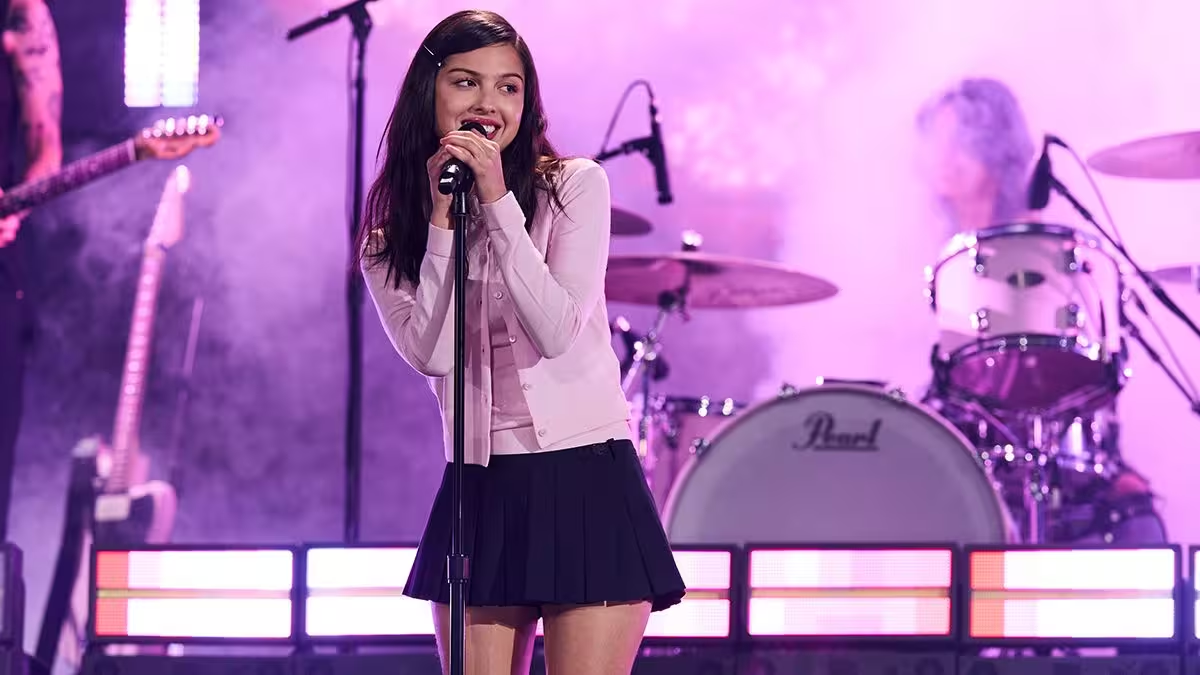
Rodrigo used specific examples to show the double standard. “What’s really disturbing is I feel like I have worn outfits that are revealing on stage. Like, I’ve been on stage in like a sparkly bra, little shorts, which is my right. That’s fun. I felt cool and comfortable in that. And that wasn’t ‘inappropriate’ – but me fully covered up in a dress that people deem to be childlike was inappropriate,” she told the Popcast.
Her remarks quickly moved beyond wardrobe. Rodrigo accused public reaction of reflecting a larger cultural problem: “I think it shows how we really normalize pedophilia in our culture,” she said, and pushed back on the idea that young women must police their clothing for others’ behaviour. “Don’t wear that because then a man is going to sexualize your body and it’s your fault,” she said, and added, “you shouldn’t be responsible for some guy sexualizing you in a way that was never your intention.”
Rodrigo framed her choice of dress as a deliberate nod to a lineage of female performers. She called the babydoll an “iconic outfit for 90s female punk stars” and said, “This is so cool. I feel like I look like Kathleen Hanna or Courtney Love.” Courtney Love responded publicly after the backlash by posting Instagram stories in support of Rodrigo.
The timing matters: Rodrigo is promoting an album of nine tracks that will arrive on 12 June, and the Barcelona performance was part of a high-visibility Spotify event. The controversy now accompanies that rollout, turning a sartorial choice into a conversation she appears determined to shape. Rodrigo said she was speaking up because she wants to protect younger women: “I’m just very protective of younger women and girls, and I just don’t ever want them to be fed that rhetoric,” she said on the Popcast.
The tension in the story is clear and personal. Rodrigo acknowledged she has worn revealing stage outfits and enjoyed them, and she insisted those bodies of work were her choice. Yet she said similar or greater exposure did not trigger the same critique as a covered dress labeled childlike. That contradiction—what is judged acceptable versus what is condemned—was the core of her complaint and the flashpoint of the public reaction.
Her comments close the loop on why the dress mattered: she did not wear it to be sexualized and was upset that others read it that way; she invoked cultural patterns she believes allow men’s sexualization to be treated as inevitable and young women’s clothing choices to be blamed. Rodrigo’s words are both a defense of a single outfit and a broader plea: young women and girls should not be taught that their clothing makes them responsible for how men sexualize them.
For now, the immediate consequence is reputational and rhetorical. The controversy has drawn high-profile support and sharpened the conversation around Rodrigo’s album campaign in the weeks before its June 12 release. If nothing else, her response makes clear she will use the coming promotional run to press a point she repeatedly returned to on the Popcast: she will not let a dress become an excuse to shift blame away from those who sexualize.