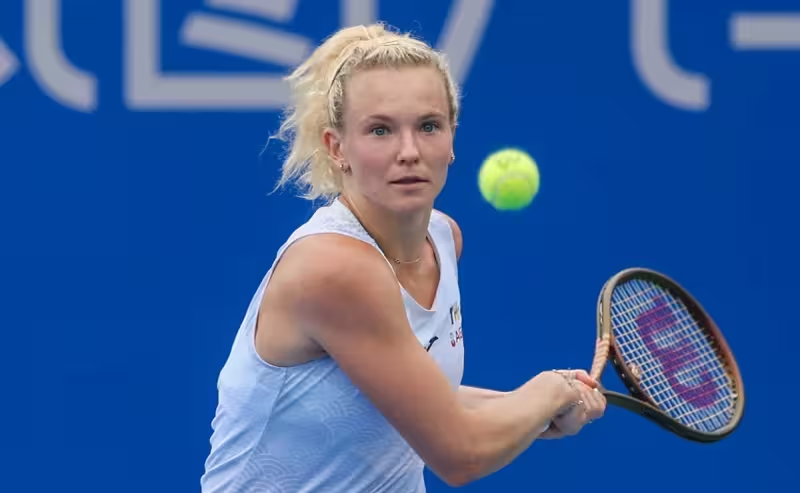
Katerina Siniakova reclaimed the WTA world No. 1 doubles ranking after winning the Madrid Open with Taylor Townsend, a result that returned the 30-year-old Czech to the top of the doubles list on the WTA Tour.
The numbers underline why this matters: Siniakova has won more than 30 WTA doubles titles and has completed the career Golden Slam, achievements that mark her as one of the most accomplished doubles specialists in modern tennis. As of May 2026 she is the world No. 1 doubles player and also sits No. 36 in singles, a rare split that shows elite success in partnership play alongside continued work in solo competition.
Her rise began long before the Madrid victory. Born May 10, 1996, in Hradec Kralove in the Czech Republic, Siniakova turned professional in 2012 and has combined singles and doubles throughout her season ever since. At 5-foot-9 (1.74 meters) and now 30 years old, she brings a mix of power and experience that has translated into consistent results on the doubles circuit and steady progress in singles.
The backdrop matters because Siniakova’s career is built on both early promise and sustained specialization. She started playing tennis at age five; her father, Dmitri Siniakov, is originally from Russia and previously worked as a boxer, and her mother, Hana Siniakova, works as an accountant. That profile—early start, a sporting household and steady family support—helps explain how she has managed a long professional career that began in 2012 and now includes the rare feat of a career Golden Slam.
The tension in Siniakova’s story comes from the split between doubles dominance and a more modest singles ranking. Holding the world No. 1 doubles spot while being No. 36 in singles presents practical scheduling and strategic choices: match load, recovery, and where to focus energy during the biggest weeks of the season. After the Madrid Open victory with Taylor Townsend, Siniakova reclaimed the No. 1 spot, but she remains an active singles competitor, a dual role that has become central to how opponents prepare for her and how she shapes a season.
That duality is also the clearest explanation for why the Madrid result is more than a trophy: it was the tipping point that reset the doubles rankings and reaffirmed Siniakova’s place at the top of the discipline. She has held the world No. 1 doubles ranking before, and the Madrid win restored a status earned across more than 30 titles and a career that includes every major. Reclaiming No. 1 now cements her as the baseline reference on tour for modern doubles excellence.
What happens next is a test of durability and choice. Siniakova’s calendar and how she balances high-level doubles with singles will determine whether she remains the dominant doubles player through the rest of the season. For now, the facts are clear: at 30, from Hradec Kralove, Katerina Siniakova stands atop the doubles game on the WTA Tour, carrying a career Golden Slam and a trophy case of more than 30 titles that make her one of the sport’s defining partners of this era.