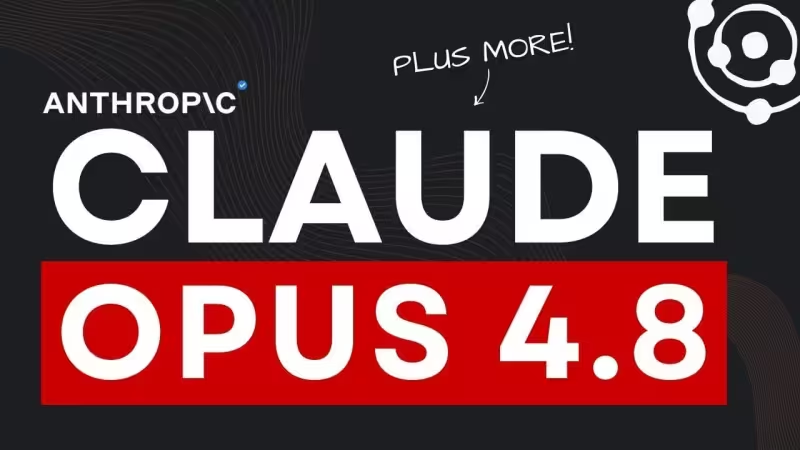
Leaked documents released this week show Anthropic is preparing three upcoming models — Opus 4.8, Sonnet 4.8 and Mythos 1 — and that the company has just secured a major hardware infusion when Elon Musk leased a massive cluster, Colossus 1, to the firm a few weeks ago.
The leaks describe Opus 4.8 as building on its predecessor with improved efficiency and scalability, Sonnet 4.8 as introducing substantial upgrades in vision processing and coding functionality, and Mythos 1 as aimed at enterprise-level challenges with advanced reasoning capabilities. The supplementary material attached to the leaks says Colossus 1 is a cluster with over 220,000 NVIDIA GPUs and that Anthropic’s model lineup includes Claude, Claude Code and Mythos alongside multi-cloud compute from AWS, Google and SpaceX.
Those figures matter because compute is the bottleneck in today’s model arms race. Anthropic is described in the primary reporting as operating with limited computational resources and facing stiff competition from OpenAI and Google — competitors that are themselves scaling rapidly. The leaks land as Google has confirmed the launch of Gemini 3.5 Pro in June 2026 and as industry analysts predict 4–6 significant AI models will debut globally in the near term.
The timeline underlines the mismatch between rhetoric and resources. In February this year Elon Musk publicly called Anthropic "Misanthropic" and "evil" on X. Three months later he spent a week in in-depth conversations with Anthropic's core team and returned to X with a different tone: "No one has triggered my 'evil detector'. Claude is probably good." A few weeks after that change of mind, the supplemental report says, Musk leased Colossus 1 to Anthropic, creating a sudden, tangible increase in raw compute availability.
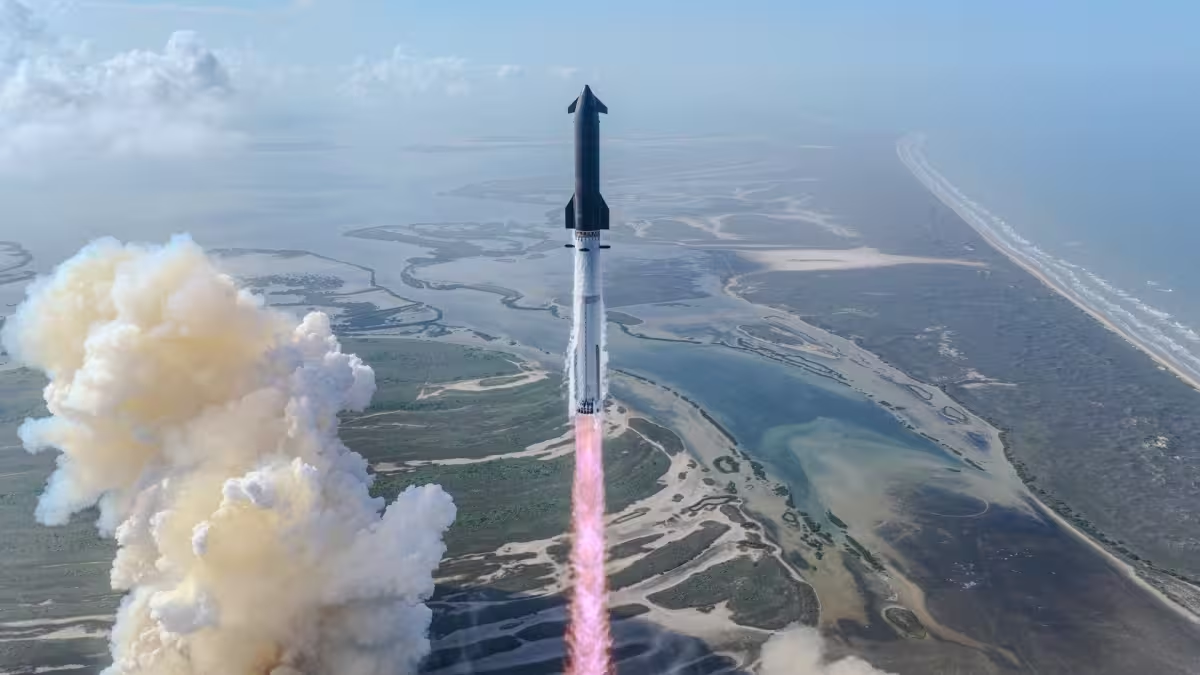
That shift produces immediate tension. Anthropic’s engineering notes in the leaks promise efficiency and scalability improvements in Opus 4.8, but efficiency does not substitute for raw GPU capacity when models scale. The company’s combination of its own model development, multi-cloud agreements with AWS and Google, a partnership with SpaceX to secure long-term compute, and now a short-term lease of Colossus 1 creates overlapping sources of capacity — which could speed development but also complicate operations, costing and deployment choices.
Opponents in the race are not standing still: the supplementary material frames Anthropic and OpenAI as rivals in an artificial superintelligence race, and OpenAI is reported to have the Stargate project, a five-year, $300 billion cloud-computing contract with Oracle and planned capacity exceeding 10GW. That scale comparison is stark: Colossus 1’s more than 220,000 NVIDIA GPUs is an enormous pool for a single cluster, but the industry’s biggest bets are now measured in multi-year, multi-cloud, multi-exabyte commitments.
The leaks also expose strategic trade-offs. Anthropic’s touted improvements in efficiency for Opus 4.8 aim to reduce dependence on brute-force scaling; yet the same documents signal a bet on larger, more capable infrastructure for Mythos 1’s enterprise reasoning. Those two paths — squeezing more from less or buying more hardware — can reinforce one another, but they can also pull budgets and engineering focus in different directions at a moment when rivals are launching major models.
For readers tracking when this will matter most: the next weeks will tell whether Anthropic turns the leaked plans and the Colossus 1 lease into visible product moves fast enough to be noticed alongside the market’s other major rollouts. The single immediate question is not whether Opus 4.8 exists — the leak says it does — but whether Anthropic can translate access to over 220,000 GPUs and multi-cloud partnerships into timely, competitive launches that alter the balance with OpenAI and Google.
Elon Musk’s arc from public critic to infrastructure provider is the human throughline here: his week-long conversations and his line, "No one has triggered my 'evil detector'. Claude is probably good," ended with a lease that materially changes Anthropic’s compute picture. Whether those moves deliver better models or simply more capacity will decide how consequential Opus 4.8 and its siblings become.