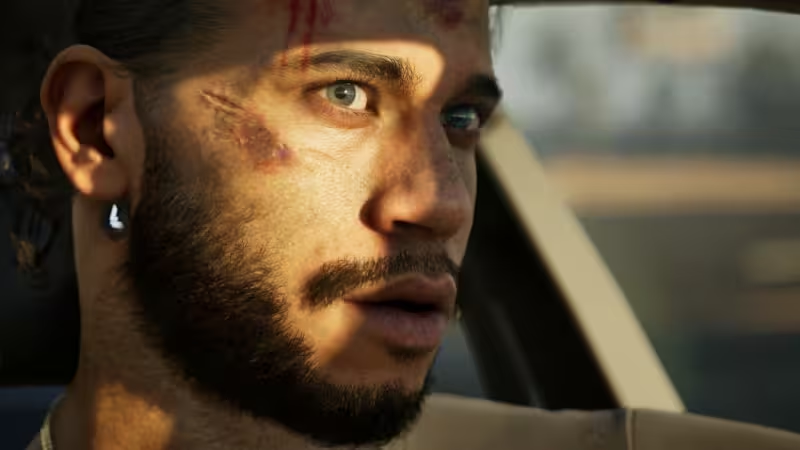
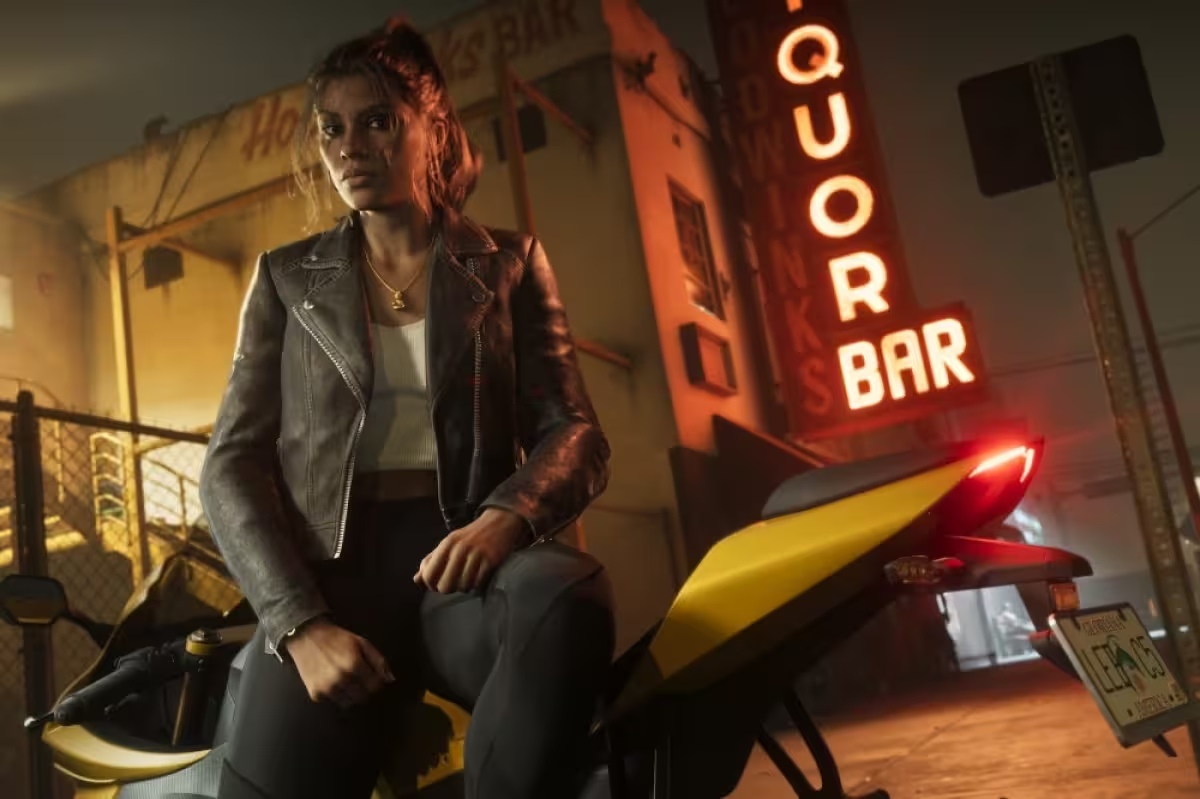
Strauss Zelnick, chief executive of Take-Two Interactive, told the TD Cowen 54th Annual Technology, Media & Telecom Conference this week that creating the next global blockbuster like Grand Theft Auto has become harder even as his company prepares to release GTA 6 in November.
"Making hits seems to get harder and harder and harder as entertainment industries mature," Zelnick said, and he laid out the blunt challenge: "The folks at Rockstar seem to be able to make these massive hits, and lots of other people have tried. Lots and lots, including former Rockstar employees. And so far, they haven't been able to do it." He added immediately: "Doesn't mean they can't in the future, by the way."
The stakes are plain in numbers and timing. GTA 6 arrives this November after numerous delays, a launch coming 13 years after GTA 5. Meanwhile, Insider Gaming reports that GTA 5 continues to sell about 5 million games per quarter and that GTA Online keeps receiving quality-of-life updates — a reminder that the franchise still drives significant revenue even as fans await the sequel.
Zelnick did not couch the company’s posture in bravado. "We're always running scared," he said. He argued that technological advances alone will not produce the next breakthrough: "It won't be technology that changes the game. What'll change is that some extraordinarily creative individual or individuals will show up and do something astonishing." His point: take-two interactive is hunting for — and trying to corral — those rare creators.
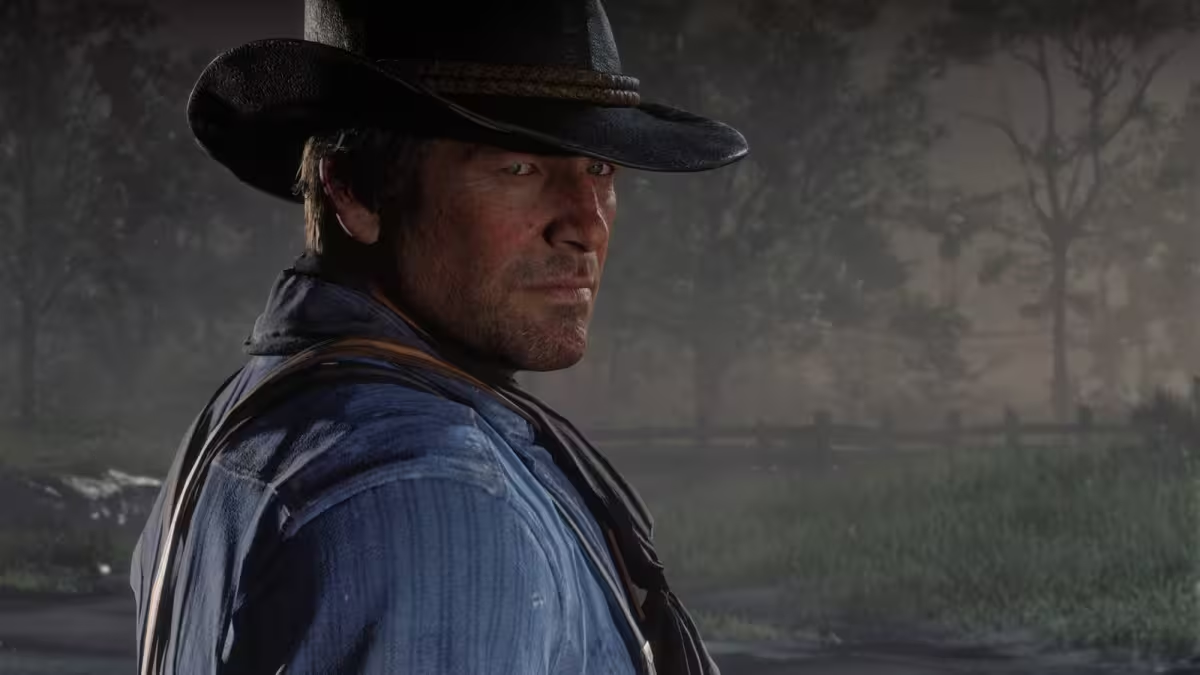
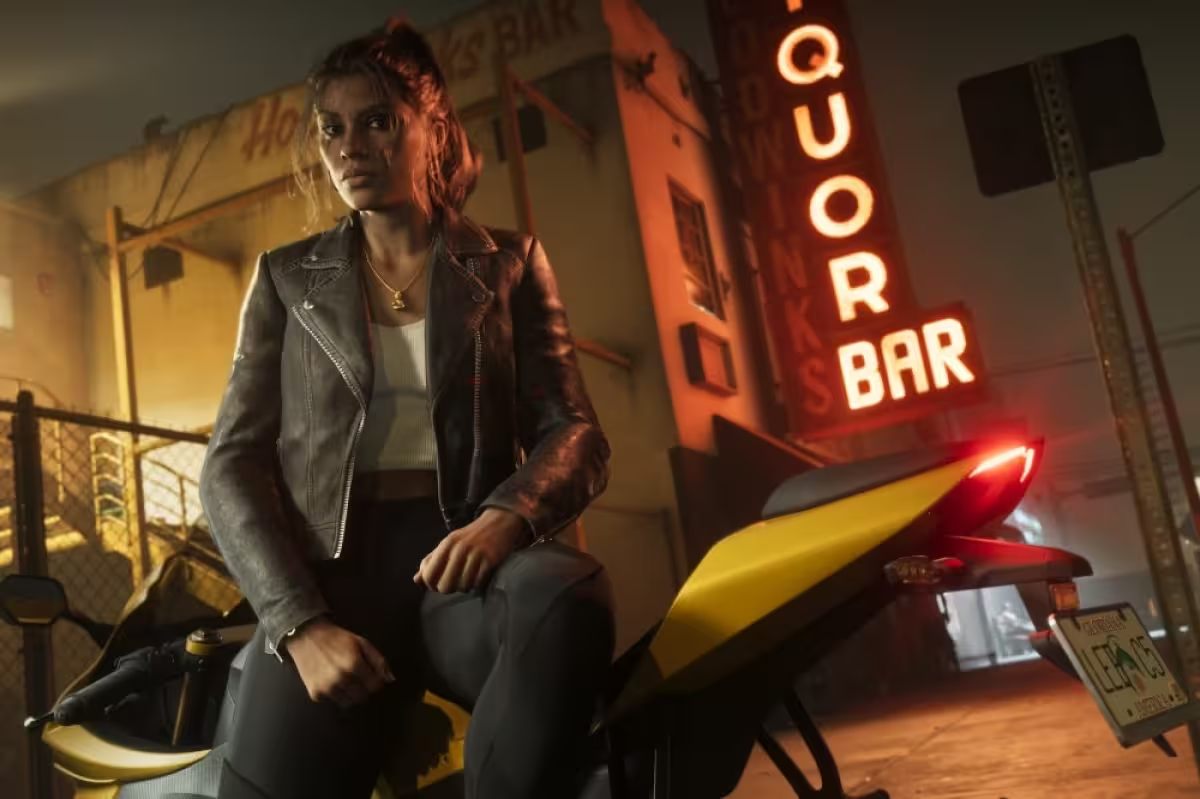
To that end, Zelnick described Take-Two’s strategy as deliberate and not schedule-driven. "Our plan might not be to have a specific cadence around our properties because we're not a cadence-driven company, we never have been," he said, stressing that the company has resisted annualizing major franchises outside its sports labels. "I'm not going to name the properties, but we've seen that some very competitive properties have had good annual releases and bad annual releases because it's just so hard to do." He pointed to the consequences of forcing rhythm on creative work: uneven results.
Context helps explain the caution. IGN identified MindsEye as the first game from Build a Rocket Boy, the studio set up by former Rockstar veteran Leslie Benzies. IGN reported that MindsEye ultimately arrived as a buggy and poorly received flop and that it led to hundreds of layoffs. Zelnick used that kind of failure as an example of why past Rockstar talent hasn’t simply reproduced Rockstar’s success elsewhere: track records don’t guarantee repeatability when the bar is as high as Rockstar set.
That reality shapes how Take-Two handles release timing. Zelnick reminded listeners of the company’s history, saying: "GTA was not the number one property [when I joined in 2007]. It was a top five property, but it was not the number one property." He said the long pauses between GTA installments are intentional. "What has driven the gap is the amount of time it takes to do something that is as good as it can possibly be for that intellectual property," he said, adding that creating consumer anticipation can be a positive: "Creating some anticipation on the part of the consumer is a good thing."
That stance matters now because industry attention is fixed on whether GTA 6’s repeatedly delayed launch will hold. IGN recently reported that Zelnick assured it the game's release date is expected to stick. If the date holds, it will test Zelnick’s thesis: that patience and the right creative leadership, not faster cycles or fresh tech, are the determinants of franchise-defining hits.
The tension is sharp. Many studios and ex-Rockstar figures have tried to replicate Rockstar’s runaway success and failed; Zelnick says that does not preclude future breakthroughs, but he also warns against treating creative output as a factory line. His final message at the conference was both strategy and challenge for take-two interactive: find those "extraordinarily creative" people, bring them into the Take-Two system, and give them the time to do something astonishing — because, in his words, the industry is getting harder to surprise.