Yuliia Starodubtseva, world number 55, stunned Elena Rybakina on Tuesday, beating the former Grand Slam finalist in a deciding-set tie-break to knock her out of the French Open.
It was the kind of result that makes the draw feel porous: Starodubtseva, who said afterward, "I'm super happy, Elena is one of the top players, she's had an incredible year and I'm super proud of myself that I was able to do this today. It was a hard third set but I got it done," had to fend off fightback in a tense finale to reach the next round.
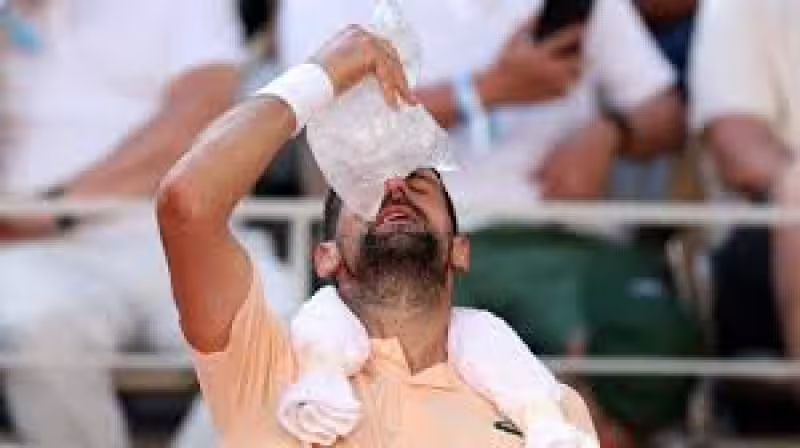
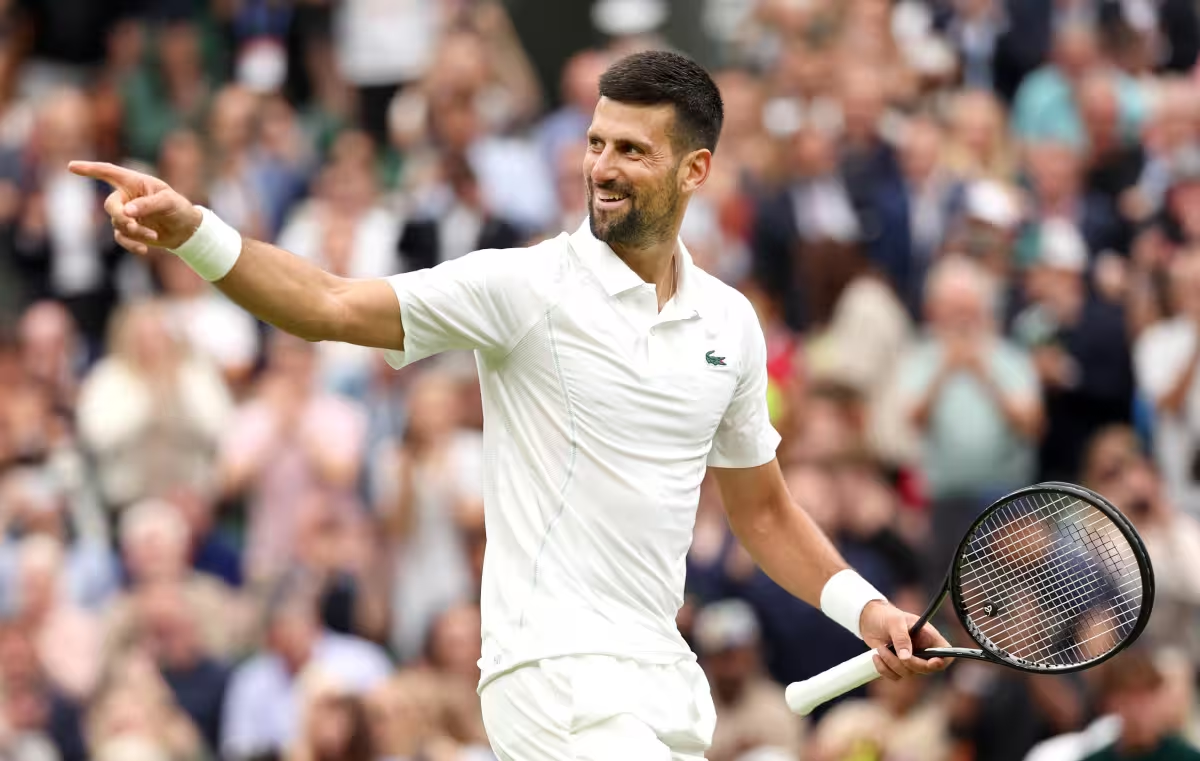
On a day when Novak Djokovic moved steadily through his match, the Serb beat Frenchman Valentin Royer in four sets to reach the third round, the scoreboard offering a counterpoint to the upsets elsewhere on court.
The women's draw produced more headlines: Elina Svitolina and Iga Swiatek both breezed through to the third round, while Great Britain's Francesca Jones, making her second-round debut at a Grand Slam, was beaten 6-0 7-6 (7-3) by 27th seed Marie Bouzkova. Jones had never reached a second round at a major before this tournament, and her exit underlined the fine margins between breakthrough and elimination.
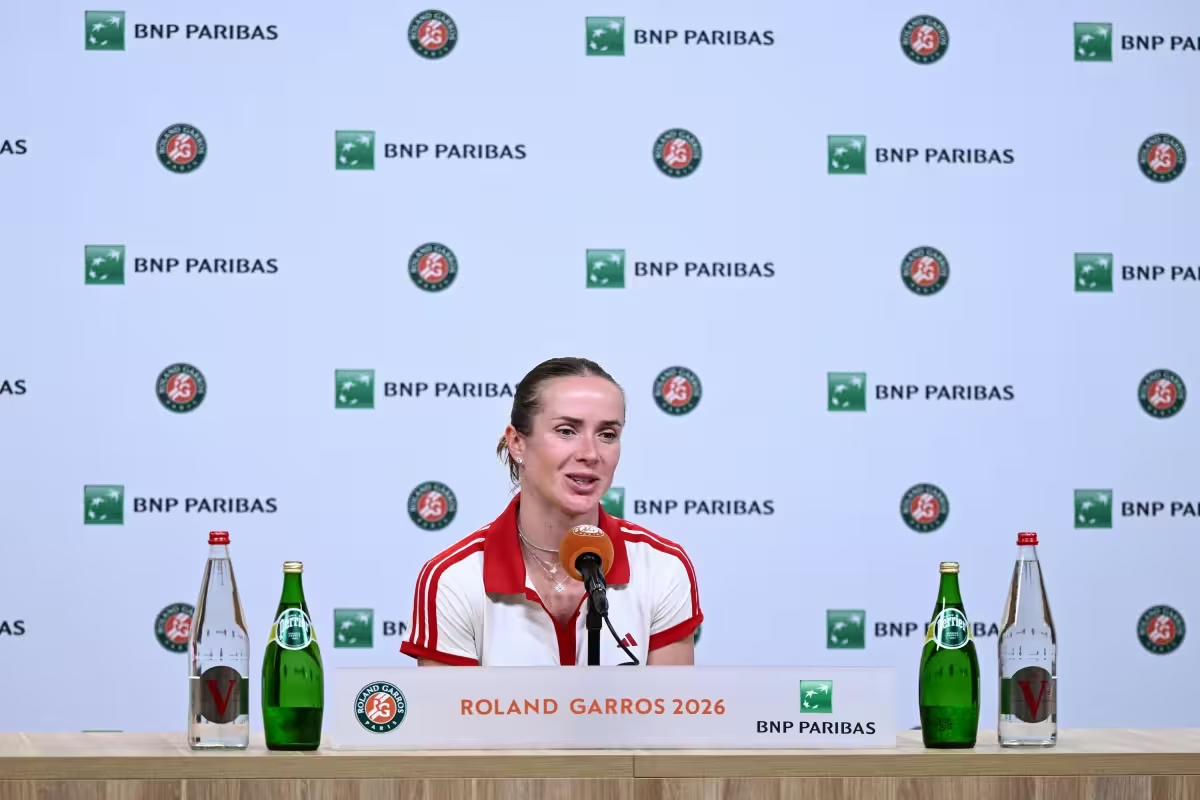
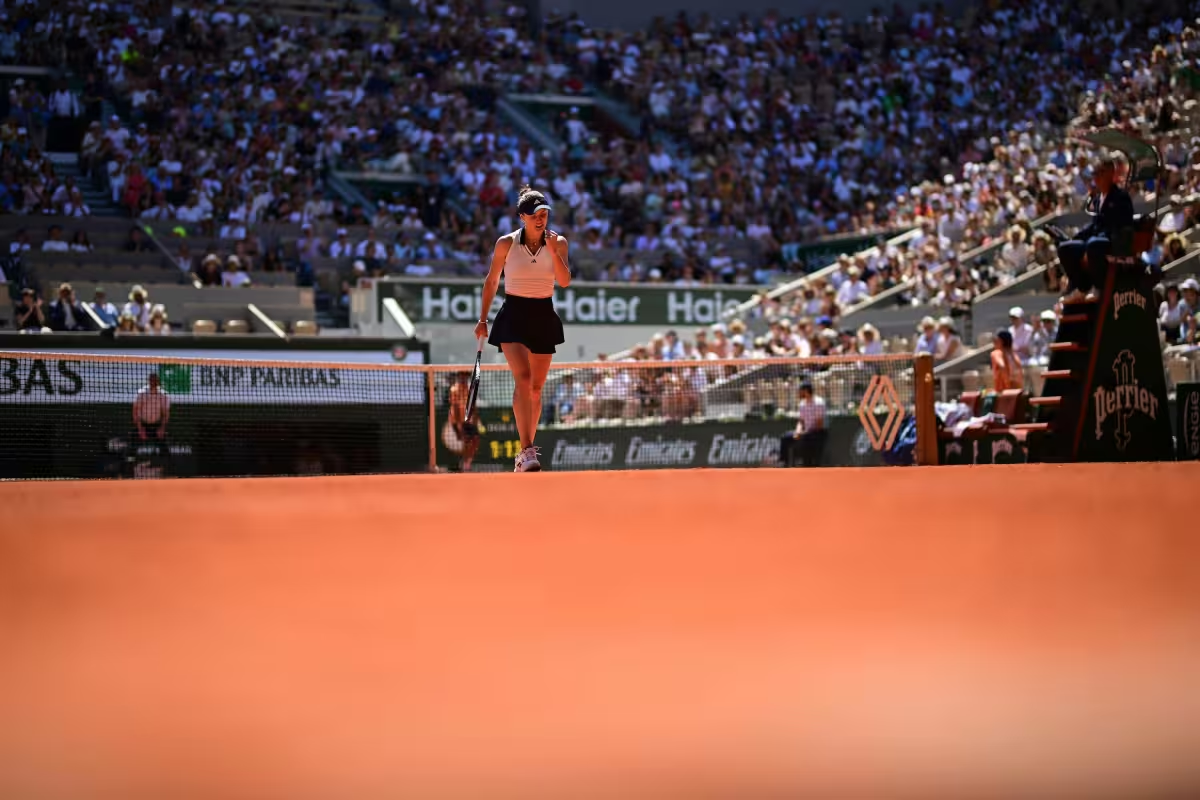
Starodubtseva, reflecting on how the match played out, added: "I feel someone like Elena, I expected it from her. You can't be thinking that it's going to be easy today. Even at 3-0 [ahead in the third set] I had a feeling that it might not be that easy which it appeared not to be. Tough match but happy to be the winner today." She also praised the crowd: "I think clay is not the worst surface for me and the crowd was very, very nice to me today - I really felt the support today and I heard my name quite a few times and I really appreciated it."
The upset has a rippling effect through the section of the draw that many had pencilled as straightforward: one unexpected victory shifts projected opponents and gives lower-ranked players tangible belief that the path forward is open.
That instability will be tested further when Jannik Sinner resumes his bid for a career Grand Slam the next day against Juan Manuel Cerundolo, who at an earlier point in the tournament defeated Great Britain's Jacob Fearnley in the first round. The matchup — Sinner's vulnerabilities on clay versus Cerundolo's confidence from his opening win — will be watched for whether it reinforces the day's shocks or restores the status quo.
More seeded players and big names were due back on court the following day, with Aryna Sabalenka, Naomi Osaka, Amanda Anisimova and Coco Gauff all scheduled to play their second-round matches. For Britain, Katie Boulter remained the sole singles representative still in play and was due to face 28th seed Anastasia Potapova the next day, a draw that will determine whether any home hopes survive into the later stages.
The tension across the grounds is simple: Djokovic's steady progress sits beside genuine volatility in the women's field, where a player like Starodubtseva can rewrite expectations in a single afternoon and force opponents to recalibrate. The most consequential question now is whether her win is a momentary upset or the start of a run that will carry her deep into the tournament.