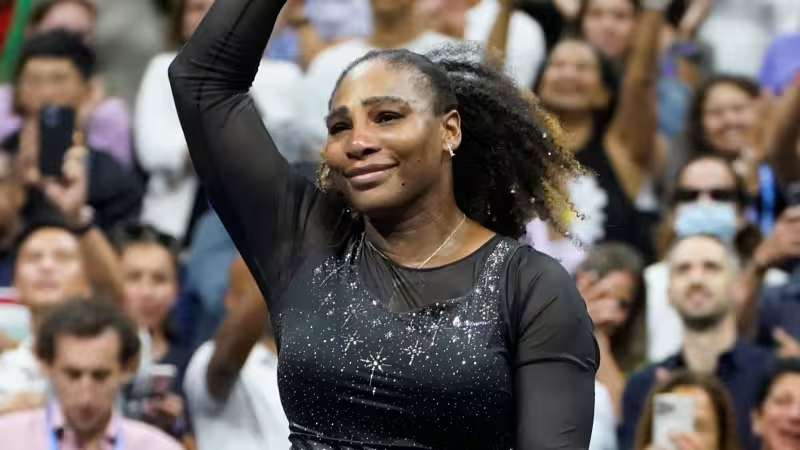
Serena Williams is in discussions about a potential return to competitive tennis at Queen's Club next month, with the 44-year-old said to be considering playing doubles at the WTA 500 event that begins Monday, 8 June.
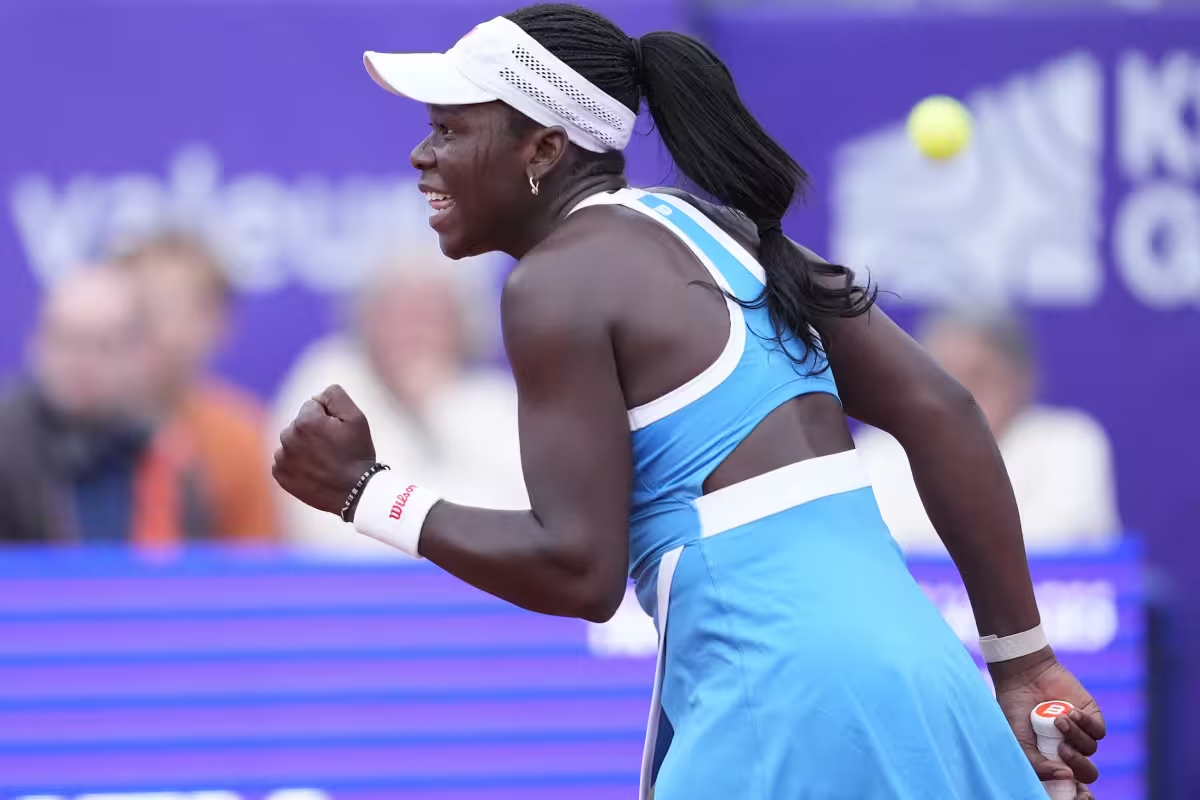
Nothing has yet been finalised, and Williams would require one of two doubles wildcards available at the grass-court tournament. A Served podcast claimed she would pair with 19-year-old Canadian Victoria Mboko, a report that Sport has not yet been able to confirm.
The numbers underline why the story landed: Williams has won 23 Grand Slam singles titles, 14 Grand Slam women’s doubles titles with her sister Venus and three Olympic golds in women’s doubles. She is a seven-times singles and seven-times doubles champion at Wimbledon, which begins three weeks after Queen’s.
That pedigree helps explain both the stir and the practicalities. Williams has been out of professional tennis since the 2022 US Open, where she lost to Ajla Tomljanovic in the third round and later said she was "evolving away" from the sport. She re-entered the anti-doping testing pool last year and, after completing the required six months, became free to return to competition on 22 February — a procedural step that would allow her to accept a wildcard if she chooses.
There is a clear contradiction at the heart of the buzz. Williams herself has pushed back on comeback speculation, posting, "I’m NOT coming back. This wildfire is crazy." Yet she has also spoken publicly about training, telling interviewers she had lost 31lb over eight months, had been "training five hours a day" and had been forced to look at extra weight as "an opponent." She has said she wanted to "try something different," language that leaves the door ajar even as she resists the comeback label.
Former world No. 1 Andy Roddick, among those analysing the rumours, framed the situation as both practical and personal. "Her best chance is on grass at Wimbledon," he said, and added, "If you enter doping protocols, you're looking to come back. Or at least you're looking at the option to come back." Roddick went further: "I think we're going to see her play singles," and he allowed that a doubles appearance could be partly motivated by family ties — "as her sister [Venus] is also not retired yet" — and a desire for one last run at the majors.
Logistics sharpen the stakes. Queen's Club's women’s draw is a WTA 500 event with only two doubles wildcards available; tournament organisers will have to decide whether to use one on a global star whose participation is unconfirmed. If Williams takes a wildcard and sees the court in competitive play, the option of pushing on to Wimbledon three weeks later becomes vivid — and for tournament planners, broadcasters and fans it would change everything about the build-up to the Grand Slam.
But the gap between protocol and practice is wide. Re-entering the testing pool requires daily whereabouts reporting and random tests; completing six months in the pool, which Williams did on 22 February, is necessary before competition but does not obligate a return. There is also the personal variable: Williams has repeatedly described a process of change since 2017, when she won her last Grand Slam singles title in Melbourne, and again after the 2022 US Open when she said she was "evolving away." Those statements give weight to her public refusal to be boxed into a comeback narrative.
The single unanswered question now is straightforward and consequential: will a short, high-profile doubles appearance at Queen’s be a dress rehearsal or a prelude — the pivot from which Serena Williams stages a true Wimbledon singles comeback?