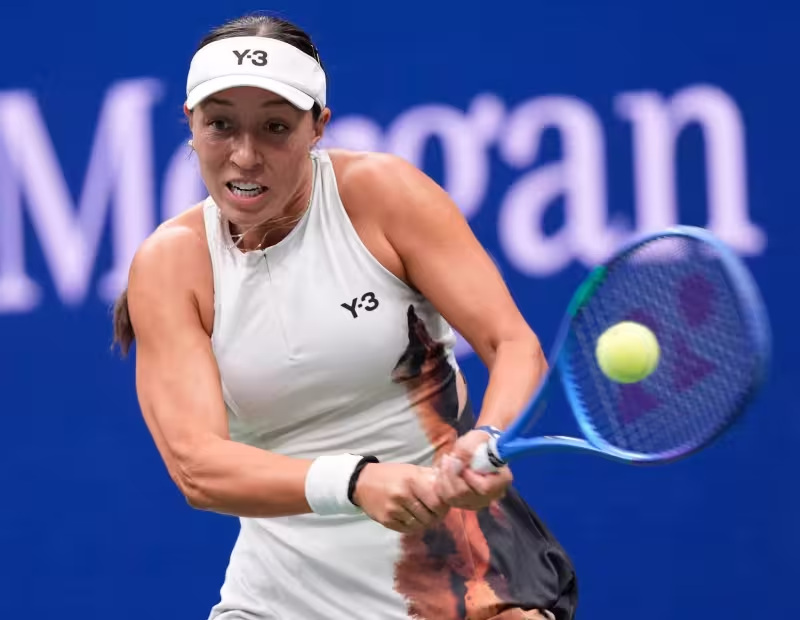
In the top half of the 2026 French Open draw, No. 40 Elisabetta Cocciaretto drew a qualifier in the opening round and now faces a clear second-round path against either No. 22 Anna Kalinskaya or long-shot 2025 semifinalist Lois Boisson.
The setup is simple on paper: Cocciaretto avoids a seeded opponent on day one and — if she advances — is scheduled to meet Kalinskaya, the higher-ranked name on that portion of the bracket. The second major of 2026 gets underway May 24, leaving little time for players to sharpen a plan for what could be a decisive early clash in Paris.
The draw hands out other stark contrasts. Victoria Mboko arrives as the No. 9 seed and opens against No. 65 Nikola Bartunkova. Mboko’s likely second-round opponent is No. 36 Katerina Siniakova, a matchup that on paper keeps the Canadian in form against established opponents before the tournament’s later rounds.
But the top half — and the tournament at large — contains brutal stretches. Mboko could be forced to run through No. 1 Aryna Sabalenka, No. 5 Jessica Pegula and reigning champion Coco Gauff in successive matches just to reach the final. That possibility turns an otherwise tidy opening into a marathon of top-ten tennis for anyone who emerges from that section.
There are more one-sided lanes. No. 2 seed Elena Rybakina appears to have a favorable path to get past the quarterfinals in Paris for the first time, according to the way seeds landed. And No. 6 Amanda Anisimova won’t face anyone ranked inside the top 100 until the third round — a rare and obvious scheduling advantage at a Grand Slam.
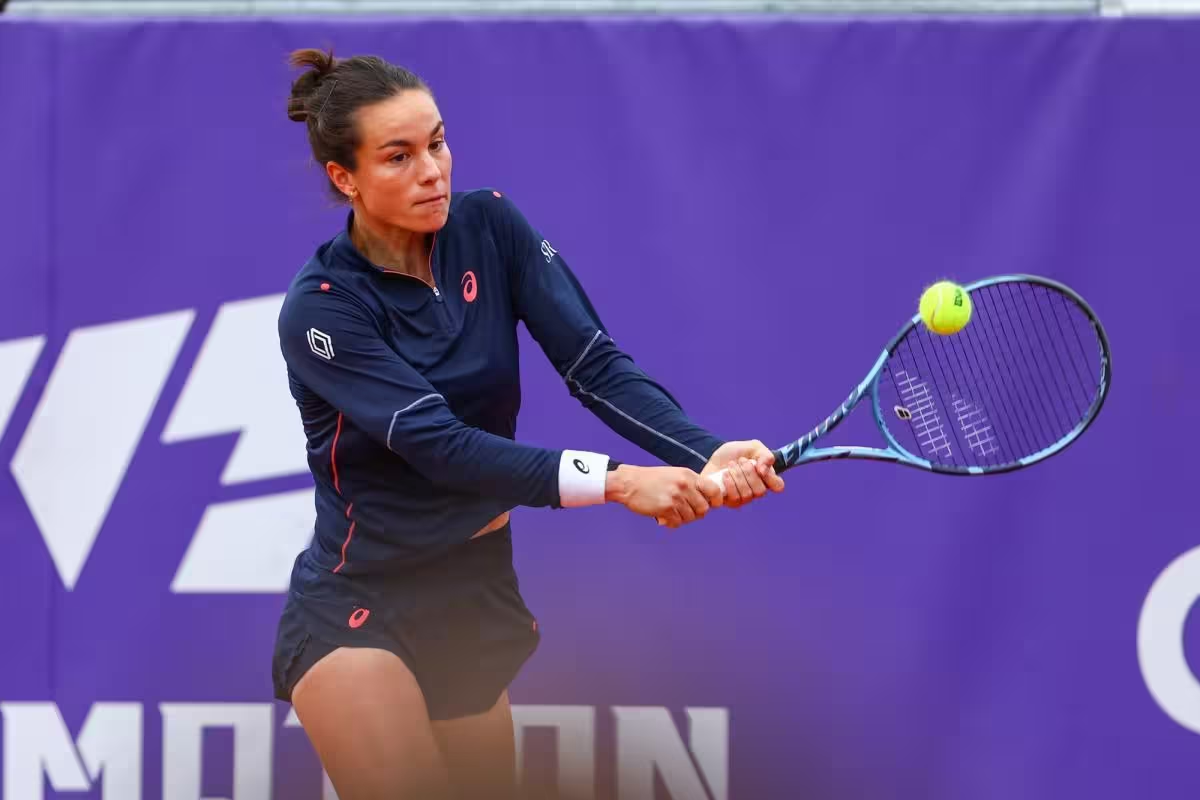
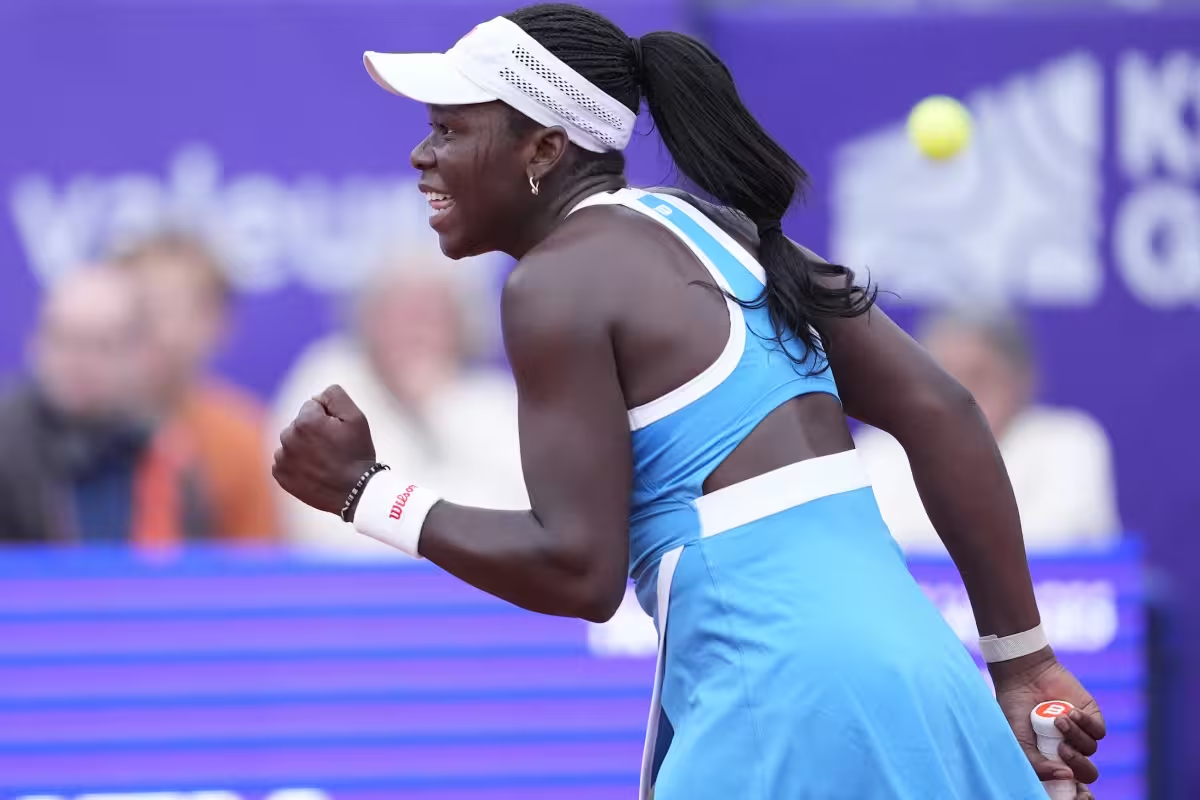
Not everyone was so lucky. Reporters and bettors immediately labeled Nikola Bartunkova and Simona Waltert as having the worst draws in the field. Bartunkova’s first-round clash with No. 9 Mboko is only the start; to win the tournament either she or Waltert could be required to play six opponents ranked in the top 20 and would not meet a single player outside the top 36 on that path.
The contrast across the draw is the story. Some seeds have routes that let them build momentum; others must sprint through a gauntlet of top-ranked rivals from round one. That bifurcation will shape match preparation, recovery plans and the betting markets in the opening week.
For Cocciaretto, the immediate question is binary and actionable: handle the qualifier, then prepare for Kalinskaya or Boisson. Kalinskaya’s place at No. 22 makes her the expected favorite in that potential meeting, but Boisson’s 2025 semifinal run flags her as a live upset threat despite the long-shot label. The draw hands Cocciaretto a winnable test, but not a guaranteed one.
The tension in Paris will be between schedules that reward consistency and stretches that punish a single off day. A player like Mboko could exert herself in a three-match sprint against Sabalenka, Pegula and Gauff, while Anisimova can use softer early opponents to build court time and conserve energy.
By the time the second week begins, the bracket will have answered only one set of questions: who survived. The larger question for this draw is straightforward and immediate — which paths harden into clear favorites, and which implode into attritional contests that hand momentum to survivors? For Cocciaretto, her first two matches will tell whether her section of the top half opens or locks shut.
When play starts May 24, the draw’s uneven geography will become action. Players with favorable early lines have a real opportunity to press deep; those with brutal roads will have to treat every match like a quarterfinal. That reality will decide whether names like Kalinskaya or Boisson end up headlines or victims of a stacked bracket.