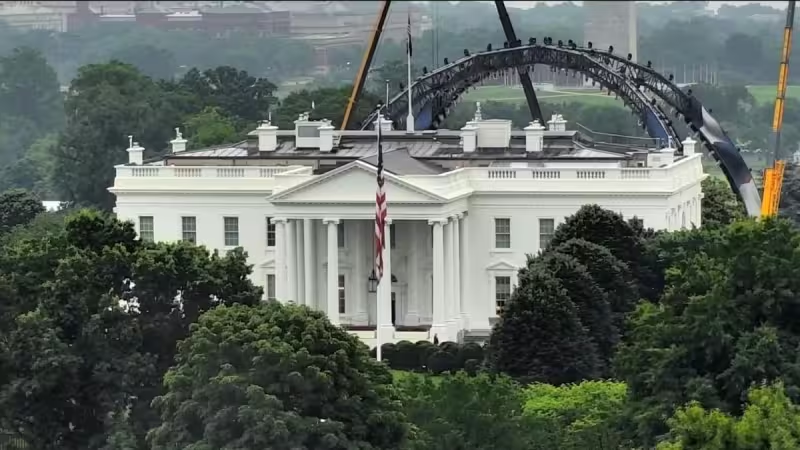
Construction crews have begun erecting a semi-circular temporary structure on the White House South Lawn for next month’s UFC Freedom 250 card, Dana White said, part of an event President Donald Trump will host on Sunday, June 14 — Flag Day and the president’s 80th birthday.
Crews are assembling the structure just behind the octagon and stands that will seat about 5,000 people, with overflow viewing planned on giant screens on The Ellipse. The shell was manufactured in Pennsylvania and shipped to Washington, D.C., and the card is set to start at 8 p.m.; tickets for the 8 p.m. event are not listed. The fight night will be available to watch on Paramount+.
White, the UFC’s chief executive and the orchestrator of the White House event, described a fast-moving build and said the company is now putting in the final details to make the night work. He said he must assemble a seven-fight card of fighters he trusts and complained that at least one marquee athlete has been unreliable, and he acknowledged the promotion could not secure a women’s bout despite trying. White also told reporters the UFC expects to lose about $30 million staging the event.
The White House card is the climax of a three-day schedule. The promotion will begin activities with a press conference at the Lincoln Memorial on Friday, June 12, followed by a fan fest and a Zac Brown Band concert on The Ellipse on Saturday, June 13, before the main card on Sunday night.
The idea for a White House card traces to 2024, when Trump reportedly leaned over to White at a Madison Square Garden fight 11 days after his re-election and suggested staging a card at the presidential residence. Trump called the event a gimmick but said it was a good one and argued the spectacle would be unique; White has publicly said he plans to use the White House as a backdrop for every fight he stages there.
That disagreement — White’s insistence on making the venue a recurring setting and the president’s own declaration that it is a one‑off privilege — is the central friction in the weeks before the show. It sits beside another tension: executives praise the global publicity the White House platform delivers, calling it a once‑in‑a‑generation marketing opportunity, even as the UFC is prepared to absorb a substantial financial loss to put the event on.
The logistics add practical strain. Organizers have to complete the temporary structure, finalize a seven‑fight card that, White says, will include no women’s bouts, and manage access for roughly 5,000 people while providing overflow viewing on The Ellipse — all without conventional ticket listings for the 8 p.m. program. President Trump is expected to be in attendance for the fight that night.
The likely outcome is spectacle more than profit: the White House event will go forward on June 14 as planned, but whether it becomes a repeatable platform depends on two facts stated plainly by the principals — White’s desire to keep the White House as a backdrop, and the president’s framing of the night as a singular privilege — and on whether owners of the brand are willing to underwrite heavy losses for the publicity that follows.