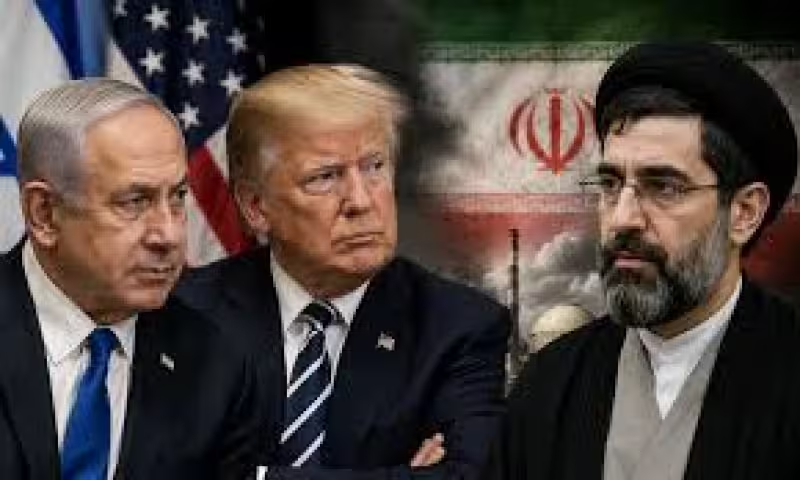
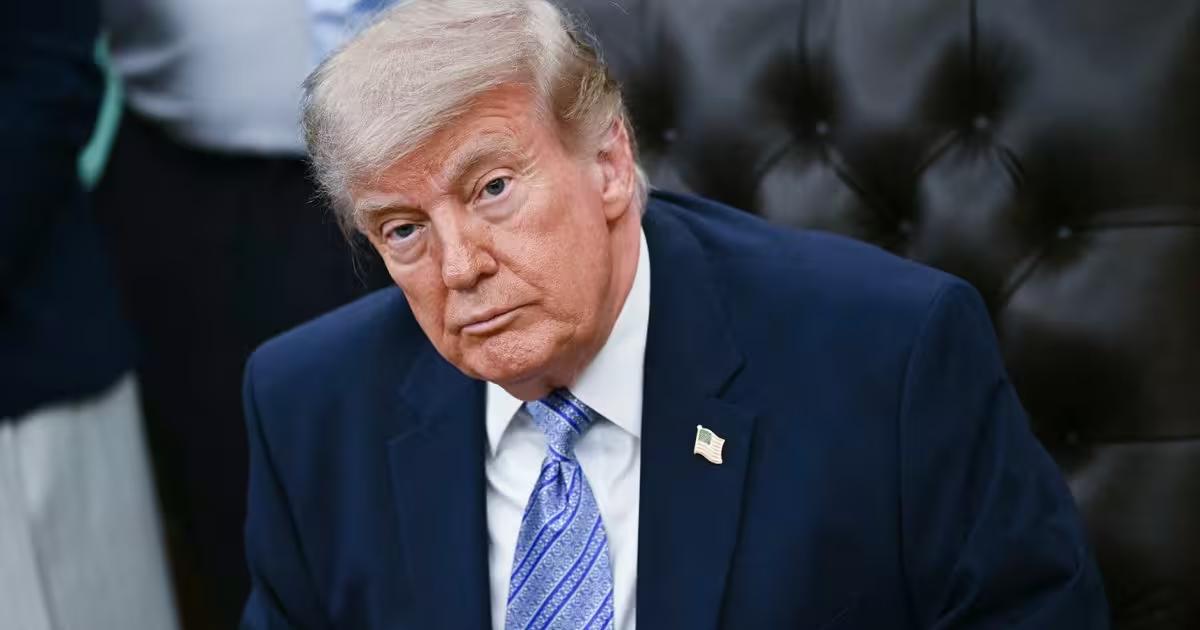
President Donald Trump said on Saturday that a deal between the United States and Iran had been "largely negotiated," describing a proposal that would end the fighting and reopen the Strait of Hormuz while making no public mention of Iran's nuclear program.
An Israeli official told reporters the United States was updating Israel on negotiations for a memorandum of understanding to open the Strait of Hormuz and that Trump spoke overnight with Israeli Prime Minister Benjamin Netanyahu. The same official said the president would not sign a final agreement without Iran dismantling its nuclear program and removing all enriched uranium from Iranian territory.
The administration's public description of the proposal — and its omissions — immediately provoked pushback. A senior Iranian source told that Tehran had not agreed to hand over its highly enriched uranium stockpile. And Senator Ted Cruz, speaking to reporters, said he was "deeply concerned about what we are hearing about an Iran 'deal' being pushed by some voices in the administration," warning that an outcome that left Tehran with new cash, enrichment capability and control over the Strait would be a "disastrous mistake."
Trump used both words to describe the status of talks, saying the arrangement was "largely negotiated" and later calling it "nearly negotiated," framing the announcement as a near-complete diplomatic package. Yet his public remarks did not mention the nuclear concessions that U.S. and Israeli officials say would be prerequisite to a final sign-off.
The weight of the moment is in the gaps. U.S. and Israeli discussions, officials said, included a memorandum of understanding aimed at reopening the Strait of Hormuz and left disputed points for further negotiation. Israeli officials have insisted the United States will require verifiable steps to dismantle Iran's nuclear program and remove all enriched uranium before any signature. Iran's apparent refusal, as reported by a senior Iranian source, to hand over highly enriched material directly contradicts that condition.
The conflicting signals create an immediate diplomatic squeeze. If the White House moves forward publicly without a clear, verifiable mechanism for removing Iran's enriched uranium, it risks fracturing ties with Israel and inflaming opponents in Congress. If it presses Tehran for dismantlement, negotiators face the hard work of converting an outline Mr. Trump described as "largely negotiated" into enforceable steps that both Tehran and Washington can accept.
That friction is what separates a press declaration from a treaty. White House rhetoric that emphasizes an end to hostilities and reopening of a strategic chokepoint sits uneasily alongside demands for dismantling nuclear infrastructure and removing fissile material — demands that Tehran's interlocutors say they have not accepted. The Israeli official's public caveat that Mr. Trump would not sign without dismantlement highlights the gap at the core of the dispute.
The clock is short. Officials said a final answer was expected from the United States by Sunday, leaving less than 48 hours for negotiators to reconcile promises with conditions. How the administration resolves whether to insist on verified removal of enriched uranium or to accept a narrower deal that focuses on reopening the waterway will determine whether the announcement becomes the prelude to a durable settlement or the spark of a new political fight at home and with Israel.
For now, Mr. Trump has presented a near-complete diplomatic package in public without laying out the nuclear terms that allied governments and senior lawmakers say are nonnegotiable. The coming day will show whether the White House turns its rough sketch into a negotiated agreement that meets those tests, or whether the disputes over enriched uranium and verification will scuttle a deal before it truly begins.