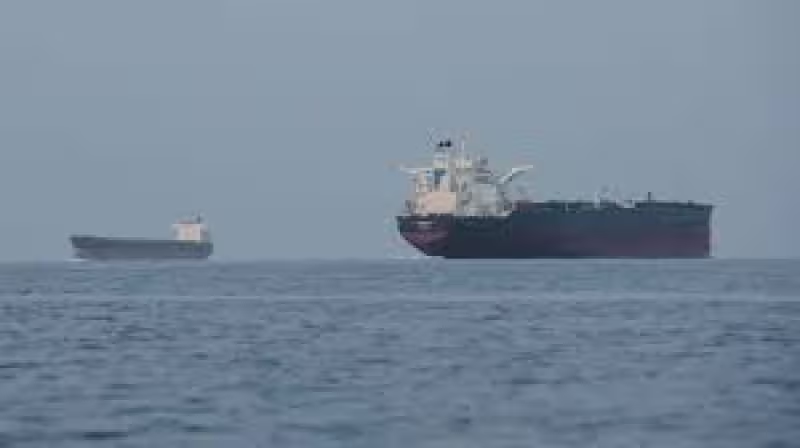
The U.S. military boarded an Iranian-flagged oil tanker in the Gulf of Oman on Wednesday, searching the M/T Celestial Sea and redirecting the vessel after suspecting it was trying to head to an Iranian port in violation of the blockade.
President Donald Trump, whose administration imposed the blockade in mid-April, had days earlier said he called off renewed military strikes on Iran and that he had planned “a very major attack” for Tuesday before putting it off, according to his own remarks.
U.S. Central Command said on social media that the Celestial Sea was searched and redirected. It was at least the fifth commercial vessel to be boarded since the Trump administration imposed the blockade on Iranian shipping several days into a ceasefire in mid-April.
The numbers the U.S. military has released underline the scope of the operation: 1,550 vessels from 87 countries are currently stranded in the Persian Gulf, officials say. The blockade has been enforced not just on Iran’s own ports but, the military says, on Iranian-linked ships far away from the Middle East.
The boarding in the Gulf of Oman and the continued rerouting of ships come against an uneasy backdrop in Washington. On Tuesday the Senate advanced legislation seeking to force Trump to withdraw from the Iran war by a 50-47 vote, signaling a sharp institutional friction with the administration’s military posture. Trump has told allies in the Gulf that he held off strikes at their request to wait “two to three days” because they feel they are close to a deal.


Contextually, the blockade was intended to pressure Tehran into reopening the Strait of Hormuz and accepting a deal to end the war. Nearly three months into the conflict, Iran maintains a chokehold on the Strait of Hormuz, a bottleneck crucial to global shipping that the blockade was designed to relieve by forcing Tehran to the negotiating table.
That framing, however, collides with contradictory signals on the ground. The administration’s rhetoric of restrained force — Trump’s public decision to call off strikes and his account of a postponed “very major attack” — sits uneasily beside an intensified naval campaign that has left more than a thousand commercial ships stranded and has seen U.S. forces board at least five commercial vessels since mid-April.
Those boardings are the clearest, most tangible lever the U.S. has used to extend pressure on Iran without launching large-scale strikes, but they also carry diplomatic and economic consequences. The ships held aloft by the blockade represent cargoes and companies from 87 countries; their immobilization tightens the squeeze on global trade routes and on nations that have asked Washington for breathing room to negotiate.
For now, the Celestial Sea’s redirection is likely to be read in Washington and the Gulf as a statement that the blockade will be actively enforced even as diplomatic urgencies and congressional pushback mount. The Senate’s narrow 50-47 advance of legislation to force a U.S. withdrawal highlights the political cost of maintaining the blockade and the military campaign it supports.
What happens next is clear in consequence if not in chronology: the United States appears prepared to keep policing maritime routes to prevent ships from reaching Iranian ports, even while the president delays strikes and lawmakers press to curtail military action. That posture will test whether diplomatic openings that allies say are near can survive the pressure of a blockade that has already stranded 1,550 vessels from 87 countries and pushed naval enforcement into waters far from the Middle East.