
As the war in Iran nears its fourth month, reports suggest President Donald Trump and his secretary of war are planning to rain more bombs on Iran, a move that would mark a sharp escalation of an already deadlocked conflict.
Those reports come as hard numbers and human need collide. Bombing has shown limited military effect — roughly 70% of Iran's missile stockpile reportedly remains intact — even as staples such as rice and wheat have doubled in price in Somalia since the conflict began. The World Food Programme warns that if the war continues, an additional 45 million people will face acute hunger. Domestically, the escalation carries political cost: Trump’s approval ratings have fallen to about 37%.
When the conflict began, warnings of another "forever war" seemed exaggerated. This iran war update finds instead a grinding stalemate whose reach goes far beyond the battlefield: markets, aid agencies and fragile states are already paying the price.
The background matters now. Trump earlier dismantled the diplomatic framework built under President Barack Obama — the 2015 nuclear pact with Tehran — and the administration is now presented with two stark options. One is to resume sustained bombing, a choice Israel has encouraged and that Benjamin Netanyahu has publicly urged. The other is to pursue a negotiated settlement; the most Iran appears willing to offer, according to reporting, is a deal broadly in line with the 2015 agreement.
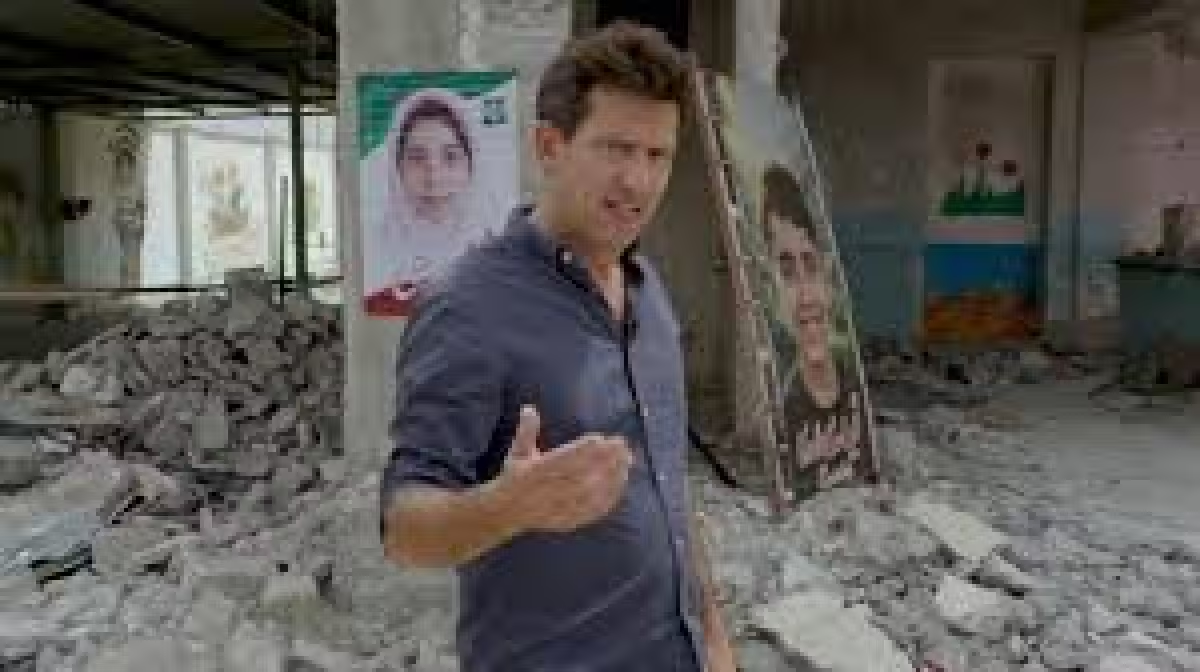
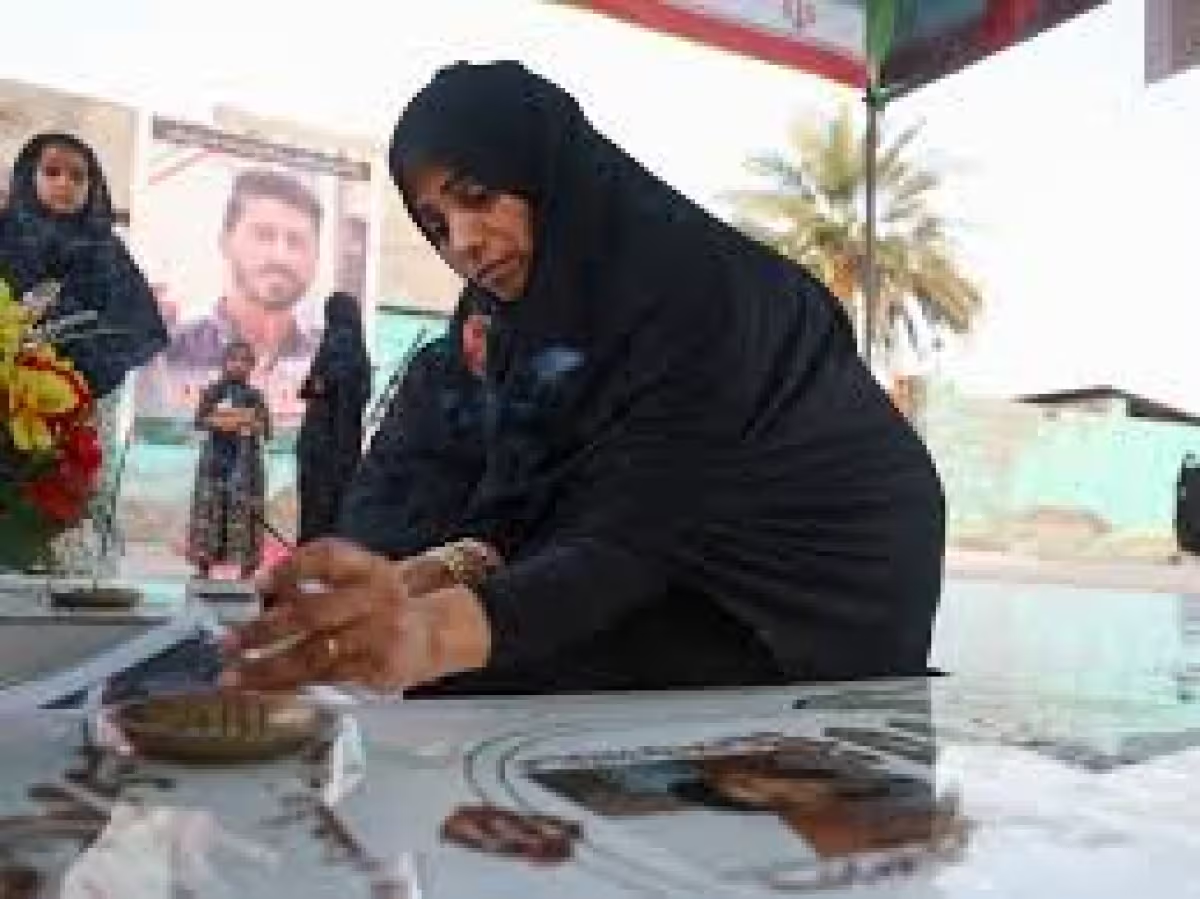
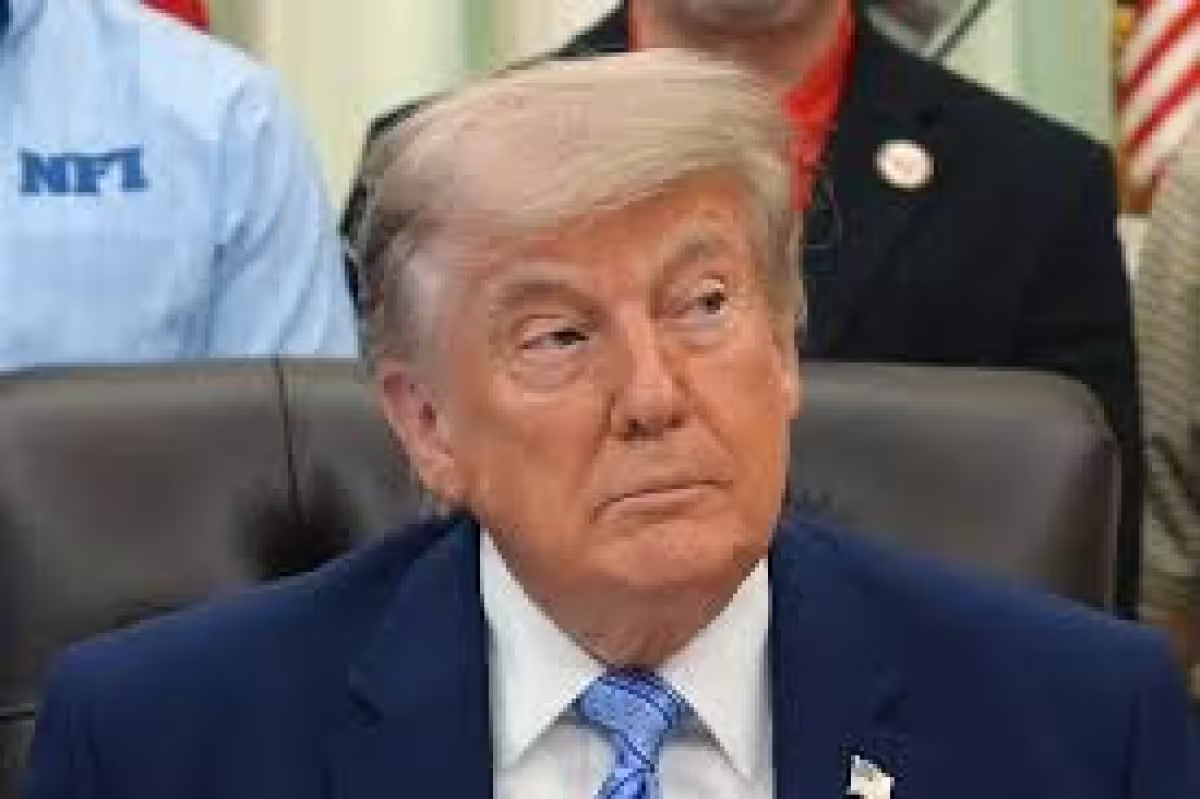
The tension is the choice itself and the trap it creates. Trump has boxed himself into a corner between the military route and a diplomatic compromise. Bombing is politically costly at home — opposed by Gulf states, by most of Washington's allies (Israel excepted) and by most U.S. voters — and strategically flawed: a large portion of Iran's missile inventory reportedly survives current strikes. Pushing harder from the air risks deepening the humanitarian fallout while delivering little decisive advantage on the ground.
Humanitarian indicators sharpen the stakes. In Somalia, staple prices have doubled since the conflict began, a market shock driven in part by the wider geopolitical disruption. Aid budgets have tightened: cuts to foreign assistance by the United Kingdom and by the Trump administration have compounded the effect, the reporting says, leaving vulnerable populations more exposed just as food insecurity escalates. The World Food Programme's projection of 45 million additional people facing acute hunger is not an abstract tally; it is a measure of lives pushed toward famine if hostilities continue.
Politically, the choice looks bitter. Netanyahu’s public encouragement has pulled the Israeli government toward the military option. But other Gulf states and Washington's broader alliance network are resisting threats to break the ceasefire, preferring containment or a return to diplomacy. For Trump, who now polls at roughly 37% approval, the calculus is twofold: increased bombing risks alienating allies and voters and deepening a global humanitarian crisis; accepting a deal resembles a reversal of a policy he already dismantled when he discarded the 2015 pact.
What happens next is, in practical terms, a narrowing of options. With most of Iran's missile force still intact and with mounting civilian hardship across fragile regions, the most sustainable path by the facts on hand is a negotiated compromise — the type of agreement Tehran has signaled it could accept that echoes the 2015 framework. Continued air campaigns are unlikely to deliver a decisive military outcome and are likely to amplify the food-security emergency the World Food Programme warns about.
Given the limits of bombing, the domestic political drag and the widening humanitarian toll, the administration faces a clear choice: accept a negotiated settlement substantially similar to the 2015 deal it once rejected, or press on with a costly escalation that is unlikely to change Iran's military posture and will deepen global suffering. The facts point toward the first option as the only realistic exit from a war that, as this iran war update shows, has already spilled far beyond Iran’s borders.