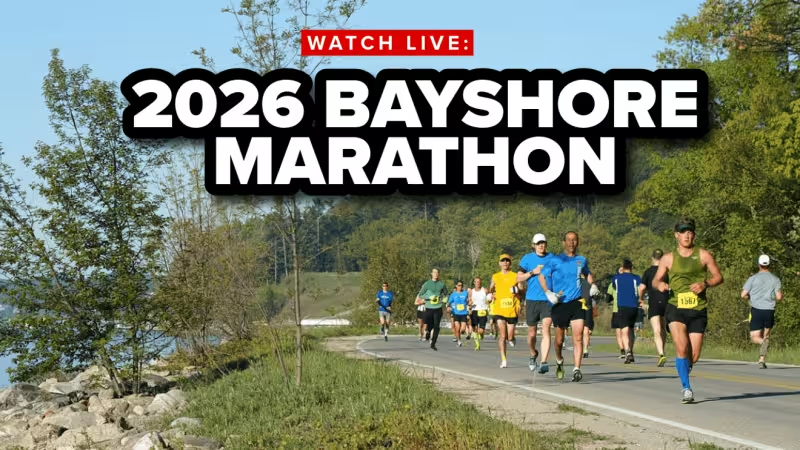
On May 23 the Bayshore Marathon, together with its half-marathon and 10K, ran as scheduled and were sold out, with about 8,000 runners competing across the three events.
The scale of the weekend was immediate and simple: three races, all sold out, and roughly 8,000 athletes on the course. Organizers also made the event broadly accessible beyond the roads — the races were streamed live on all digital platforms.
That turnout matters for two concrete reasons. First, a packed field on a single day tests logistics — parking, shuttles and aid stations must move tens of thousands of feet and hands — and race materials directed spectators and participants to a course map that lays out parking information, shuttle service, aid stations and designated spectator spots. Second, the event is structured to return money to its community: all profit the marathon makes is donated back to the Traverse City area community as grants, scholarships and planned giving.
Context is short and essential: the weekend includes three distinct races — marathon, half-marathon and 10K — and all three sold out on May 23. That combination of scale and local purpose is baked into the event’s identity. The crowds that filled the course were not only participants but potential funders; the livestream extended that audience to people who could not attend in person while the course map guided those who did.
The tension in the story is plain. The Bayshore Marathon functions simultaneously as a large, in-person sporting event and as a community fundraising mechanism. Having 8,000 runners and sold-out fields underscores how big the operation has become. At the same time, the organizer’s pledge to funnel all profits back into the Traverse City area reframes the weekend not as a commercial enterprise but as a concentrated source of local philanthropy delivered in a single busy day.
Operational details were made available to both participants and spectators: the course map included parking information and shuttle service, and it flagged aid stations and spectator spots. That combination — detailed, on-the-ground logistics for those in town and a livestream for those watching from elsewhere — suggests the event is managing two audiences at once: the people on the course and a larger remote audience reached through digital platforms.
Two facts remain fixed and central to what happened on May 23: the three races were sold out and the race was streamed live on all digital platforms. Together they explain why this day will register not just in the city’s traffic plans and volunteer rosters but in the budgeting spreadsheets that determine the size of the grants, scholarships and planned gifts the event underwrites.
The most consequential unanswered question after a day this big is straightforward: how much will those weekend crowds and that digital audience translate into dollars returned to the Traverse City area community? The answer will determine whether the Bayshore weekend is remembered primarily as a running spectacle or as a major annual boost to local grants and scholarships.