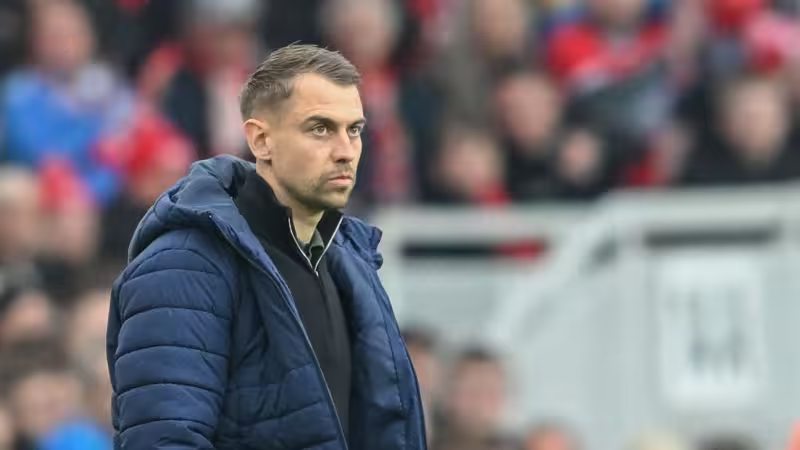
The English Football League on Thursday published written reasons for a disciplinary commission that expelled Southampton from the play-offs and handed the club a four-point penalty ahead of next season after finding the club guilty of spying on three opponents this season.
The commission set out a timeline: Southampton attended opposition training grounds to obtain tactical and selection information in December (Oxford United), in April (Ipswich) and on May 7 (Middlesbrough). Middlesbrough staff saw a figure filming their training on May 7 and identified him as a first-team analyst intern working for Southampton; that intern later told the commission he had been placed under pressure and had declined to be involved in the Ipswich incident. The EFL said the conduct involved “transmission and internal dissemination and analysis of footage and observations” and that Southampton provided inaccurate information to the EFL on May 8.
The commission described the club’s behaviour as a “contrived and determined plan” from the top down and called the use of junior staff to carry out clandestine observations “particularly deplorable,” concluding the integrity of the competition had been harmed. The four-point penalty imposed corresponds to the offences against Oxford and Ipswich; an original six-point sanction was reduced.
Those written reasons came after the club was expelled from the play-offs on Tuesday and had its appeal rejected the following day. Middlesbrough were reinstated into the play-offs after Southampton admitted to spying on their training session. Southampton’s head coach has said the club “derived no material sporting or competitive advantage from viewing and filming opponents' training.”
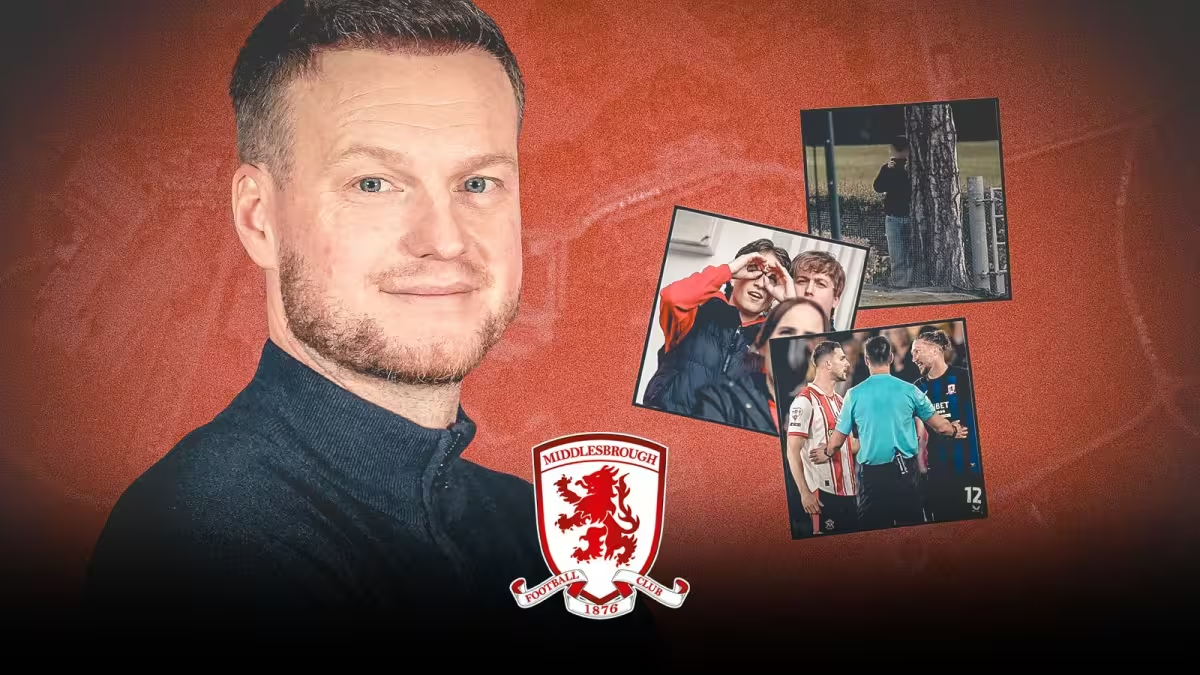
For Hull City owner Acun Ilicali, the ruling has become a matter of immediate action rather than purely sporting grievance. With the Championship play-off final at Wembley against Middlesbrough three days away, Ilicali said his club would pursue legal remedies if they do not win the final: “Our legal team says that we have to go for action, that's for sure,” he said, adding that his aim was justice — “We have no doubt about it. Here, all we want is justice. If justice is broken, nobody will enjoy football.” He has also publicly questioned why Southampton were allowed to play the semi-final rather than being removed earlier and Wrexham reinstated: “If this action was so big that a team is out of the play-offs, why didn't they let them not play the semi-final, investigate and take Southampton out and put Wrexham in?”
The written reasons stress two lines that sharpen the dispute. First, the commission found evidence that senior personnel authorised and delegated the tasks that resulted in clandestine observation, and that junior staff were in a vulnerable position “without job security and with limited ability to object to or resist the instructions given to them.” Second, the commission recorded that Southampton then supplied inaccurate information to the EFL, suggesting the conduct was not part of the club’s culture and that no footage had been captured, when in fact there was transmission and internal analysis of material. Those findings sit uneasily alongside Southampton’s defence that no material sporting advantage was obtained.
The immediate consequence is legal and reputational. Ilicali has said repeatedly that reinstating an eliminated club would be wrong and that his lawyers view the decision as grounds for action: “For me, an eliminated team [being] put back - also our lawyers say this and that's their opinion too - is an incredibly wrong decision.” With 72 hours before the final, his threat of litigation shifts the dispute from the pitch to the courtroom and leaves a single practical question for this weekend: will the outcome at Wembley settle the matter, or will legal proceedings begin and prolong the controversy?
Away from the row over governance and protestations of competitive harm, attention is split across sport and culture — even unrelated pieces such as Jack Quaid reflects as The Boys ends: 'they really have become my family' — — have competed for readers' interest as the football saga plays out.