
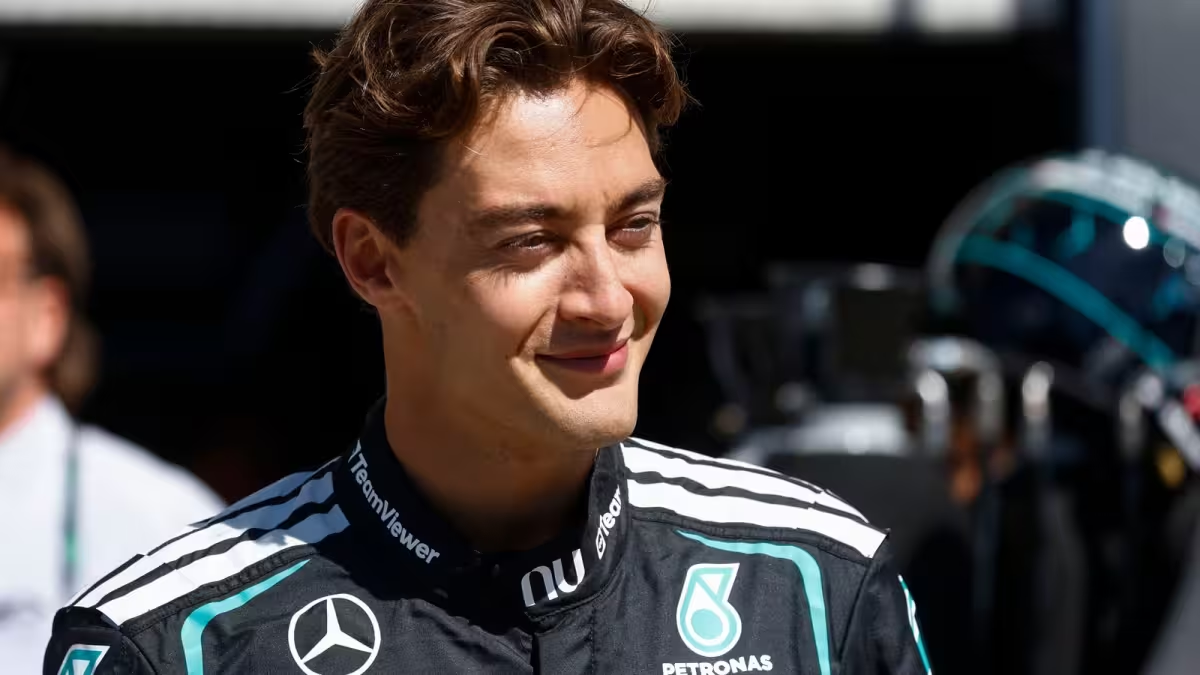
George Russell took pole for the sprint in Montreal this week, edging Kimi Antonelli by 0.068 seconds and beating Lando Norris to top billing ahead of the round five weekend at Circuit Gilles-Villeneuve from 22–24 May. The on-track moment and the timetable now set the scene for a compressed, global clash of motorsport calendars that puts the main race under bright lights on Sunday at 21:00.
The numbers give the moment weight: Montreal returns as round five of the 2026 Formula 1 season and hosts the third sprint event of the campaign, with the sprint itself scheduled for Saturday at 17:00 BST — listed as 17:00–18:00 — and qualifying slotted for 21:00–22:00. Race build-up on Sunday begins at 20:45 on Radio 5 Live, Sounds and smart speakers, with full commentary available across Radio 5 Live, Sounds and the Sport website and app. Organizers point to a huge, established audience here: the Canadian Grand Prix weekend in 2025 drew 352,000 fans.
Russell’s lap — described by him simply as "wonderful, wonderful, wonderful, wonderful" — tightened the immediate story on track. Yet the championship ledger tells a different line: Kimi Antonelli enters the weekend leading Russell by 20 points. That gap is the clearest reason to watch the sprint and the main race as separate, decisive contests; a sprint pole is a boost, not a championship swing.
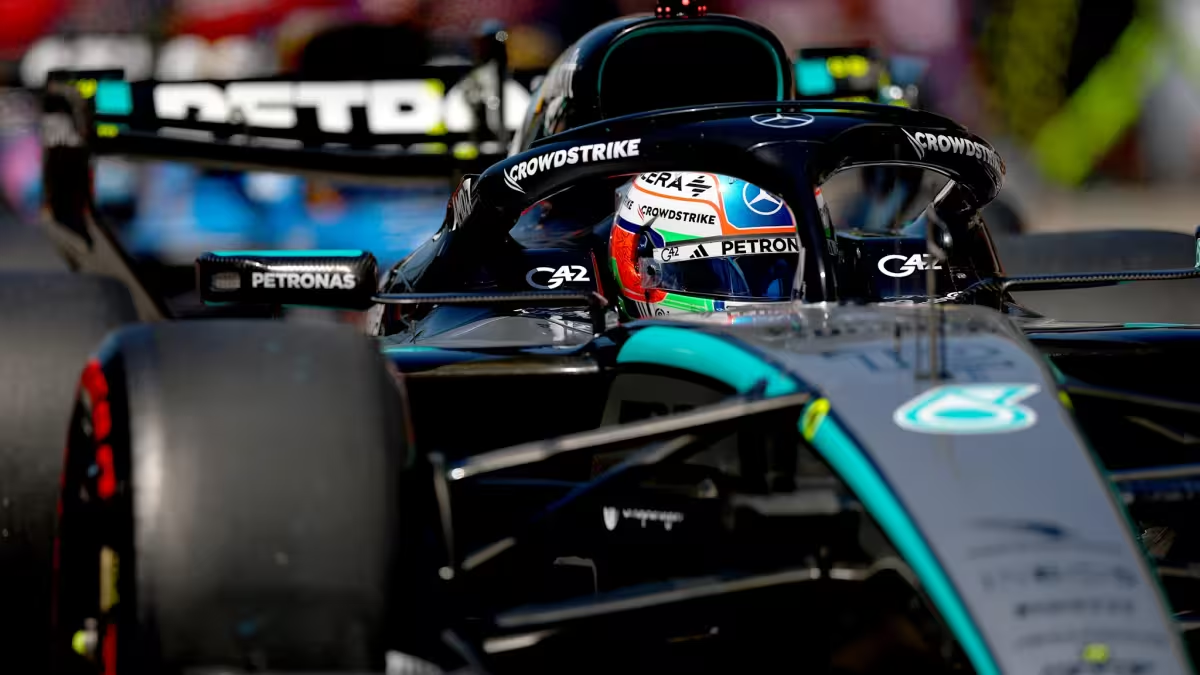
Context matters. The Montreal stop has been moved into May this year — the grand prix, traditionally held in June, starts earlier — and the race itself will begin two hours later than last year to avoid a direct clash with the Indianapolis 500. The Indy 500 is due to get under way at 17:30, a timing clash that pushed Formula 1 to alter local start times so both events can play to live global audiences. The result: a late-evening Canadian Grand Prix on Sunday and a Saturday sprint that now shares the spotlight with North American motorsport’s marquee oval race.
The calendar squeeze brings friction. Drivers and fans arriving in Montreal face mixed weather in the forecast, and broadcasters have retooled coverage windows accordingly. For viewers and followers checking the formula 1 schedule, the changes are practical — sprint at 17:00 BST on Saturday, qualifying 21:00–22:00, and the main race at 21:00 on Sunday — but they also underline a commercial and logistical tension between series fighting for the same weekend real estate. As Alain Creton put it in his clipped celebration of the city and moment: "Won-der-ful." Yves Lalumière framed it with bigger language — "It’s the beginning of a new era," and "The planets are perfectly aligned," — while local voices mixed awe and bemusement: "I don’t know how everybody’s going to survive," joked Gil Hawkins Jr., adding, "Is it Saturday night we’ve got something going on? I’m going to have to hide."
That cultural churn — packed crowds, competing spectacles and a rearranged timetable — is the backdrop against which the race weekend will unfold. The Canadian Grand Prix is the third sprint event of the season, meaning teams and drivers must split focus between the shorter, high-stakes Saturday sprint and the full Grand Prix on Sunday; convert a sprint pole into a points haul and a driver can punch above his weight for the weekend, but failure to do so can leave championship standings unchanged.
The immediate tension is simple and decisive: Russell has sprint pole and momentum, Antonelli has a 20-point lead in the drivers’ championship. The prudent read is that Russell’s lap narrows margins but does not erase the deficit; what matters next is whether he can turn Saturday’s advantage into Sunday points. If he does, the championship fight tightens sharply. If he does not, Antonelli’s lead will feel more secure even as Montreal’s grandstands — and the global audience listening on platforms — size up the next twist in a season now mapped tightly against the Indianapolis 500 and a mixed weather forecast.