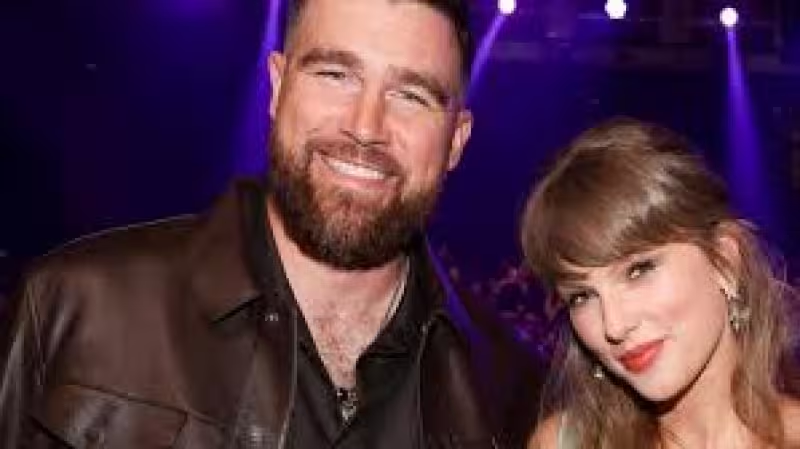
Taylor Swift is due to marry Travis Kelce on July 3 in New York City, and guests say the couples’ invitations come with an unusual instruction: the ceremony venue will be disclosed only the morning of the wedding, a move organizers attribute to security concerns.
That detail — and rules about who may bring companions — has already altered plans for at least some invitees. A reported list of attendees includes Andy Reid, Selena Gomez, Gigi Hadid, Zoë Kravitz and Graham Norton, but the exact location has not been shared with guests. “My invite did not let me bring a plus one,” one unnamed guest said, adding to a pattern of restrictions that have left some singles weighing whether to attend.
Guests described uneven plus-one policies. Married invitees were reportedly allowed to bring spouses; single guests were not. One unnamed guest put the sentiment plainly: “I mean, what am I supposed to do? Go alone? That is so awkward. I don’t think I am going to attend because I don’t want to go by myself and I am not sure I will know too many people there. I mean, sorry, I am not friends with Gigi and Bella Hadid!” Another said: “I know Selena Gomez is bringing her husband Benny Blanco, so she has a plus one, but I am not allowed to have a plus one because I am a single woman.”
The morning-of disclosure and limited guest allowances are, according to people close to the couple, rooted in security. “I get that too, she doesn’t want everyone knowing where she is getting married until the last minute for security reasons,” an unnamed insider said. That insider added that the secrecy has turned the lead-up into speculation: “Now it is one big guessing game, everyone is wondering where it will be. Probably a massive hotel like the Waldorf Astoria that has amazing security and access.”


The approach marks a sharp, practical pivot from the early public chapter of Swift and Kelce’s relationship. The couple became engaged after two years of dating and announced the proposal with backyard photos last August. The reported July 3 date places the wedding a year after that announcement and follows a long run of public sightings and performances that turned their romance into a cultural fixture.
Numbers and names underline the stakes of the guest list. The reported roster mixes entertainment stars and high-profile figures; but capacity constraints, the insider said, help explain why some invitees were denied a plus one. As one guest put it: “I get it, the venue can probably allow for only so many people, but it’s not the best feeling.” Another admitted the logistical awkwardness may be decisive: “It’s the wedding of the year, but I may sit this one out because I am shy.”
The tension is simple and human: security-driven secrecy collides with social expectation. For couples and long-time friends, bringing a spouse is allowed; for singles, arriving solo to a tight, celebrity-filled room feels like a social risk. That contradiction has already produced at least one possible decline and a flurry of private fretting among invitees who otherwise say they “love Swift and want her the best.”
What happens next is predictable and limited: guests will learn the ceremony site on the morning of July 3, and the couple’s security team will hold firm on who may bring companions. That means a handful of nervous or shy single guests may opt out, but the reported list of high-profile invitees suggests the event will still draw a roster notable enough to make headlines worldwide. The privacy choice answers the central trade-off: Swift and Kelce are prioritizing controlled security and a smaller, managed guest environment over offering open plus-ones — a decision that will likely trim the crowd by a few reluctant singles while keeping the ceremony tightly contained.