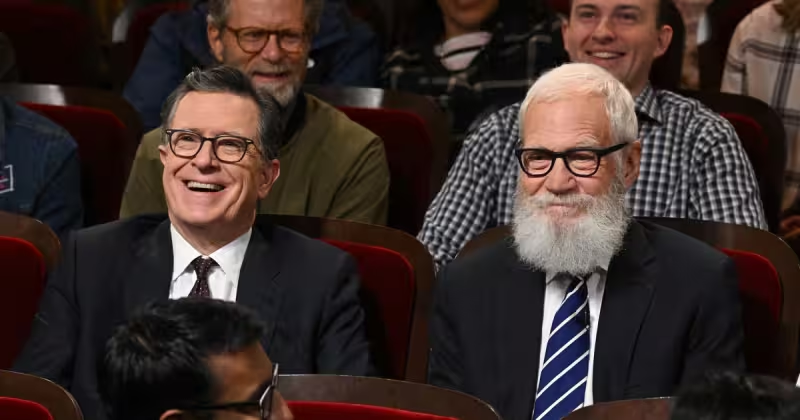
David Letterman said CBS’s decision to cancel The Late Show was “a huge mistake” as Stephen Colbert prepared to deliver the program’s final episode on May 21, and the network moved immediately to replace the long-running hour with a new comedy block. Letterman, who launched The Late Show in 1993, told Today’s Craig Melvin the end of the program made him “kind of sad” and warned the loss removes an important perspective from American culture.
The reaction matters because The Late Show’s end closes a 33-year run that included Letterman’s 1993–2015 tenure and Colbert’s 11-year run after he took over in 2015. CBS announced the cancellation in July 2025 and has framed the move as a purely financial decision by CBS and Paramount Global, not driven by the show’s performance or content. Still, the network’s plan to slot Comics Unleashed, hosted by Byron Allen, into the hour has set off an unusually public airing of grief and protest among late-night figures.
Letterman’s remarks were blunt. He told viewers the cancellation made him sad, argued the show’s disappearance is a loss for American culture and called the decision a mistake. He reminded Colbert and the audience that “you can take a man’s show, you can’t take a man’s voice,” a line he delivered on Colbert’s show on April 15 as the two traded barbs and affection. The weight of those remarks landed alongside a theatrical protest: Letterman recruited Colbert to toss CBS property off the roof of the Ed Sullivan Theater, hurling couches, Colbert’s office chair, several watermelons and a three-tiered congratulatory cake in a final, gleeful destruction of studio accoutrements.
Context matters here. The Late Show had been one of the most-watched late-night programs and won both an Emmy and a Peabody. Colbert’s program, long visible for its outspoken political commentary, became part of the late-night ecosystem that helped shape national conversation. The hosts have also shown a streak of solidarity before: they joined as Strike Force Five during the 2023 writers’ strike. With Colbert airing his final installment on May 21, the symbolic and practical consequences of the cancellation were concentrated into a single day.
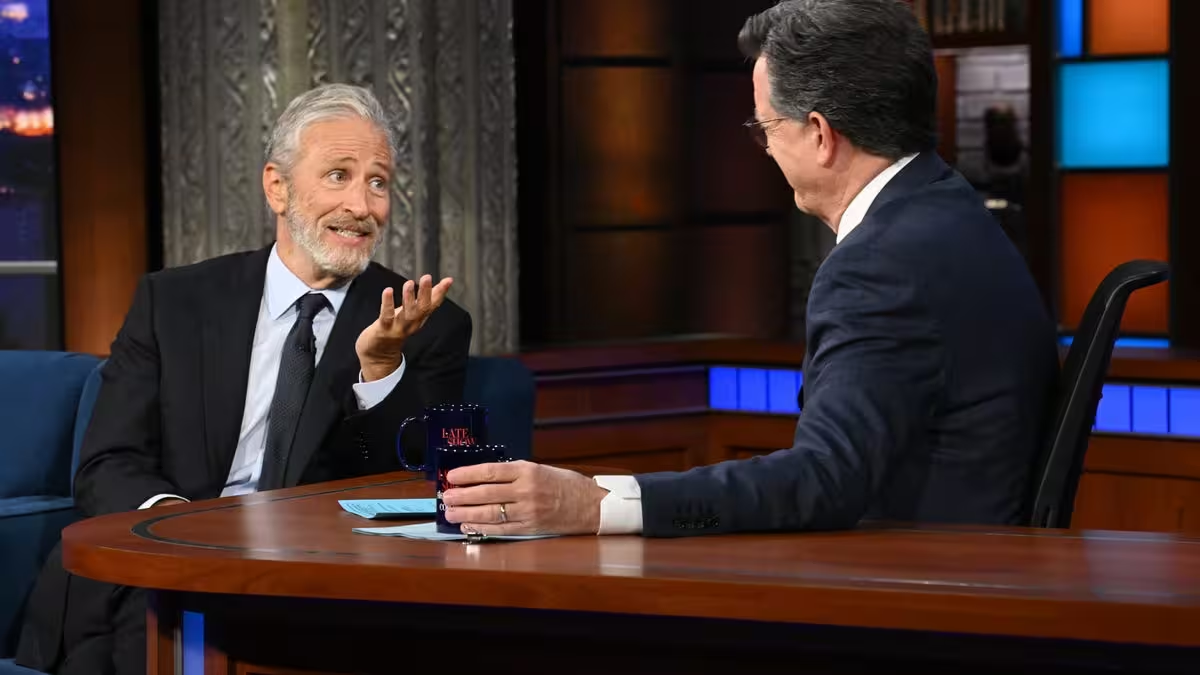
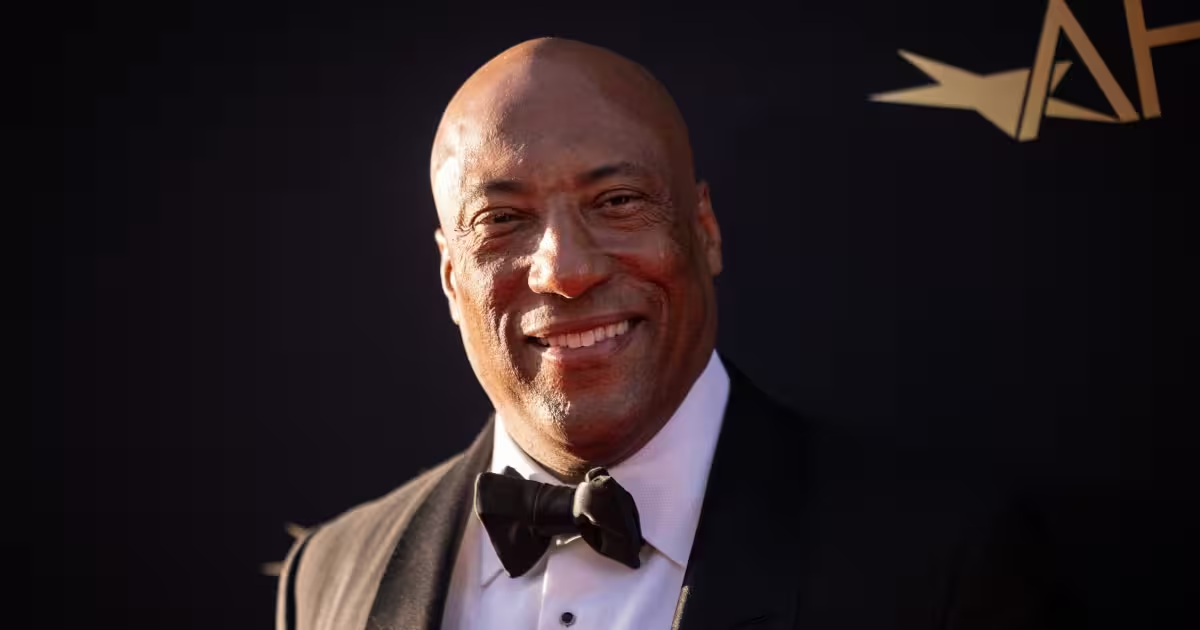
Tension opened around who might try to claim the space Colbert leaves behind. Megyn Kelly publicly warned Jimmy Fallon to steer clear of political commentary, saying a Tonight Show segment on May 20 suggested Fallon might be imagining he could step into Colbert’s role. Kelly’s take — aired on SiriusXM — was scathing about other hosts as well, and it heightened scrutiny on Fallon just as Jimmy Kimmel and Fallon planned to air reruns of their programs out of solidarity with Colbert. Those reruns look, for now, like gestures of support rather than attempts to adopt Colbert’s voice or format.
CBS and Paramount Global have emphasized the financial rationale for the change, insisting the decision was not linked to performance, content or any other matters at Paramount. That explanation has done little to quiet critics who point to the show’s awards and audience reach. The rooftop protest and Letterman’s public denunciation made clear that many in late night view the cancellation as more than a budget line item: it is a cultural excision from a medium that thrives on distinct host voices.
For Jimmy Fallon, the immediate fall‑out is mixed. He is part of the late‑night chorus expressing public support — planning reruns alongside Jimmy Kimmel — but he is also the subject of a debate over whether any host can or should assume Colbert’s combative, politically pointed stance. Megyn Kelly recommended he keep his distance from politics; Fallon’s decision to air reruns suggests he is choosing solidarity over substitution at this moment.
The most consequential answer is simple: Fallon will not replace Colbert’s role by default. The network has taken the program off the schedule, Colbert signs off on May 21, and the immediate responses from Letterman, Kimmel and Fallon are gestures of farewell and protest more than a transfer of political authority. If anything, Letterman’s final public point — that you can remove a show but not a voice — underlines the reality: the marketplace of ideas will keep producing political voices, but the specific institution of The Late Show on CBS is ending, and Fallon’s next moves, whether cautious solidarity or bolder commentary, will determine how much of that voice survives outside the hour that is now gone.