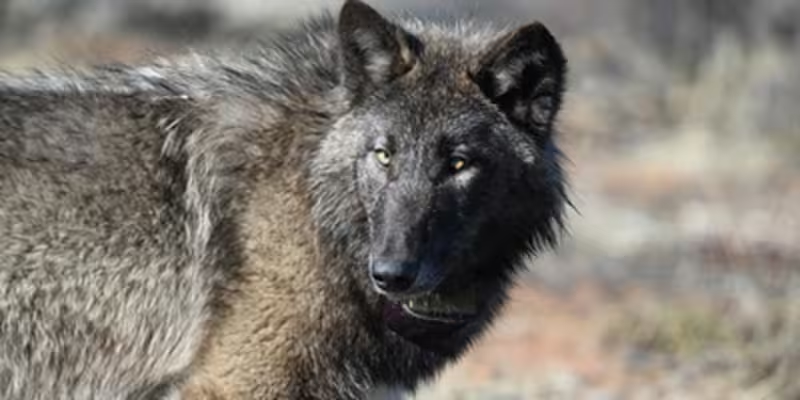
A gray wolf tracked in California has reached Sequoia National Park, becoming the first known wolf to enter the park in more than a century. By 7 a.m. Sunday, the 3-year-old female known as BEY03F was just south of Mt. Whitney and inside the park after crossing terrain that rose to at least 13,000 feet.
Her arrival marks another milestone in a journey that has pushed far beyond the range most wildlife managers expected to see in one animal’s lifetime. BEY03F was born in 2023 to the former Beyem Seyo Pack in far northeastern California, then dispersed from her pack before livestock conflicts in 2025 led to several members of that group being lethally removed by the California Department of Fish and Wildlife. She was captured and collared for tracking in May 2025 after being tracked on a CDFW camera in the zone of the Yowlumni Pack, then released. Since then, she has traveled more than 370 miles from her pack in Plumas County into Yowlumni territory and then into Los Angeles County, where she became the first wolf documented in February, and last month into Inyo County, where she became the first wolf known in about a century.
The wolf’s route lands in a state where gray wolves were wiped out by the 1920s and naturally reintroduced themselves in 2011. California’s first modern wolf pack was established in 2015, and the population has slowly grown since then. By the end of last year, at least 55 wolves were roaming the state, and there are now nine known and monitored gray wolf packs in 2026. The California Department of Fish and Wildlife uses the Wolf Tracker to follow those animals as it tries to conserve and observe the population across California.
BEY03F’s path also underscores the risk that comes with a species returning on its own. Wolves have come back to California, but the return has been tied to livestock conflicts in rural areas, and the same movement that helps rebuild the species can expose individual animals to danger. John Marchwick said her travel patterns show the unpredictable movements of a dispersing wolf seeking a mate and territory of its own. Axel Hunnicutt put it more simply: “She did some hiking.”
For now, BEY03F is still alive and well, and that matters because California’s wolf comeback is being measured one animal at a time. Her route through Sequoia National Park is not just a dot on a tracker. It is proof that a species once erased from the state can still keep moving into places where it has been gone for generations.