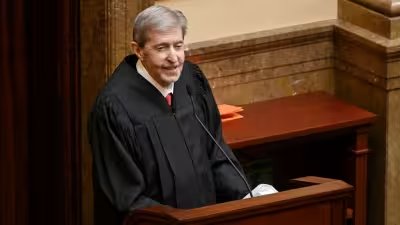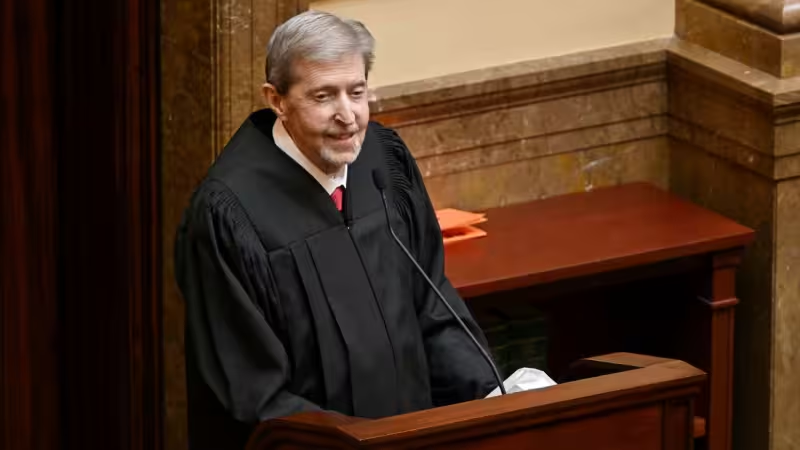
Utah Chief Justice Matthew Durrant said Friday he will retire from the state Supreme Court on Aug. 31, ending a 26-year run on the bench and 14 years as the court’s top judge. Gov. Spencer Cox now has four vacancies to fill on a court that has been reshaped repeatedly this year.
Durrant, the longest-serving chief justice in Utah history, said the work has been deeply meaningful. “Serving the people of Utah and working alongside dedicated judges and court employees across the state has been the honor of a lifetime,” he said, adding that he is “deeply grateful for the opportunity to help strengthen the administration of justice in Utah.”
The retirement closes one of the most durable chapters in the state judiciary. Durrant was appointed to the Utah Supreme Court in January 2000 by Gov. Michael Leavitt, after beginning service as a 3rd District Court judge in 1997. He graduated from Harvard Law School in 1984 and was elected president of the Conference of Chief Justices in 2024, a sign of the influence he built beyond Utah.
Cox responded with unusually personal praise, calling Durrant “an incredible human being and one of the best people I’ve ever met.” The governor said Durrant has led the court with integrity for many years and is “a deeply respected jurist, consummate public servant and genuinely extraordinary person.” Cox also said he had hoped Durrant would not be retiring anytime soon because of health problems over the past few years, but added, “We love him. We wish him well. We’re grateful for his service to the state, and we look forward to working with him until the end of August.”
The timing matters because the court is in the middle of a major overhaul. Earlier this year, the Utah Legislature voted to expand the Supreme Court from five seats to seven and created a new panel of judges to hear constitutional issues. Cox had already nominated a new justice seven months earlier in October, and the court gained another member in November when John Nielsen was confirmed to fill the vacancy left by Associate Justice John Pearce’s resignation.
That upheaval accelerated again earlier this month, when Justice Diana Hagen resigned after a complaint to the state’s Judicial Conduct Commission. The complaint alleged that Hagen had an improper relationship with an attorney who argued cases before the court.
When Durrant steps down, Cox will have four vacancies left to fill, and he will have the chance to nominate five of the seven justices within 12 months. That gives the governor unusual influence over the court just as it is drawing criticism from some GOP leaders over decisions on abortion and redistricting.
For now, the court is headed toward another transition at the top. After more than two decades on Utah’s highest bench, Durrant leaves behind a court he helped steady, and a governor with a rare opportunity to reshape it.