On Thursday in London, Elton John was named the first-ever president of The Ivors Academy and received an Ivors Academy Honour, accepting both as a mandate to champion songwriters and composers worldwide.
At the 71st Ivor Novello Awards, held last night, the moment carried weight not as a ceremonial title but as a plainly stated mission: the new presidency is an ambassadorial role that will see John advocate for rights and recognition for music creators around the globe. "To be able to write a song, it is such a personal, wonderful thing," he told the crowd, adding that Britain continues to produce "great songwriting" and that the new music he hears "inspires me." He also thanked the winners: "It is really an honour and a privilege to be able to stand up here and witness all the great talent that has won awards today."
The Ivors Academy, a U.K. not-for-profit that supports, empowers and celebrates songwriters and composers and presents the Ivor Novello Awards, made plain why the appointment matters: the position is reserved for people who have reached the pinnacle of songwriting or composing and are committed to supporting the community. The Academy also used the event to honour the late George Michael and to stage a tribute to Thom Yorke by Harry Styles, underscoring the ceremony’s role as both celebration and cultural record.
John’s Honour singled out the work the veteran artist has done for emerging talent. He does much of that work each week on his Apple Music show, Rocket Hour, and on Thursday he referenced that duty in a personal aside, mentioning Sam Fender by name: "I just wanted to give something to lovely Sam Fender, who I regard as part of my family and a son." The Academy described the Ivors Academy Honour as recognition of John’s long record of championing new and emerging talent.
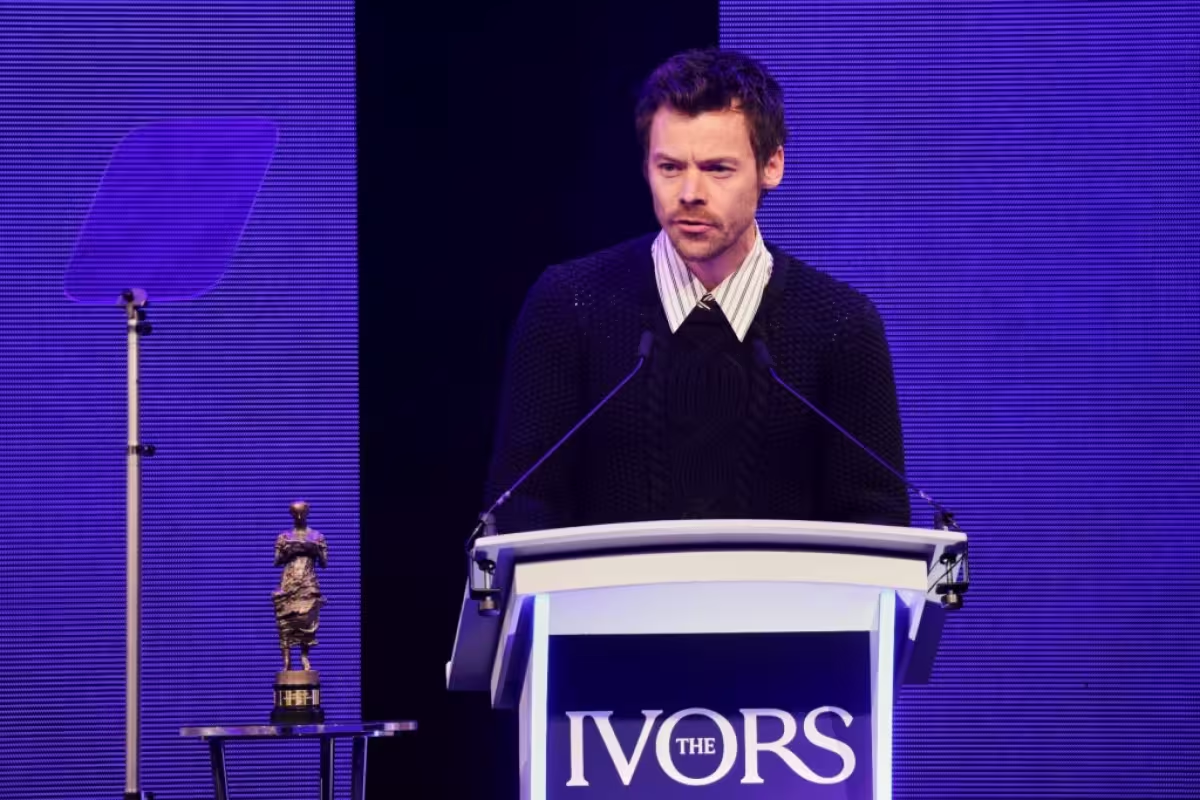
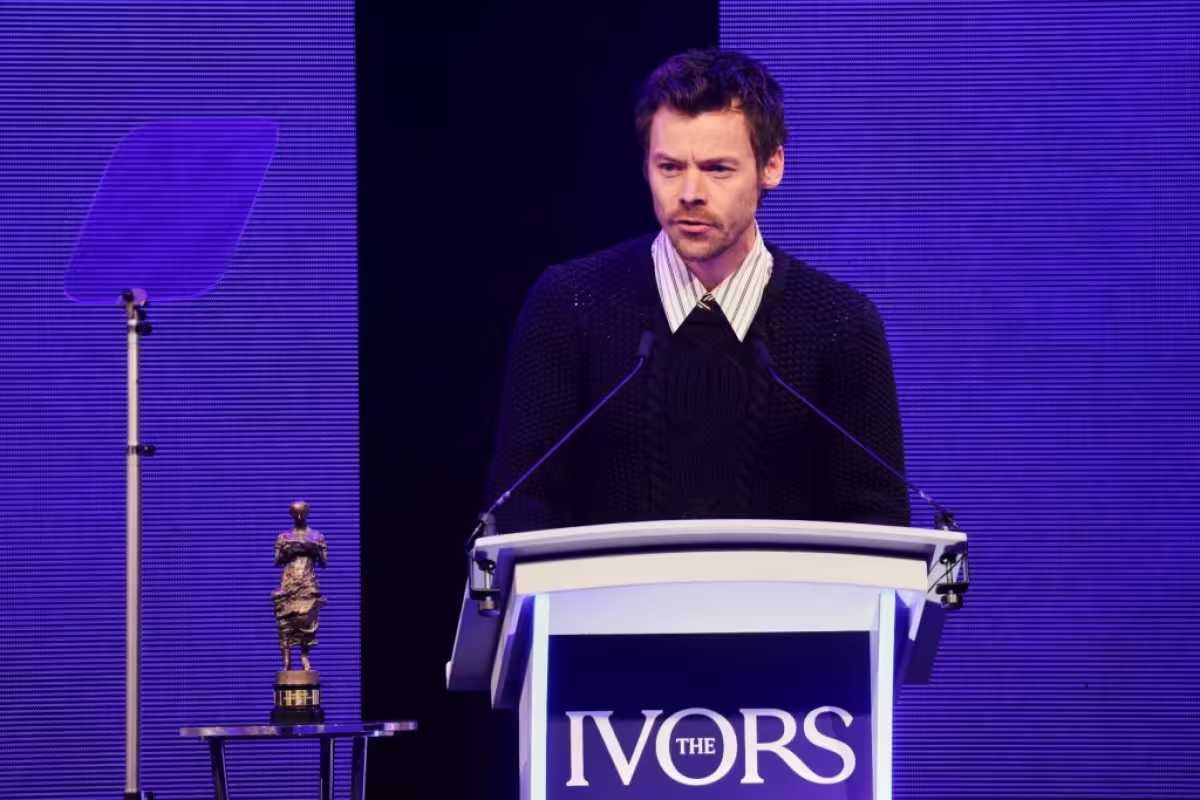
The choice of John comes amid a sharper fight over creators’ rights. He used his acceptance to issue a blunt warning about technology and control: "No matter what kind of music you write. It’s yours, you own it. It came from your soul. And don’t let it be taken away from you, especially by A.I." That line cut through the goodwill of the night. The new presidency gives John a platform to press that point in the corridors where policy, tech and copyright collide—an area where law and commerce have repeatedly outpaced artists’ protections.
That tension is the night’s central friction. The Ivors Academy can celebrate achievements and bestow honours, but its power to change the structures that threaten authorship depends on leverage outside the ceremony: lobbying, industry negotiation and public pressure. John’s remit is ambassadorial, not executive, which means his effectiveness will hinge on how the Academy translates his profile into concrete campaigns and wins for creators whose livelihoods are at stake.
What happens next is concrete: John will serve as president and as a public face for the Academy’s work, and the organisation has already scheduled its Ivors Academy Honours for 1 October 2026 at the InterContinental London Park Lane. The immediate test will be whether the appointment moves policy conversations beyond platitude—whether the warnings about A.I. and ownership become agenda items in meetings with platforms, publishers and lawmakers rather than just lines in an acceptance speech.
If the last night is any guide, John intends to make it more than a line. "It’s an incredible honour to be here today," he said, and then framed the role in personal terms: songwriting comes from the soul and must be defended. In that sentence he answered the unspoken question of the evening—will he use the platform to fight for writers?—with a promise and a plan: he will continue to spotlight new voices on Rocket Hour and to press, as president, for the rights and recognition he says creators must keep.