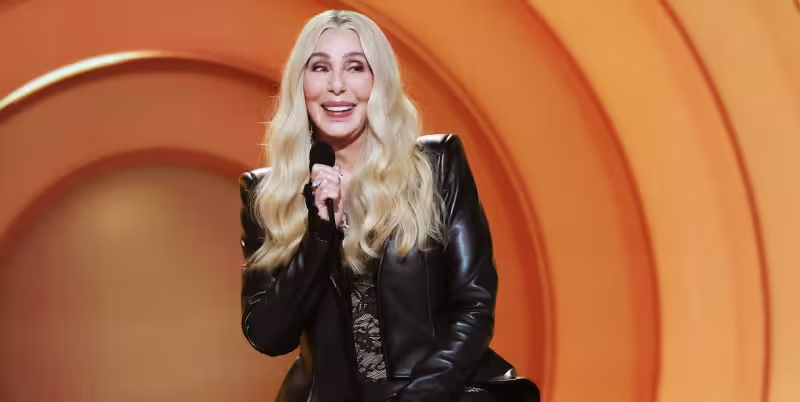
Vogue has republished the December 1974 feature titled “The Super-Whammos: 60 Years of Cher,” the magazine announced in 2026, returning four pages that originally presented Cher time-traveling through the 1920s to the 1970s.
The archive piece runs four pages and lays out looks that span six decades, a literal through-line from the 1920s to the 1970s. The original shoot commissioned one-time-only costumes from Bob Mackie and Ray Aghayan and used Ara Gallant to devise period-enhancing makeups and hairdos. Cher, reflecting on the shoot at the time, said, "I loved doing it. For the first time I really had to act!"
The weight of the republished feature is in those specifics: December 1974 is the original publication date; the spread was built as a compact, four-page demonstration of range; and the designers and hair-and-makeup artist named on the credits were major figures charged with creating decade-specific visions. Vogue’s decision to bring the pages back in 2026 returns that exact package to a contemporary audience intact.
That matters today because the feature was never meant to present Cher as merely fashionable in the moment. The original layout framed her as timeless, a performer who could be read outside current trends rather than pinned to them. The four pages of period looks underscored that argument: each decade was rendered as a distinct tableau, but the sequence was meant to accumulate into a portrait of longevity — sixty years of persona and costume rolled into a single magazine piece.
There is a friction at the center of the spread. The photographers, designers and hair-and-makeup team tied Cher to particular historical moments — 1920s silhouettes, 1970s glamour — while the editorial voice insisted on her timelessness. The effect is paradoxical: by dressing her in tightly dated costume and style, the piece both catalogs fashion history and argues that she transcends it. That contradiction is what made the original four-page run feel less like a fashion spread and more like a short performance.
How the republished pages land now depends on the read: presented again in 2026, the spread reminds viewers that the original creators assembled a deliberate statement about durability. Bob Mackie and Ray Aghayan’s one-off costumes and Ara Gallant’s period makeups and hairdos were not mere pastiche; they were instruments in an editorial argument that Cher was not simply "of the moment." The quote from Cher — "I loved doing it. For the first time I really had to act!" — reads as a hinge between star and concept, the performer acknowledging that the camera required more than pose.
Vogue’s archive republication closes the loop on the original claim: the package that presented Cher across the 1920s to the 1970s was conceived as a proof of endurance, and bringing it back in 2026 reasserts that proof. The pages do not merely nostalgically reproduce looks; they restate the magazine’s older case that Cher operates outside seasonal cycles. That is the clearest lesson the republished feature leaves behind.