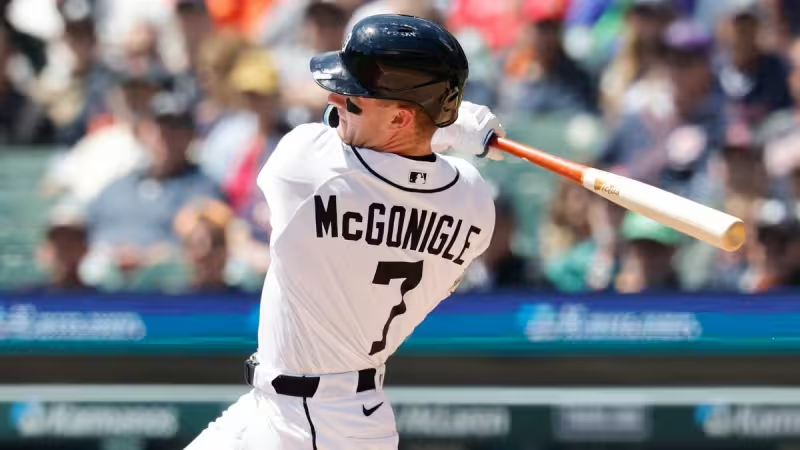
Kevin McGonigle was in the lineup leading off and starting at shortstop against Baltimore on Friday, a reminder that the 21-year-old rookie has become one of Detroit’s most relied-upon players despite plans to give him occasional rest.
Manager AJ Hinch had intended to sit McGonigle for a game against the Guardians because they were expected to send two left-handed starters, but Detroit’s health problems and the need for a steady leadoff presence kept him in the lineup. Before Friday, McGonigle had appeared in 49 of 51 games and entered the day with a 2.7 WAR — tied with Cody Bellinger and Shea Langeliers for second in the American League, behind only Bobby Witt Jr.
The usage figures underline why: Riley Greene had been in 51 games daily, Spencer Torkelson 50, Colt Keith 46 and Dillon Dingler 45. Hinch said the club’s original plan for workload management is meant to be proactive, but that the Tigers have not had the luxury of being proactive this season. With injuries stacking up, Detroit has been playing nearly the same nine or 10 players most days.
That steady availability matters now. McGonigle has a.291/.397/.424 slash line for the season and is walking more than he is striking out, traits that let him carry the top of the order even as his power dipped in May. He went 4-for-5 in an 8-2 win over the Padres and has supplied other moments of offense, including an early solo home run against the Cincinnati Reds in recent action.
Still, there are clear wrinkles. McGonigle’s power mostly evaporated in May — he posted a.224 slugging percentage that month — and both of his home runs this season have come on fastballs. Pitchers have begun to attack him with fastballs up in the zone and to try getting ahead in counts with softer stuff before challenging him up. He’s chasing less often than a typical rookie might: he’s whiffing on just 9% of fastballs, yet the uptick in elevated heaters has blunted extra-base production.
Hinch painted the situation plainly: the team is not where it hoped to be on multiple fronts, and that has forced a different approach to playing time. He said McGonigle is holding up fine, is moving and performing well, and that Detroit will dig out of its slump together — language Hinch used to explain why rest plans have been sidelined. The manager emphasized that workload management is designed to be proactive, and they simply haven’t been able to be proactive with where they are at.
The rookie’s arrival has been sudden. Selected in the first round of the 2023 MLB Draft, McGonigle made his major-league debut during his first season with the Tigers and was set to play in Detroit’s season opener on March 26. He laughed about that night later, saying he didn’t know where the parking lot was for his home opener and spent some time driving around Comerica Park before arriving on time, a small story that underlines how quickly he’s had to grow up in the big leagues.
Even as his approach has produced a high on-base percentage, the Tigers have slumped as a club. They entered Camden Yards 11 games under.500 and on a six-game losing streak — the sort of stretch that makes managers reluctant to sit productive players even for planned rest. For now, McGonigle’s combination of contact skills and durability gives Detroit its clearest path out of the hole.
The real test ahead is obvious: can McGonigle sustain his ability to get on base while pitchers keep working him up and try to take away his remaining power? If the team’s injuries persist, the answer will determine whether Detroit continues to rely on the young shortstop day after day or finally gets the chance to be proactive about his workload. Until that point, Hinch and the Tigers will keep asking McGonigle to do what rookies rarely must so early — carry a lineup through one of its toughest stretches.