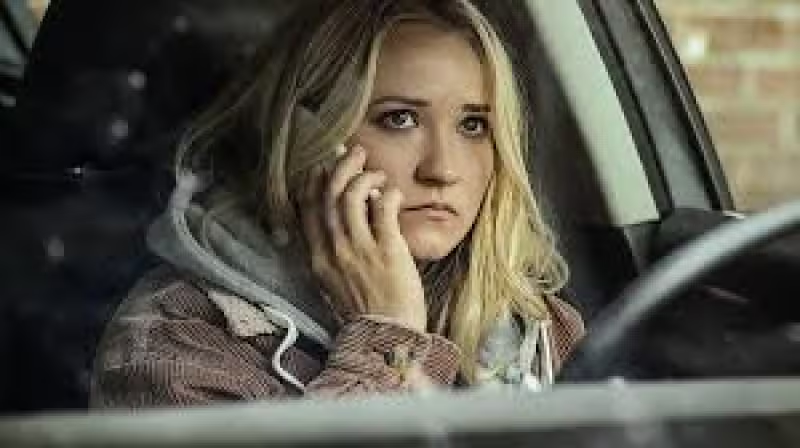
Stolen Baby: The Murder of Heidi Broussard became available for streaming on Netflix, bringing the headline case back into living rooms across the United States.
The film revisits the December 2019 disappearance of Heidi Broussard and her two-week-old daughter, Margot, a case that ended with a rescue, a conviction and a sentence of more than half a century in prison.
After dropping her older son at school in December 2019, Broussard and the infant vanished. Investigators later discovered Broussard’s body in the trunk of a car parked behind a home on Bo Jack Drive in Houston. Margot was found alive inside that house and was reunited with her father, Shane Carey.
Carey made the moment public in 2019 with a short, blunt message: "Baby Margo is home." He posted other brief notes afterward, including "Good times with good people," as friends and relatives gathered to take custody of the infant.
The woman charged in the case, Magen Fieramusca, later pleaded guilty to murder charges connected to Broussard’s death and was sentenced in Texas to 55 years in prison. Under the sentence handed down, Fieramusca could become eligible for parole in 2047.
The documentary’s title — Stolen Baby — puts the words stolen baby at the center of the story, and the film traces how a friendship that some described as close ended with a dead mother, an infant found alive, and a woman who had reportedly pretended to be pregnant and then attempted to present the child as her own.
The case drew national attention in part because Broussard and Fieramusca were described by others as longtime friends, and because the dramatic rescue left a narrow line between criminality and the banal outlines of personal relationships. Margot Carey was the infant at the heart of that line. Her family reunited around her when she was rescued, and they have largely kept her out of the public eye in the years since.
That is the tension the Netflix release now makes visible: a widely distributed film invites new viewers to relive the facts, the footage and the interviews, even as the family at the center has tried to preserve privacy. There are no verified public reports suggesting Margot has remained in the media spotlight since she was returned to her family, and the film’s release does not change what the public record shows about her current life.
For viewers, the film collects the key, verifiable elements: a December 2019 disappearance, the discovery of Broussard’s body in a car trunk behind a Houston home, the rescue of a two-week-old infant, the reunion with her father and the guilty plea and sentence for Fieramusca. Those facts are the spine of the story; what each viewer takes from them will depend on the film’s framing and the questions it raises about motive and trust.
For Shane Carey and the rest of the family, the arrival of the film on a major streaming service is likely to mean renewed public attention. But the family’s past actions — reclaiming Margot, issuing brief public notes such as "Baby Margo is home," and otherwise keeping the child out of view — make clear the limits of that attention. The Netflix release revives the case for public consumption; it does not, on its own, undo the family’s efforts to keep Margot’s life private.