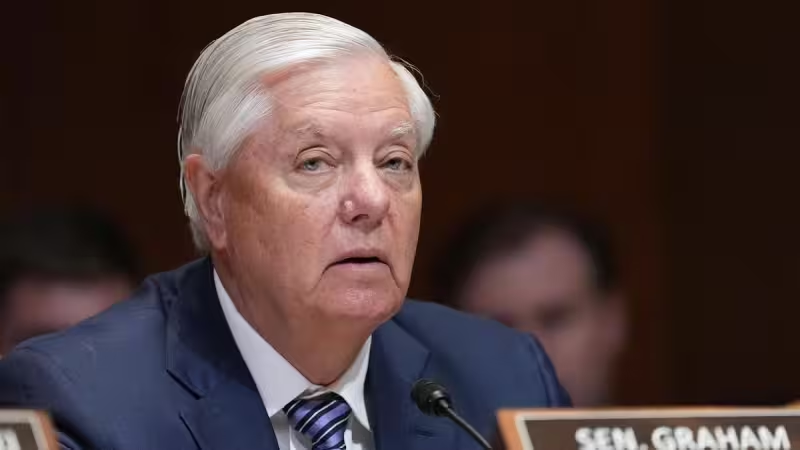
On May 27, 2026 Republican Senator Lindsey Graham posted on X that Pakistan's role as a mediator in the United States' war with Iran was intractably compromised, saying: "It has been apparent to me for quite a while that Pakistan as a mediator is more than problematic. Their animosity towards Israel is long standing."
Graham's post named Pakistan's attitude toward Israel as the central reason he doubts Islamabad's neutrality. He pointed directly to remarks by Pakistan's defence minister and to a clip he said was recorded a year earlier, writing: "As to the defence minister's comments about the Abraham Accords, saying that Pakistan would never join because they don't trust Israel: The clip may be a year old, but I fear the sentiment is fresh." Graham also asked Pakistan to respond to Donald Trump's call to mediators in the U.S.-Iran war to join the Accords.
Those comments came after Pakistan's Defence Minister Khwaja Asif publicly said he is not in favour of Islamabad joining the Abraham Accords and reiterated Pakistan's longstanding position that it will not accept Israel until a Palestinian state on the pre-1967 borders with East Jerusalem as its capital is established.
The numerical and rhetorical weight of Graham's intervention is compact but heavy: a U.S. senator publicly casting doubt on a mediator's impartiality, citing a senior Pakistani minister's rejection of the Accords, and linking that rejection to a continued refusal to recognize Israel. The sequence—post, clip, defence minister statement—ties a U.S. political call to a clear public posture in Islamabad.
Context matters here. The Abraham Accords create diplomatic, economic and security ties between Israel and Arab states, and have been floated by some U.S. officials and outside actors as a way to reshape regional alignments. Pakistan's refusal to accept Israel until Palestinian statehood on the pre-1967 borders with East Jerusalem as capital is a long-standing policy that sits at the center of its decision not to join those accords.
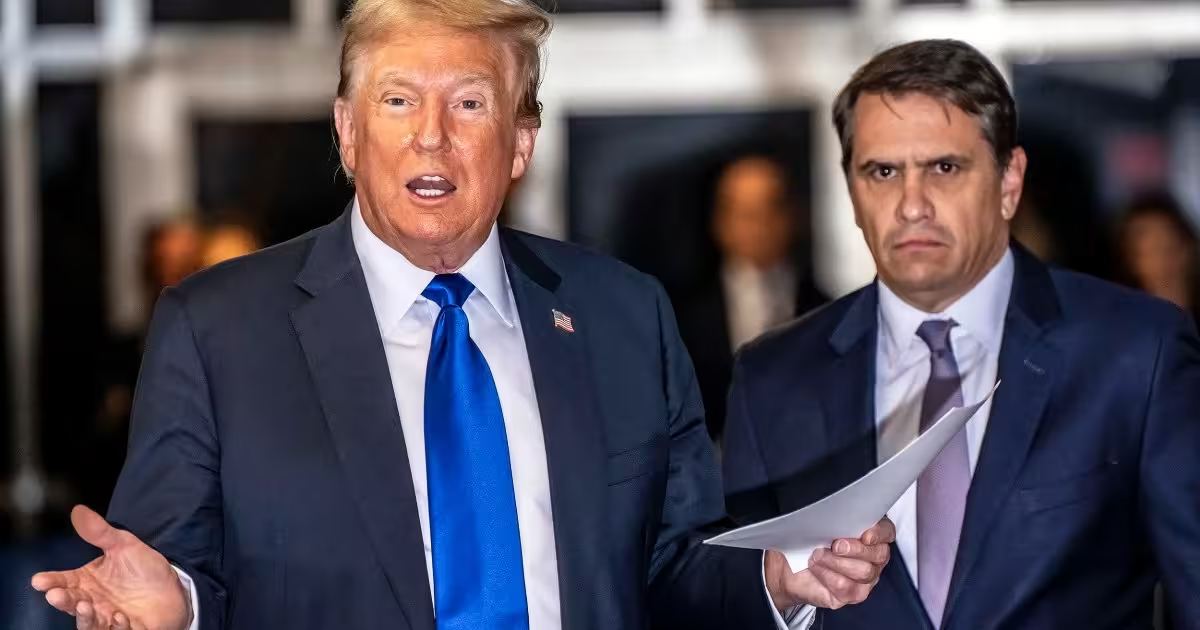
The tension is straightforward and consequential. A mediator in a conflict involving Israel—directly or indirectly—would ordinarily be expected to present a posture of neutrality toward the parties. Graham argues that Pakistan's refusal to join the Abraham Accords and what he calls long-standing animosity toward Israel undercut any claim to impartiality. Pakistan's defence minister, by saying he is not in favour of joining the Accords and reiterating the demand for Palestinian statehood on pre-1967 lines, has made that posture explicit.
Graham's post also folded in a political maneuver: by citing a clip he says is a year old, he suggested the public record of Pakistan's stance has enduring force even if the recording is not recent. That creates a mismatch between timing and sentiment—a year-old clip, a fresh allegation—and leaves Islamabad's current intent in debate rather than resolved fact.
The immediate consequence is procedural: Pakistan has been asked, in public and by name, to answer whether it will respond to a U.S. political call to mediators to join the Abraham Accords. Graham's intervention heightens the scrutiny on whether Pakistan can serve as a credible intermediary in the U.S.-Iran war without first clarifying its stance on Israel and the Accords. For readers following the diplomatic story, the internal dynamics in Islamabad and any formal reply to Graham's demand are the next things to watch.
For now, the clearest fact is simple: on May 27, 2026 Lindsey Graham declared Pakistan's role as mediator "more than problematic," quoted Pakistan's defence minister's rejection of the Abraham Accords and invoked Pakistan's long-standing condition on recognizing Israel. That public nudge forces Islamabad to decide whether it will defend its refusal, soften its posture, or outline how it can mediate despite an explicit stance on Israel.
Graham's post has made one thing inevitable—Pakistan can no longer occupy a diplomatic gray zone on this question without answering directly to Washington and to a U.S. senator who has named it in public.