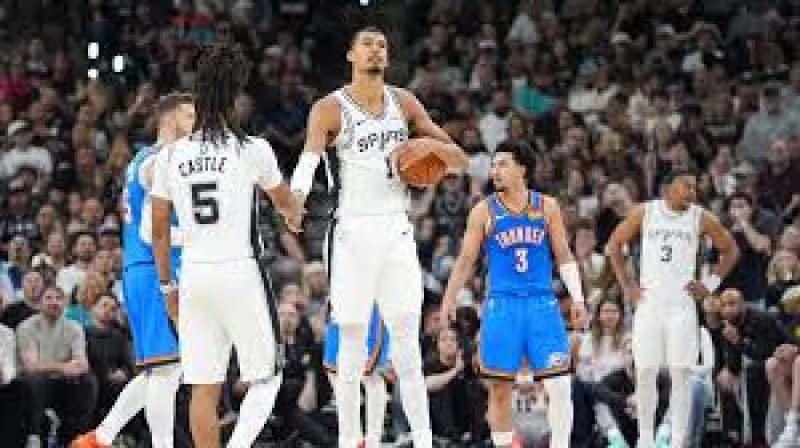
Shai Gilgeous-Alexander scored 22 points as Oklahoma City opened a game-high 18-point lead in the third quarter of Game 5 at Paycom Center, a swing that handed the Thunder the initiative in the okc vs spurs series tied 2-2.
The lead arrived after a jittery start: at 9:30 of the first quarter De’Aaron Fox drove early and winced on the play, a moment that added tension to the crowd even though the centers of this matchup were on the other end. Oklahoma City chased control through the middle quarters. Lu Dort opened the second half with a layup, and a sequence later in the period that encapsulated the night — Victor Wembanyama blocked a Jared McCain layup and the loose ball went to Dort for a conversion — stretched the margin and momentum for the home team.
Gilgeous-Alexander’s 22 in Game 5 followed a measured Game 4 in which he had 19 points in 31 minutes before sitting out the fourth quarter. His willingness to carry a heavier load in this game was a clear response to how San Antonio was trying to attack: the Spurs repeatedly targeted Wembanyama on offense against Isaiah Hartenstein, a matchup chisel that forced rotations and opened driving lanes for Oklahoma City.
The numbers matter beyond the box score. This was a tied series entering Game 5, and historically the team that wins Game 5 in a 2-2 best-of-seven goes on to win the matchup more than 80 percent of the time. That statistical gravity is why the swing in the third — and the manner of it — is the defining detail of the night.
San Antonio signaled adjustment early in the second half, calling a timeout barely two minutes into the period. The stop read as a coach’s insistence on re-finding structure against an opponent that had just answered every knot. Former guard Jamal Crawford put the moment bluntly on the broadcast: "San Antonio isn't playing with emotion. They're playing emotional." That line captured the oddity of a team trying to manufacture momentum while appearing off-balance in execution.
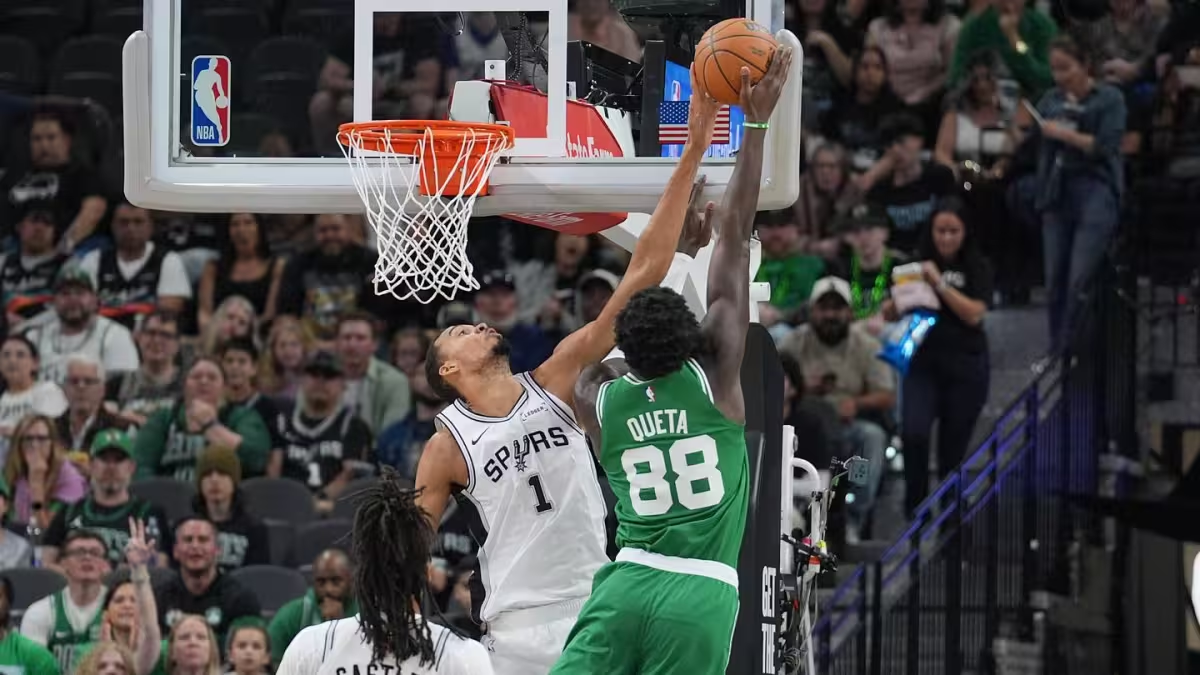

The tension of the game was not only strategic. Oklahoma City’s third-quarter surge raised a clear contradiction: the Spurs were both deliberately attacking a mismatch and, for stretches, surrendering easy conversions that fed the Thunder’s lead. The block by Wembanyama on McCain — which immediately turned into a Dort score — underlined how a single defensive sequence could flip possession, crowd energy and scoreboard breathing room in an instant.
For San Antonio, the decision to lean into Wembanyama-Hartenstein matchups was a bet that rim pressure and creation around the paint would crack the Thunder’s spacing. For Oklahoma City, it became a platform to sprint into transition and crowd the Spurs’ attempts at set offense. The result was a middle period where the Thunder stretched the game to a margin that, historically, puts the tide in their favor.
This contest matters beyond tonight because the winner of this Game 5 will be moving toward what feels like a final step: the coverage frames the outcome as a potentially decisive step toward meeting the New York Knicks in the NBA Finals. For readers looking back at how the series tilted, our earlier piece on the matchup’s turning points remains relevant and worth a click (Okc Vs Spurs Game 3: Injuries, turnovers and a bench that could decide the series —
If the series follows the probability curve, the Thunder’s third-quarter control and Gilgeous-Alexander’s heavier scoring night hand them the kind of leverage that usually decides a best-of-seven. The most consequential unanswered question now is whether San Antonio can convert its targeted offense into consistent halves of execution — not just emotional bursts — or whether Oklahoma City’s late-game sequences will tighten into a series-clinching template.
For Gilgeous-Alexander, the night will be remembered as one where he took the load and forced a moment in a tied series; for the Spurs, it will be remembered as the game in which one quarter created a gap they must answer before the series returns to San Antonio.