A new directive from the Trump administration could sharply change how certain immigrants adjust their legal status in the United States, affecting hundreds of thousands of people who for years have been able to pursue that process without leaving the country.
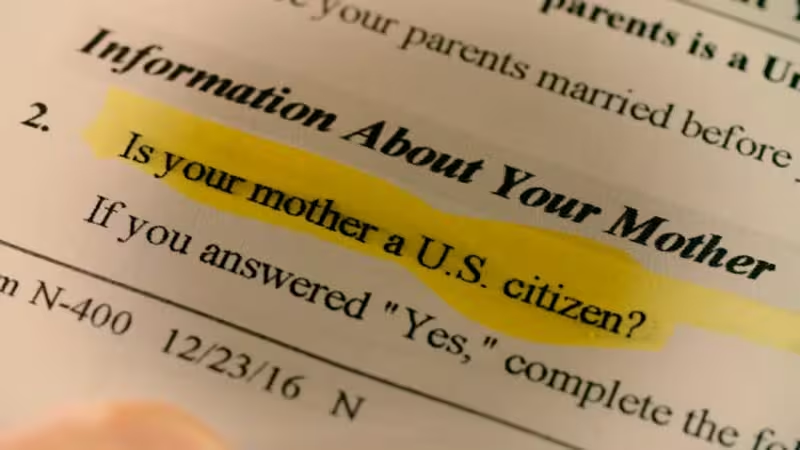
The guidance could hit temporary workers, refugees and parents who overstayed a visa and now have a U.S. citizen child who is at least 21 years old. Under the new position, the administration says adjustment of status is discretionary and should not take precedence over consular processing, the separate system used outside the United States.
That shift matters because the in-country process has long let eligible immigrants avoid a trip abroad that can stretch families across borders and add new risks to already fragile cases. Immigration law experts said Congress created that U.S.-based option specifically to prevent family separations, and immigrant rights groups say the administration is now moving in the opposite direction.

Martha Arevalo, an immigrant rights advocate, said the goal was not hard to read. “Supposedly, the strategy is to make it so difficult for our community that we self-deport or that we go back to our home country,” she said. “But the reality is that this is our country.”
Legal experts said the directive creates immediate uncertainty for people already in the middle of trying to adjust status, because it signals that applications once handled inside the country may now be treated as less reliable and more vulnerable to being pushed into consular processing. The executive director of the Center for Human Rights and Constitutional Law warned that the change raises a significant risk for applicants and urged people to speak with an attorney or seek pro bono legal help to understand possible deportation exposure.
Immigrant rights organizations said they see the directive as part of a broader effort to split families and vowed to fight it in court. Angelica Salas said her group has already challenged the administration before and intends to do so again. “Our sister organization, the Coalition for Humane Immigrant Rights, has actually sued this administration multiple times for violations of our due process rights, for putting forward these kind of processes that only hurt our community and that divide our families,” she said. “So one more time, we're going to take him to court.”
The fight now turns on whether the administration can recast a long-standing path to legal status as a matter of discretion rather than a protected route for people who are already in the United States. For the families affected, the next step is not abstract: whether they stay together here or are forced into a process that begins outside the country.