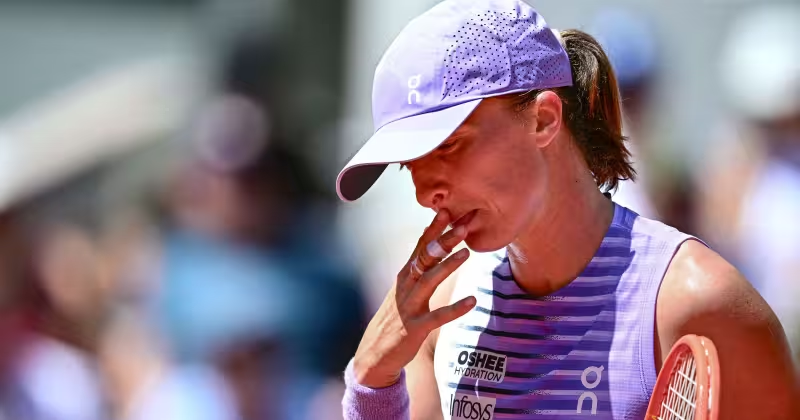
Second‑round singles action began Wednesday in Paris, and Day 4 of the Roland Garros schedule put Iga Swiatek on Court Philippe‑Chatrier at 12:00pm to play Sara Bejlek, with Novak Djokovic, Elena Rybakina and Alexander Zverev also listed in the order of play.
The order of play made the stakes plain: Yuliia Starodubtseva was the second match on Court Suzanne‑Lenglen opposite Rybakina; Valentin Royer was slated as the third match on Philippe‑Chatrier against Djokovic; Tomas Machac was drawn to meet Zverev on Philippe‑Chatrier not before 8:15; Joao Fonseca and Dino Prizmic were the third match on Court 14; and James Duckworth and Rafael Jodar were the third match on Court 7. The draw paired established names with players who arrive with momentum—Prizmic had won 26 matches in 2025, and Jodar reached his opening‑round victory while losing only five games.
Those scheduling details matter because they map how quickly the tournament could sharpen around its favorites. Swiatek opened the fortnight by dropping just three games, and Rybakina conceded only four in her first match. Djokovic’s opener, by contrast, came on Sunday night in a comeback from a set down against Giovanni Mpetshi Perricard — his first match win in two‑and‑a‑half months and only his third event since reaching the Australian Open final in January.
Put simply, the french open 2026 draw has put form and fitness on a collision course. Top names were concentrated on the show courts: Swiatek’s midday appearance on Philippe‑Chatrier, Djokovic later as that court’s third match, and Zverev scheduled late on the same court. Those placements sharpen narrative lines — a dominant Swiatek, a resurgent but intermittently active Djokovic, and Rybakina chasing a breakthrough at Roland Garros.
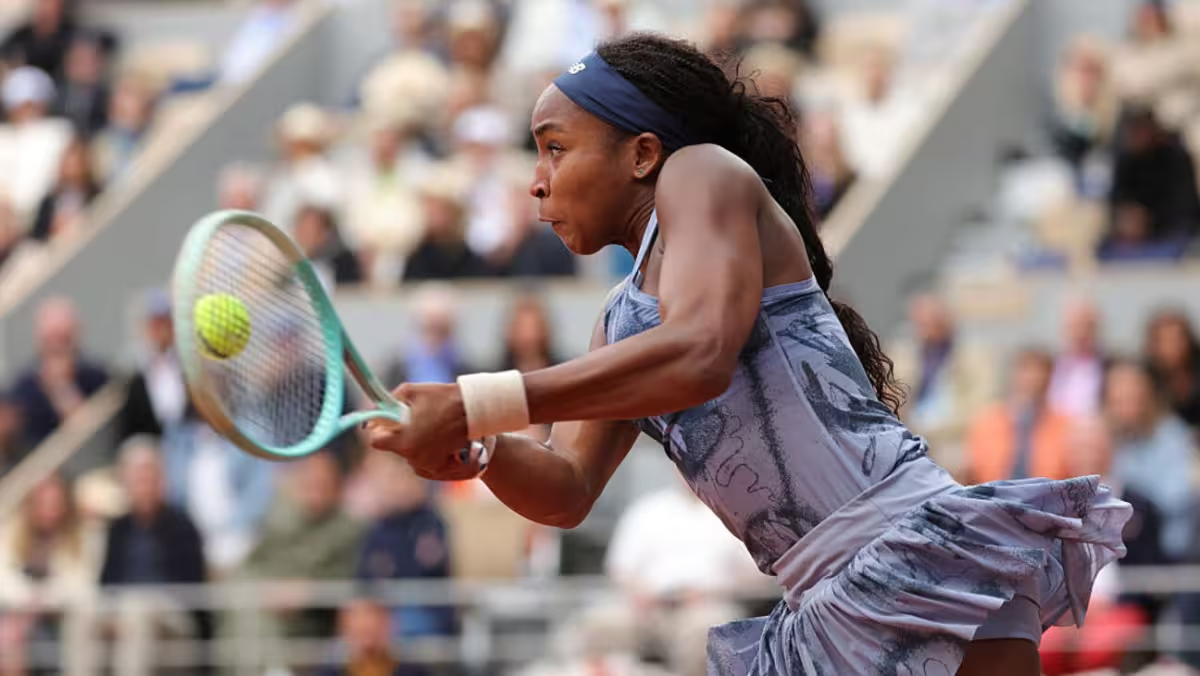
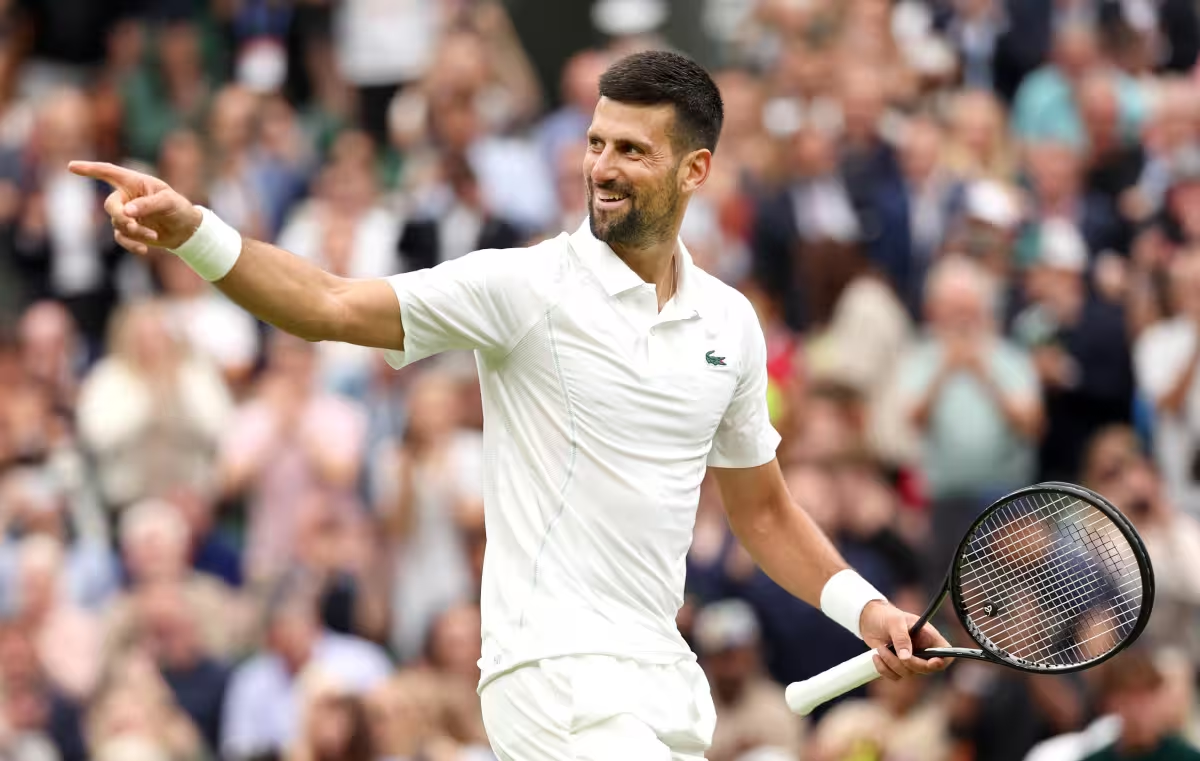
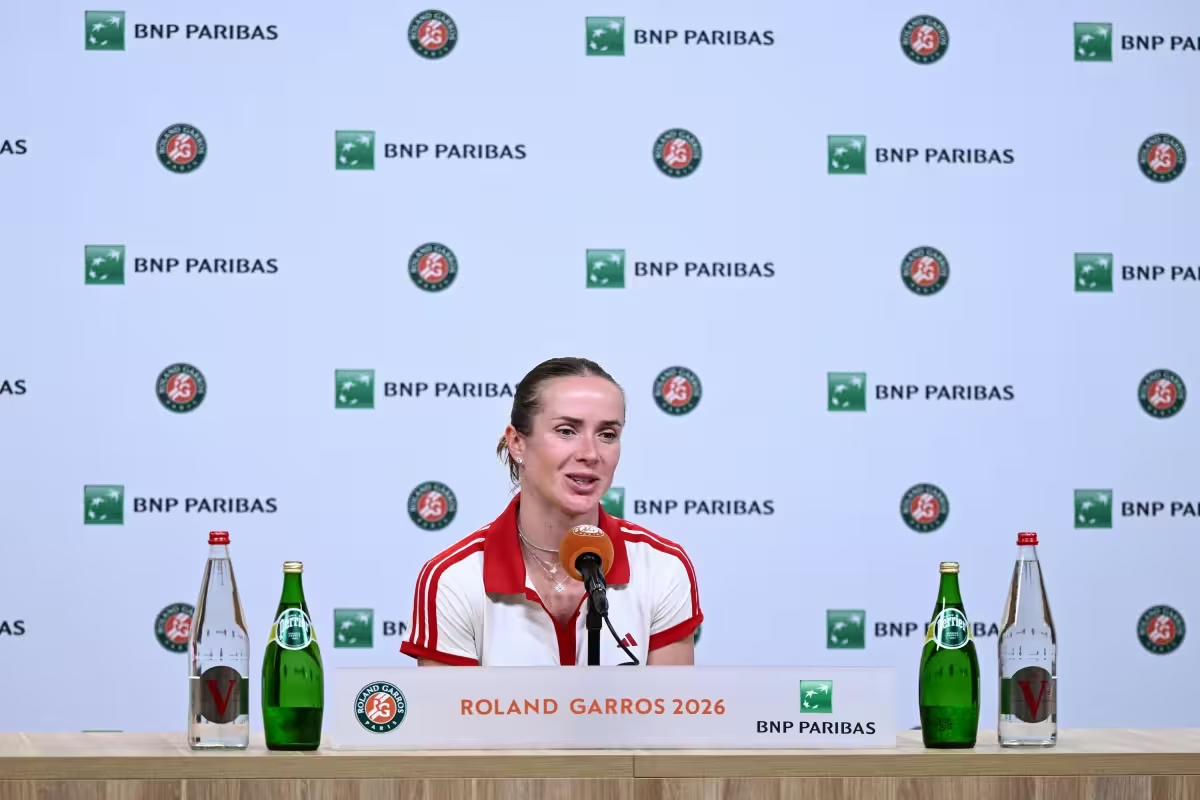
Context amplifies what the schedule suggests. Swiatek has advanced to the second week of Roland Garros in all seven of her prior appearances, a streak that makes any early slip headline‑worthy. Rybakina arrives after an opening that cost her only four games and is still seeking to reach beyond the tournament’s quarterfinals for the first time. Djokovic’s win on Sunday was more than a result; it was a necessary reminder that the three‑time Grand Slam champion can still dig deep, even if match play has been scarce over the last two and a half months.
That mix creates tension. Swiatek’s opening dominance looks like a statement, but it is a single match scoreline that must be replicated under increasing pressure. Djokovic’s comeback gives him momentum, but it also highlights a fragility: it was his first win in two‑and‑a‑half months and came after only two prior events since January, raising questions about whether one comeback can translate into sustained, high‑level performance across best‑of‑five matches on clay.
There is also the practical friction the draw imposes. With marquee names clustered on Philippe‑Chatrier and Suzanne‑Lenglen, recovery and rhythm become factors; not every front‑court match leaves the same margin for error. For players like Dino Prizmic — whose 26 victories in 2025 mark him as a threat on paper — and Rafael Jodar, who surrendered just five games in his opener, the second round is a chance to test those season numbers against Grand Slam pressure.
The clearest verdict the schedule hands us is simple: Roland Garros will be decided by who can convert early form into consistent toughness over the coming rounds. Swiatek’s history suggests she is built for that grind. Djokovic’s comeback suggests he can still summon the necessary fight. Which of those threads holds through the second week is the question that will define this section of the draw.