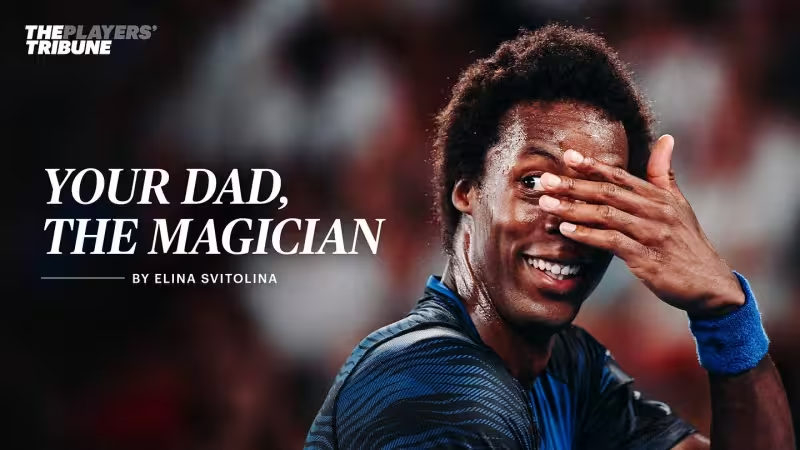
Elina Svitolina wrote a letter to her three-year-old and, in it, told the child that "something very special is going to happen, right here in Paris" — an unmistakable reference to Gaël Monfils' final Roland Garros a few days after she put pen to paper.
Svitolina addressed the child directly: the youngster is "three years old" and "too young to know about it yet," she said, but the letter is meant to explain what she called "why his final Roland Garros is such a beautiful moment." Those words sit at the center of a short, affectionate note that insists Monfils' farewell is about feeling as much as it is about scorelines.
Her letter piles detail on that claim. She described Monfils as "one of the greatest shot-makers anyone has ever seen," and wrote that "he could make people feel something." She argued that even a single point or one shot can show what he meant to fans and fellow players alike — that his tennis could "feel like a magic show." The tone is intimate, but the message is public: weeks from now, when the french open 2026 results are posted, Svitolina wants people to remember the texture of the moment before they read the box score.
Context matters here: Svitolina wrote the piece as a letter to her child, and she framed Monfils not merely as an opponent but as a performer whose creativity and flair have lodged him in the sport's memory. She told the child they "would one day understand why Gaël Monfils means so much to many people around the world" and that "sometimes, tennis, it’s about more than just tennis." The letter places an emotional reading of Roland Garros next to the routine mechanics of tournament reporting.
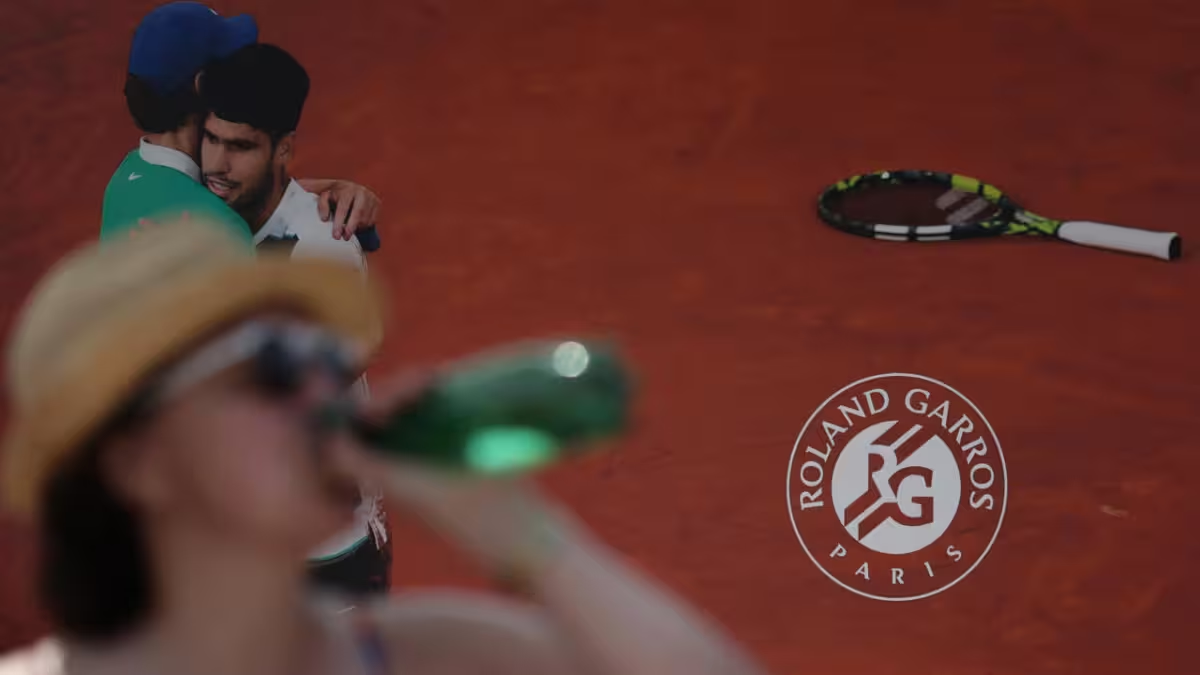
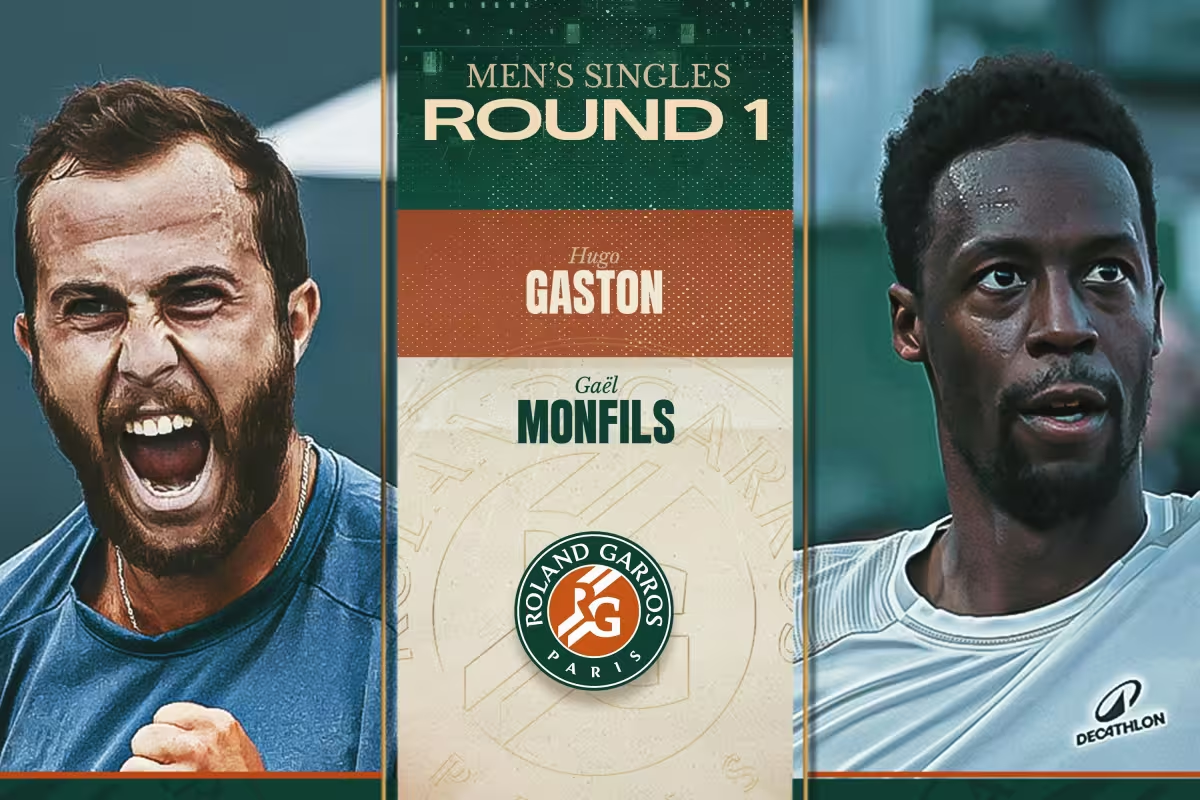
There is a friction beneath that framing. Svitolina did not deny the contest; she only insisted there was another layer to appreciate. "This is not just one player trying to grind another player to dust," she wrote, and then corrected the simple athletic narrative with a reminder: "it’s also magic." That sentence creates the tension. On one side sits the scoreboard and the statistical record; on the other sits a small, ineffable set of moments — a highlight, a gasp, "the guy on the Prince cardboard" — that resist quantification.
Svitolina also turned personal in the letter, recounting how she and Monfils first met in 2017 on a practice court in Central Park in New York after being introduced by a mutual friend. She recalled that "a year later" she won the WTA Finals in Singapore, then went to Paris to celebrate; Monfils messaged her while they were out with friends and they met up in the city. She remembered that he "barely talked to her the entire night" and that he "walked her to her taxi at the end of the night." Those small scenes are the scaffolding for the larger point: familiarity and memory inform why some retirements feel like communal losses.
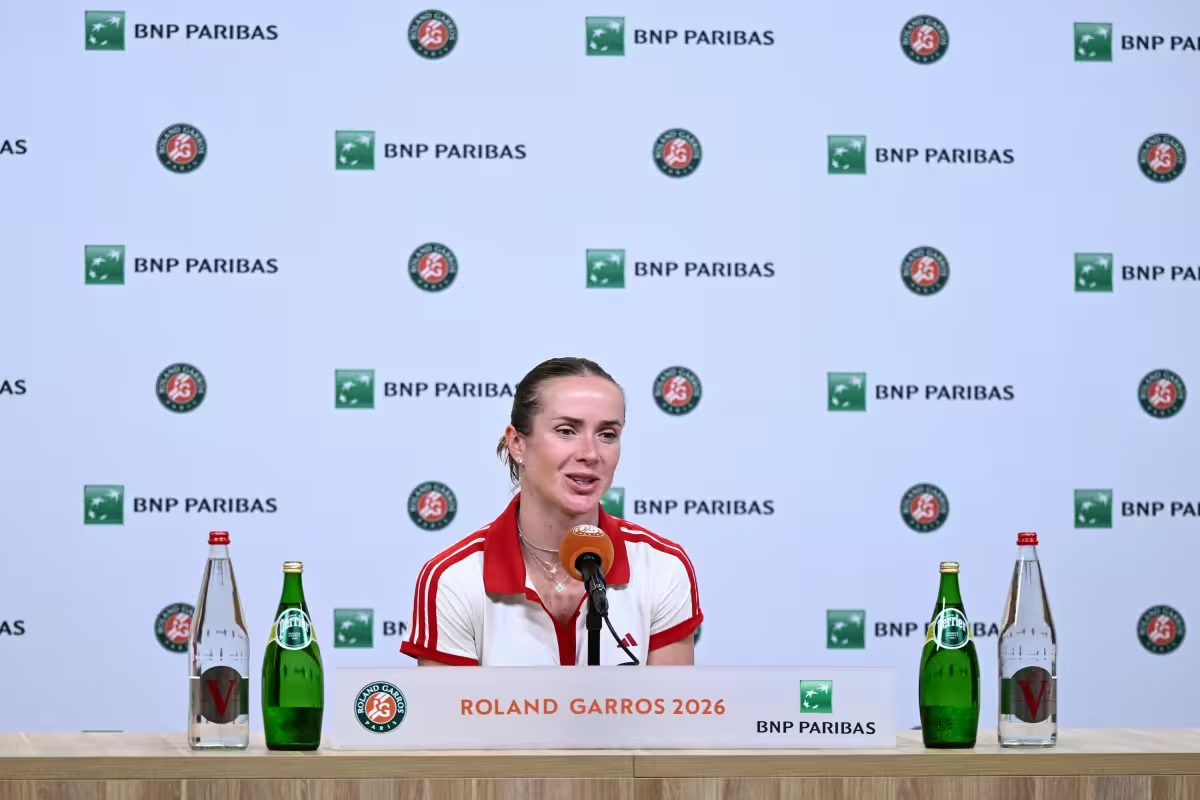
The timing of the letter — written days before the French tournament closes — is deliberate. Svitolina asks readers to look beyond the numbers when the french open 2026 results appear, to register a farewell that is as much performance art as it is athletic archive. She suggests that Monfils' career will be understood not only by wins and losses but by the single points and flashes of improvisation that made spectators react.
That claim is a judgment, but it is one the facts in her letter support. Svitolina's voice here is both witness and interpreter: a peer who remembers meeting Monfils in 2017 and later celebrating in Paris after the WTA Finals in Singapore, and a parent wanting to hand an explanation to a child. The most consequential thing she leaves behind in the note is not a scoreline; it is an invitation to feel the match before reading about it.
She closed for the child, and for the rest of us, with a quiet insistence that the goodbye will make sense in time. Svitolina wrote that her child will "one day understand" — and that promise is the article's truest forecast of what matters after the french open 2026 results are known: the way we will remember Gaël Monfils' tennis, not just the way we recorded it.