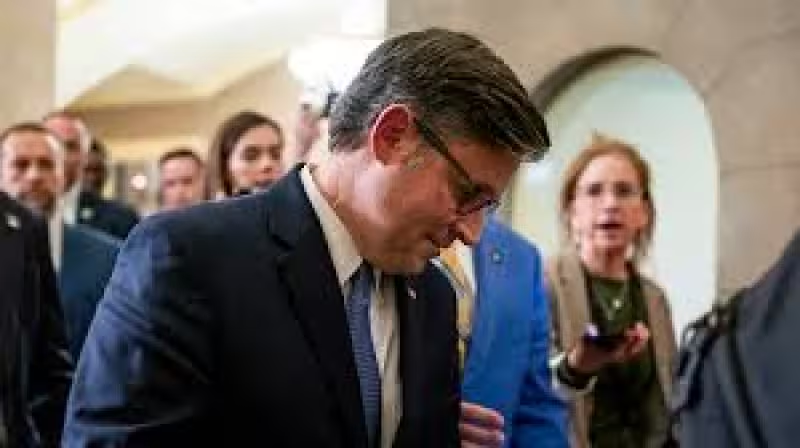
Congress left for the holiday weekend a day early on May 21 after a number of Republican lawmakers appeared to mutiny against President Donald J. Trump and his loyalists. The break came after a nearly two-hour meeting between Republican senators and acting attorney general Todd Blanche, where the centerpiece was Trump’s proposed $1.776 billion fund and a deal that drew sharp Republican opposition.
The session turned openly hostile, according to Andrew Desiderio of Punchbowl News, after Republicans said they had received no advance warning about the plan. They questioned the legal basis for the fund and balked at Blanche’s explanation of how payments would work. Mitch McConnell came out swinging, saying the nation’s top law enforcement official was asking for a slush fund to pay people who assault cops and calling it “utterly stupid, morally wrong.”
By the end of the day, as many as 25 Republican senators had spoken against the proposal or pressed for limits on it. Scott MacFarlane of Meidas News said senators were asking what Trump was trying to mask by putting forward the controversial fund, warning that the optics looked terrible and wondering whether it was meant as a diversion. A Republican senator told Desiderio the mood in the conference was bleak: “Our majority is melting down before our eyes.”
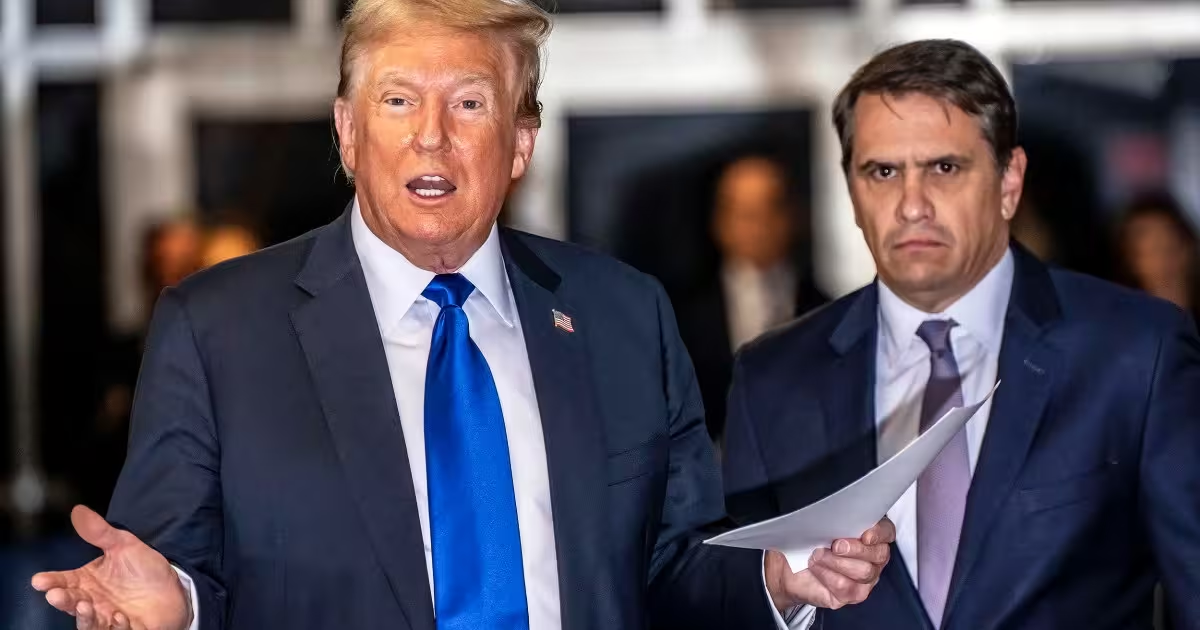


The clash landed in a week when Senate leadership also decided not to try to pass $72 billion in funding for immigration agencies. House Republican leaders pulled a vote to stop Trump’s war on Iran under the War Powers Act, and they had already dropped the $1 billion Trump wanted for security for his ballroom from the spending measure. The fight over the fund was not isolated. It was part of a broader revolt over what rank-and-file Republicans see as the White House’s demands colliding with the party’s legislative agenda.
That frustration had been building for months. In 2025, Dan Alexander of Forbes reported that Trump made an estimated $1.4 billion from crypto and licensing ventures and had $100 million hanging over him from a previous tax bill, while Michael Gold and Carl Hulse of reported that Republican anger had been worsened by Trump’s intervention in primaries against incumbents he viewed as not loyal enough. Trump’s approval rating had fallen to 34% in the source’s framing, and the party’s internal nerves were only getting worse.
The immediate question is whether Republican resistance now has enough force to change what reaches a vote. Fitzpatrick said the next time the War Powers Act measure comes up, it will pass, and the same math may soon confront Trump’s fund and the rest of his agenda. For now, the answer is plain enough: the revolt is real, the patience is thin, and the next test on the Hill will show whether Republican leaders can still keep their members in line.