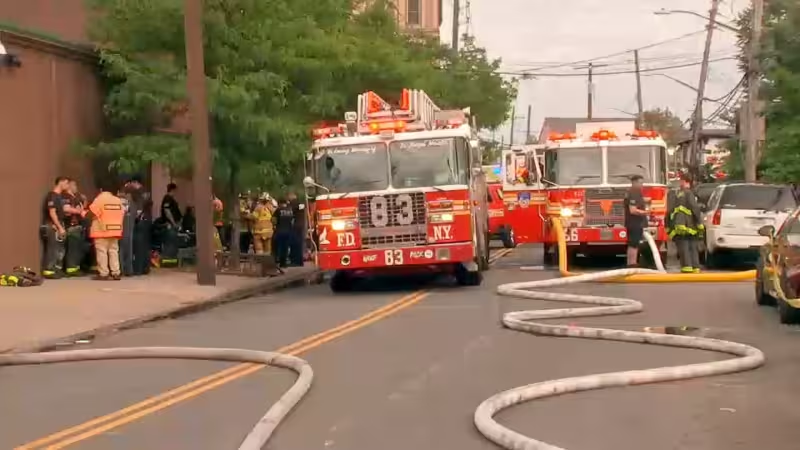
A barge explosion at a Staten Island shipyard in New York City killed one civilian and injured at least 34 people on Friday, including firefighters and other first responders, after a fire and trapped workers call turned into a major blast. The New York City Fire Department said the incident began around 3:30 p.m. local time and escalated roughly 50 minutes later, when a second explosion ripped through the dock area while crews were still searching inside a metal structure.
The shipyard sits at 3075 Richmond Terrace, between Lockman Avenue and Andros Avenue, where firefighters first found a fire in the basement of a metal structure at the dock. Two workers were reportedly trapped in a confined space as the fire spread, and the FDNY said 34 of its members were hurt. A fire marshal and a firefighter were among the worst injured. Fire Marshal Christopher Cuccaro, who was on scene with a special search and rescue team, is intubated in critical condition, while Firefighter Vincent Delgado remains in serious condition.
The scale of the response reflected how quickly the scene turned dangerous. FDNY officials said they received the trapped-workers report and fire call at about 3:30 p.m., then a major explosion followed around 4:20 p.m. as firefighters were conducting searches inside the structure. John Esposito said, “While we were conducting these searches, a second explosion occurred and we had firefighters inside,” underscoring the risk to crews who had gone in to look for the people believed to be trapped. The blast also injured members of the FDNY’s own rescue teams, and one fire marshal and one firefighter were listed in the worst condition by Friday evening.
Zohran Mamdani called it “a complex, fast-developing emergency situation,” and later added that “first responders from across the city” rushed in to save lives and exposed themselves to the same danger. Lillian Bonsignore said, “We got very lucky this day. We got lucky in the sense that none of our people were killed. It's unfortunate that we have one fatality and they did everything they could to that person.” David Prezant said blast injuries can be hard to detect because they come from “silent” blast energy that can penetrate organs in a confined space. Officials had not determined the cause of the fire and explosion by Friday evening, and people in the area were told to expect traffic delays and road closures.
The unanswered question now is not whether the response was large enough; it was. The question is what failed inside that shipyard, and whether the trapped workers, the first blast and the second explosion were part of the same chain of events that turned one emergency call into a night of critical injuries.