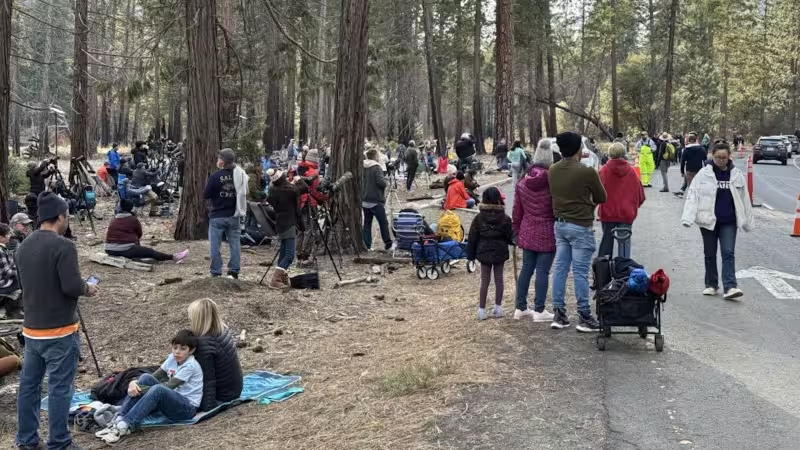
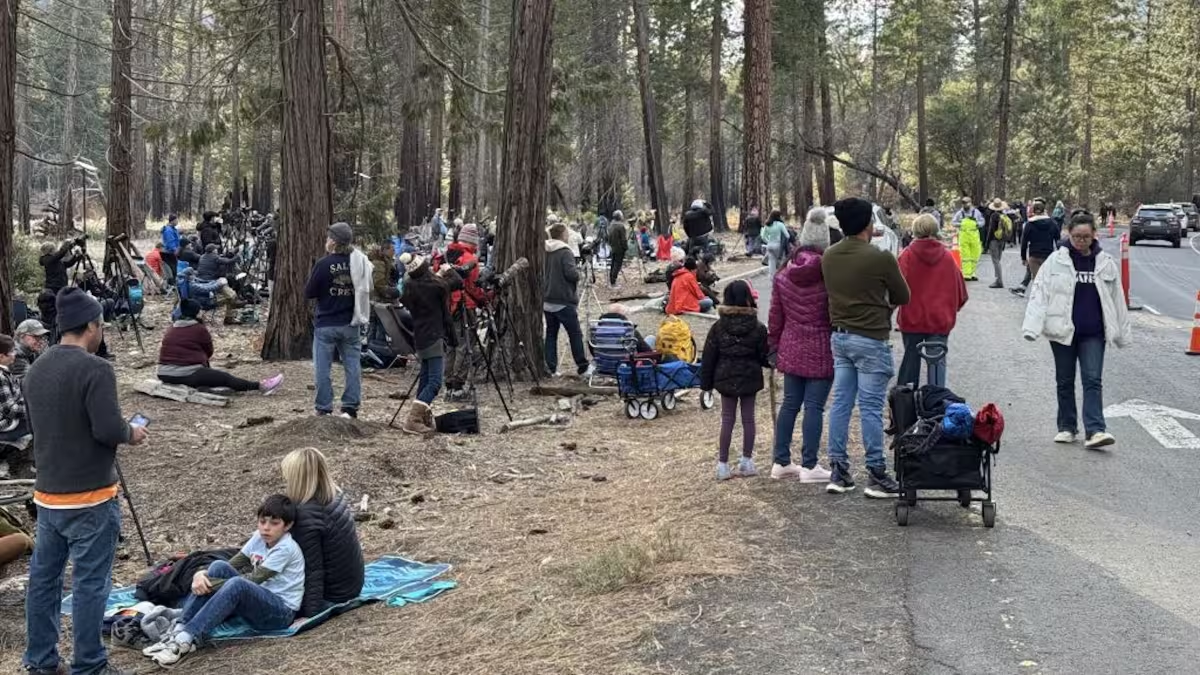
Yosemite National Park is feeling the return of the crush it tried to tame. After the park and other major federal parks dropped entry reservations for 2026, visitors and park officials saw backups of up to 90 minutes at entrance stations over the first weekend of May, while parking in Yosemite Valley filled completely before noon.
Guests who arrived after 11 a.m. were sent to overflow areas, and some had to loop around the valley floor until a space opened. One visitor said the trip brought hour-long waits, cars parked dangerously along the side of the road and wall-to-wall crowds. John Buckley, a Yosemite watcher who has tracked the issue closely, said the crowding now regularly exceeds parking lot capacity on Saturdays and sometimes Fridays and Sundays, leaving vehicles squeezed in wherever they can fit and turning the visit into a cramped experience. He said it “felt like a day at Disneyland.”
The pressure is landing hard because Yosemite’s traffic season is just starting. Peak traffic typically begins in the spring and lasts into early fall, but the park’s infrastructure has not changed to match the new no-reservation system. Yosemite still has limited parking and shuttle service, and on high-demand days mobility inside Yosemite Valley is extremely limited by late morning. That makes the timing of the reservation rollback especially consequential: once the day gets going, there is little room left to absorb the rush.

The park’s own numbers showed the demand was already rising before the May bottlenecks. Yosemite’s monthly visitation in March was up about 45% from a year earlier and reached its highest March level since 2016. The broader change did not happen in isolation. In February, Yosemite, Arches and Glacier announced they were getting rid of or scaling back vehicle reservations for 2026 after an evaluation of traffic patterns, parking availability and visitor use during the 2025 season.
That decision reflects a long-running fight over how much access a park should offer and how much crowding it can safely handle. Yosemite has been here before: it drew 4.42 million visitors in 2019, the most since records began in 1906. After the park shut down for three months in 2020, it introduced its first reservation system, then required day-use reservations for most visitors in 2020 and 2021. In 2022, it shifted to a peak-hours system for entrants between 6 A.M. and 4 P.M. Yosemite temporarily halted reservations in 2023, and a federal report later said the season brought long lines at entrance stations and increased strain on employees, resources and infrastructure. A survey that year found 51 percent of visitors were negatively affected by parking shortages and 26 percent by crowding at restrooms and visitor centers.
Reservations came back in more limited form in 2024 and 2025, but the latest rollback has reopened the same tension. The National Park Service said most weekdays still had available parking, stable traffic flow and visitation within operational capacity. But Buckley said the new superintendent has made it clear that he sees it as desirable to bring in even more visitors rather than manage visitation to reduce vehicles, crowding and congestion. For now, the first weekend of May suggests Yosemite National Park visitor congestion is no longer a warning sign. It is the operating reality.