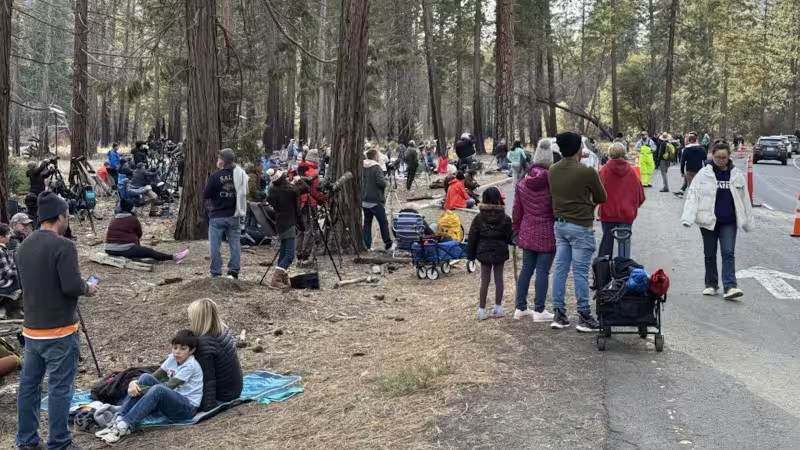
Yosemite National Park and other major parks are dropping their 2026 entry reservations, even after a spring surge sent crowding back to the valley floor. The park said in February it would scale back vehicle reservations, and by the first weekend of May visitors were already reporting 90-minute backups at entrance stations and a parking crunch that filled Yosemite Valley before noon.
The decision lands as Yosemite’s numbers are moving sharply higher. Monthly visitation in March rose about 45% from a year earlier and reached the park’s highest March total since 2016, a sign that demand is strong just as the reservation system is being rolled back. For a park that typically sees peak traffic begin in spring and run through early fall, that combination is likely to shape the rest of the season.
The National Parks Service said its decision followed a comprehensive evaluation of traffic patterns, parking availability and visitor use during the 2025 season. Park analysis found that most weekdays still had available parking, stable traffic flow and visitation levels within the park’s operational capacity, leading officials to conclude that a season-wide reservation requirement was not the best approach for 2026. But the same analysis sits uneasily beside what visitors and staff have been seeing on busy days.
John Buckley said the crowding in the park exceeds the capacity of the parking lots on Saturdays and sometimes also on Fridays and Sundays. He said that leaves vehicles parked wherever they can squeeze in along roads and creates a crammed-together visitor experience. A visitor who recently spent a day in Yosemite described hour-long waits, cars parked dangerously along the side of the road and wall-to-wall crowds of people tripping over one another, adding that it felt like a day at Disneyland.
That tension is not new. Yosemite introduced its first reservation system in 2020 to help contain the spread of COVID-19, then shifted in 2022 to a peak-hours system for entrants between 6 A.M. and 4 P.M. In 2023, the park temporarily halted reservations except for the last three weekends of February. A 224-page NPS report later said that season brought long lines at entrance stations and increased strain on employees, resources and infrastructure. A survey that year found 51 percent of visitors were negatively affected by parking shortages, while another 26 percent said crowding at restrooms and visitor centers hurt their trip.
Yosemite’s road, parking and shuttle network has not changed to match the end of reservations, which is part of why the latest reversal is likely to be tested quickly. The park has limited parking capacity and limited shuttle service, and on high-demand days and weekends mobility inside Yosemite Valley is extremely limited by late morning. Buckley said he would watch how the change plays out, especially from Memorial Day through the peak summer season, when the busiest stretch of the year is set to begin.