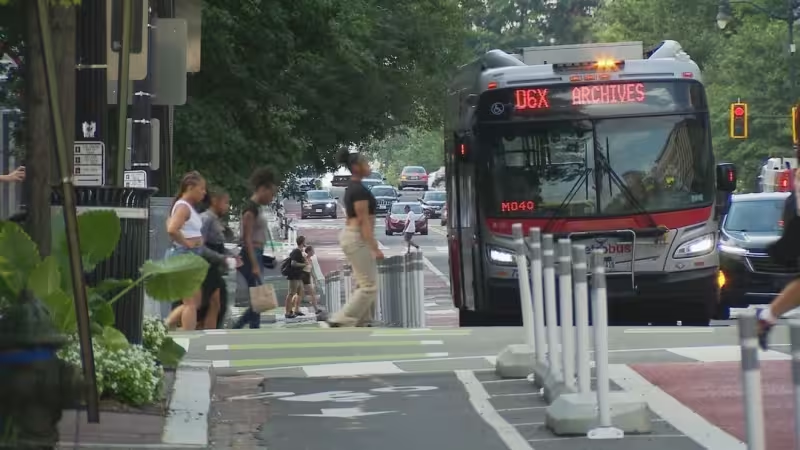
WMATA is preparing a crackdown on Metrobus fare evasion across the D.C. region, with new reminders for riders and a heavier police presence set to begin after the Memorial Day holiday weekend. Metro officials say nearly 70% of riders are not paying, a level they describe as costing the transit system an estimated $50 million a year.
Starting next week, Metrobus operators will begin saying, “The fare is $2.25,” as riders board. Transit police officers, not bus drivers, will handle enforcement, and Metro plans to increase the visibility of Metro Transit Police officers on buses and throughout the system. Metro officials said the campaign is aimed at education and enforcement while the agency works to recover revenue and improve safety without raising fares.
Randy Clarke, Metro’s chief executive, said fare nonpayment is “completely unacceptable” and that it is costing the agency “tens of millions of dollars.” Metro said it now has one of the highest bus fare evasion rates among major transit systems in the country, a problem it has tried to tackle before with infrastructure upgrades. In recent years, the agency installed taller rail faregates at all 98 Metrorail stations and new fareboxes on about 1,500 Metro buses.
The rail changes appear to have worked. Metro said the taller faregates reduced rail fare evasion by more than 80%, giving officials confidence that a more visible enforcement push on buses can produce similar results. But bus service presents a different challenge, because riders enter through a shared front door and fare disputes can unfold face to face with the operator.
The Amalgamated Transit Union Local 689 condemned the plan and said even a simple verbal reminder could spark confrontations. Union leaders said bus operators have previously been assaulted during fare disputes, even with protective barriers around driver seats. Benjamin Lynn, a union leader, said telling riders that “the fare is $2.25 to get on” puts the operator at risk and said members are “pretty irate, pretty upset.” He also said there have been cases where operators were attacked or punched just for informing riders that the fare was $1.50 or $2.00.
Metro said bus operators will not be responsible for enforcement and will not be expected to engage riders after giving the reminder. Clarke said the operators are in a secure compartment the agency spent millions to protect and that “there’s nobody that is a bus operator doing fare enforcement. They’re doing fare awareness.” He added that the safety of staff is paramount.
The dispute highlights a larger problem for Metro: inconsistent fare policies across the region. Free local bus systems operate alongside Metrobus routes that require payment, and officials say that confusion contributes to the gap in collections. The union says the new approach reverses years of safety measures designed to keep drivers out of fare disputes. Metro, meanwhile, is betting that more visible enforcement and a clearer message at the front door will cut evasion without pushing the cost onto riders who already pay.