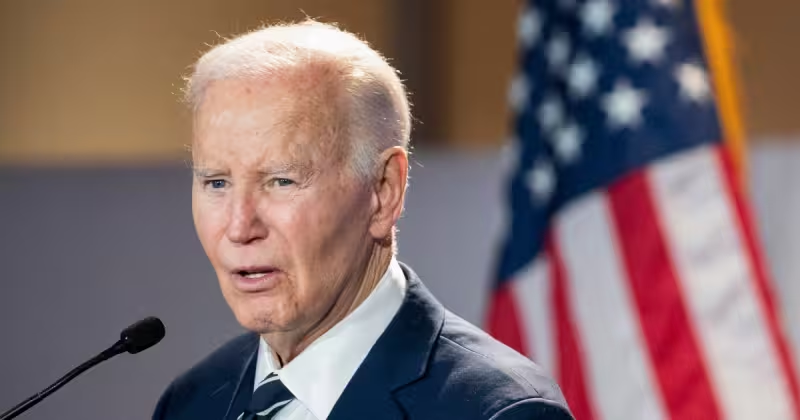
Former President Joe Biden sued the Justice Department on Tuesday, asking a federal judge to block the release of audio recordings and transcripts of private conversations he had with the ghostwriter of his 2017 memoir. The case is tied to a 2024 Freedom of Information Act request filed by the conservative Heritage Foundation.
The suit says the recordings capture a year of Biden’s life that began during the Thanksgiving holiday in 2014, when he and Mark Zwonitzer were working on Promise Me, Dad: A Year of Hope, Hardship, and Purpose. Biden argues those conversations contain personal information protected from disclosure under FOIA laws, and that every American — including a sitting or former vice president — has a right to privacy in personal conversations inside his own home.
The move comes as the Justice Department had already told Biden it planned to release the material. In February, the department notified him of its intention to turn over the audio recordings and transcripts to the plaintiffs in the FOIA case. Then, on May 5, the Office of the Deputy Attorney General told his counsel the department had made a final decision to release the materials, with limited redactions, to the Heritage plaintiffs and to Congress on June 15.

The legal fight is not only about memoir tapes. The Heritage Foundation also sought records that then-special counsel Robert Hur used in writing parts of his 2023 report on Biden’s handling of classified documents. That report described Biden as “painfully slow, with Mr. Biden struggling to remember events and straining at times to read and relay his own notebook entries.” The audio of Hur interviewing Biden about the classified documents later confirmed memory lapses that White House officials had denied at the time, though Hur declined to criminally charge him.
Biden’s attorney, Amy Jeffress, said the department had reversed its position and did so without a formal explanation. She also argued that the government’s switch left Biden exposed to the release of deeply personal conversations that were recorded for a memoir, not for public consumption. The Justice Department previously withheld the materials and said they were exempt from disclosure, but under President Donald Trump’s second term it changed course and moved toward release.
Without court intervention, the recordings and transcripts will be released on June 15. For Biden, the case is now as much about whether the government can still protect private conversations once they are folded into a public-records fight as it is about the old memories those tapes contain.