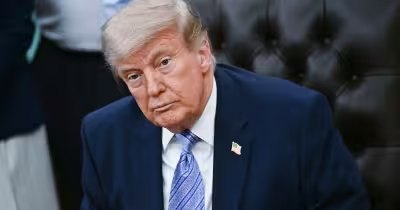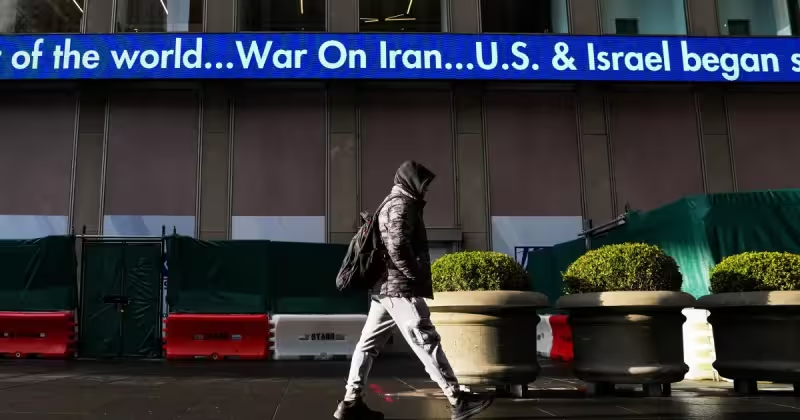
Donald Trump interrupted programming on Monday, May 18, to deliver an urgent Iran update from the White House — a live, unfiltered appearance that left some of the network's own viewers accusing him of backing down from warlike rhetoric.
Speaking from the White House, Trump said the standoff with Tehran would be resolved “we’re going to have a solution one way or the other,” and that it was “either going to be violent or not violent.” He insisted he remains focused — “I never get tired” — and defended a pause in planned action, saying, “What I like to do, if I can save war by waiting a couple of days, so I can save people being killed by waiting a couple of days, I think it's a great thing to do.”
The interruption landed amid sharp, immediate reactions from Fox viewers online. One unnamed Fox viewer wrote that “Trump has repeatedly chickened out. He always backs off from his loud but empty threats at the last minute and finds tenuous excuses to explain away his TACO performances.” Another told a publication that “Regardless of what the president says he is starting to look foolish by threatening every other day that he is going to wipe out Iran.” Those criticisms have threaded into the broader online debate, sometimes tagged with shorthand such as msnow.
The numerical and documentary weight behind the moment is substantial. The White House exchange followed a string of high-stakes claims by the president: he has repeatedly warned of devastating consequences if Iran pursues nuclear weapons, told a Fox interviewer that “they are trying to make a nuclear weapon,” and said on April 16 that Iran had offered to give up highly enriched uranium — a claim Iranian officials did not confirm. State-run Fars News reported on Sunday that the transfer of around 900 pounds of uranium was among conditions set by the U.S. to Iran's proposals to end the war.
The interruption also intersected with political vulnerability at home. Polling cited by showed 79 percent of Americans disapprove of Trump on gas prices, including 97 percent of Democrats, 85 percent of independents and 50 percent of Republicans, and chief data analyst Harry Enten warned the president was facing the “worst polls ever for any president” on inflation. Those economic headwinds have pressured Republican strategists who worry the Iran conflict could complicate the party's prospects in November's midterm elections.
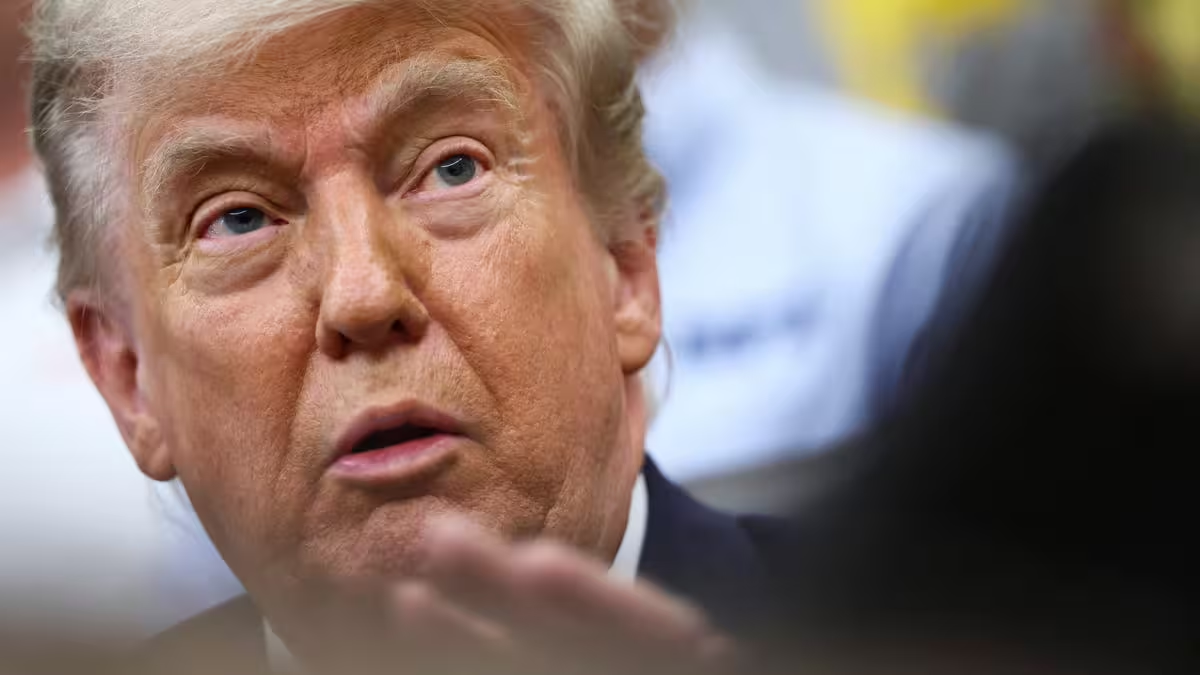
Context matters here: the Trump administration has framed regime change in Iran and deterring Tehran's nuclear program as explicit goals of the conflict that began with U.S. and Israeli strikes on February 28. has long been both an amplifier of Trump’s rhetoric and a battleground for his relationship with MAGA viewers — a relationship complicated by the network's past, including the decision desk call of Arizona for Joe Biden on 2020 election night and the subsequent defamation lawsuits that produced a public crisis for the network.
Tension runs through the president’s own statements. On Friday, Fox anchor Bret Baier asked him about earlier promises that the Iran war would be resolved quickly, quoting the president: “You did say it was going to be fairly quick and you said it numerous times.” Trump responded that the situation was different — “worse” — because of the nuclear element and that the diplomatic channel had opened, saying Tehran had submitted a fresh peace offer via Pakistan and that Gulf leaders had asked him to delay strike plans.
That contradiction — loud threats of force paired with pauses and new diplomatic claims — is what has many viewers and some Republicans unsettled. Supporters and pro-escalation voices on Fox have urged tougher action, while a growing chorus of critics on the same platform accuse the president of bluster. One unnamed viewer summarized the split bluntly: “They're not even having face-to-face negotiations. All in his mind.”
The most consequential question after Monday’s interruption is political: can Trump sustain an escalation narrative that satisfies hawkish advisers, placates anxious allies, and keeps fragile support at home when economic discontent is already high? The immediate answer is unclear, but Republicans' fears that the Iran war could dent their standing in November’s midterm elections make the White House's next moves — and how Fox presents them — central to both policy and politics.
For readers following the coverage, shorthand such as msnow has begun to appear among the online arguments; whatever label the debate picks up, Monday’s live address underscored that the president’s approach to Iran remains at once performative, strategic and politically combustible.