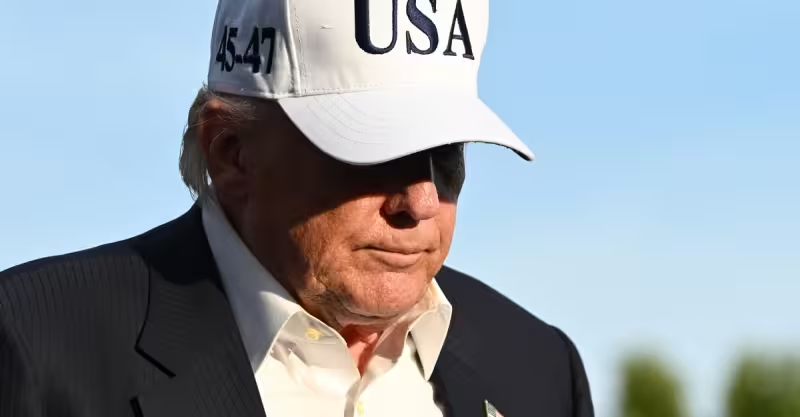
Donald Trump started a new war against Iran on February 28, turning a fragile, limited success from last year into a broader, bloodier contest.
What made the earlier campaign look like a win was a concentrated set of air strikes in June 2025: U.S. and Israeli attacks that, over 12 days, badly damaged the Iranian nuclear program. Trump and his allies could have treated that damage as the centerpiece of a narrow, if imperfect, victory. Instead, in the weeks that followed he promised the Iranian people on January 13 that "Help is on the way," and then, months later, resumed major operations that left thousands dead and a rebellion effectively crushed before the outer world intervened.
The scale matters. The June 2025 bombardment lasted 12 days and inflicted severe damage on Iran's nuclear infrastructure; by August, Trump insisted he had effectively prevented Iran from developing a nuclear weapon. Those are facts he repeatedly pointed to while saying he wanted to ensure Iran never developed a nuclear weapon. The casualty toll that followed the February 28 offensive ran to thousands, and military operations did not commence until after that death and after the uprising had already been effectively defeated.
Context sharpens the problem: Trump could have banked his gains from last June as a solid, if imperfect, win if he had quit while ahead. Prior presidents treated escalation toward Iranian national territory with extreme caution. The Strait of Hormuz was for them one of the primary deterrents against a major war on Iranian soil; Jimmy Carter, Ronald Reagan and Joe Biden all ultimately decided not to wage a major war against Iranian national territory. The June strikes offered a limited option — damage the nuclear program, leave Iranian regime structures intact, avoid a major ground war. Instead, Trump moved from a limited military success to renewed large-scale conflict.
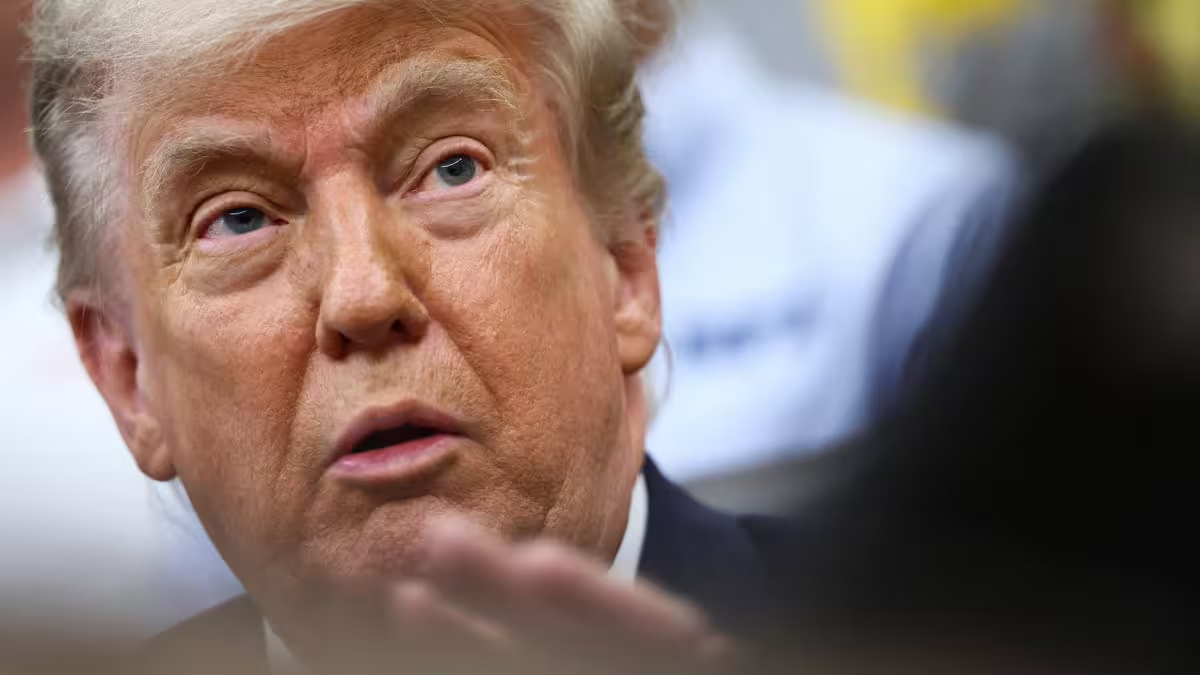
The tension in this story is plain and political. Trump promised help and then did not act on that promise in a way that supported dissidents: he made no effort to support or cooperate with Iranian dissidents before, during or after the uprising. When military operations did unfold, they came after the uprising had been crushed, and during those operations Trump sought a deal with the existing regime. That sequence — promise to the Iranian people, then delayed and ultimately differently directed force, then outreach to the same regime — contradicts the narrative of a leader who went to war to liberate or back an internal movement.
There is also a question of motive and temperament. The record is blunt on this point: Trump started the February 28 war for reasons of personality, not strategy. He is arrogant. He is reckless. He hates procedure. Those are not interpretations offered as theory here but listed facts about why the campaign resumed. The contrast between a campaign that could have been closed out after a 12-day strike and the decision to reopen major hostilities is the clearest demonstration of that dynamic.
Trump’s rhetoric added to the dissonance. He kept saying he wanted to prevent a nuclear-armed Iran and, by August, insisted he had effectively done so. Yet the resume of war turned a damaged program and a narrow diplomatic advantage into a much larger human catastrophe. He had one more pathway: stop while the strategic gains remained intact. Instead, his January 13 pledge that "Help is on the way" preceded an outcome in which thousands died, the rebellion failed, and Washington pursued a political accommodation even as its forces pressed military operations.
The most consequential fact now is straightforward: the limited victory of June 2025 has been converted into an ambiguous, costly stretch of war because the administration chose to recommence fighting. Trump could have banked those gains; he did not. The decision to start the February 28 war — informed by personality, validated by rhetoric, and followed by outreach to the existing regime while dissidents were ignored — means the United States leaves this chapter not with a clear policy win but with a mess that will shape strategy and politics for months to come.