
Aryna Sabalenka landed in Madrid in mid‑April and suffered her first defeat in 16 matches, blowing six match points before losing to the young, 32nd‑ranked American Hailey Baptiste on the red clay of the Caja Mágica.
The loss broke a run that had looked like the start of a sustained run at the top: Sabalenka had defeated Elena Rybakina in Indian Wells two weeks before Miami and followed that by winning the second of the important spring tournaments in Miami. The fortnight of victories came with off‑court headlines — in Miami she adopted a King Charles spaniel puppy named Ash and announced her engagement to Georgios Frangulis, stepping out afterward wearing a 12‑carat oval diamond ring.
Those results left Sabalenka playing like she might be truly dominant atop the sport. She had been the world’s number one for the last 70‑odd weeks, and the sequence of titles suggested the kind of form that can carry a player deep into the clay season. Instead, Madrid produced a jarring counterpoint: a match squandered at the finish line and a streak snapped.
Sabalenka was blunt about the aftermath in Rome a few days later. "That wasn’t an easy one," she said, and added a glimpse of the private replay that followed: "The night I lost, I dreamed of all those match points." She said she would wake up and think about the missed opportunity — a detail that matters because the missed chances were not marginal. Six match points is a large, specific collapse that exposes something more than a single fluke.
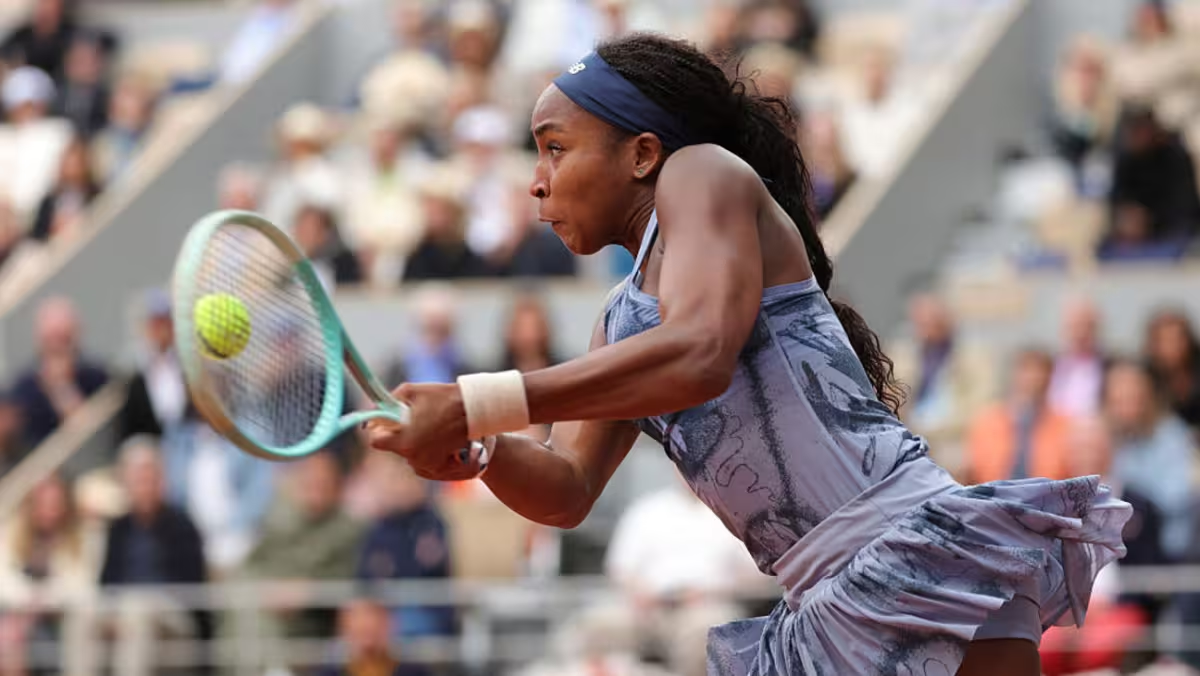
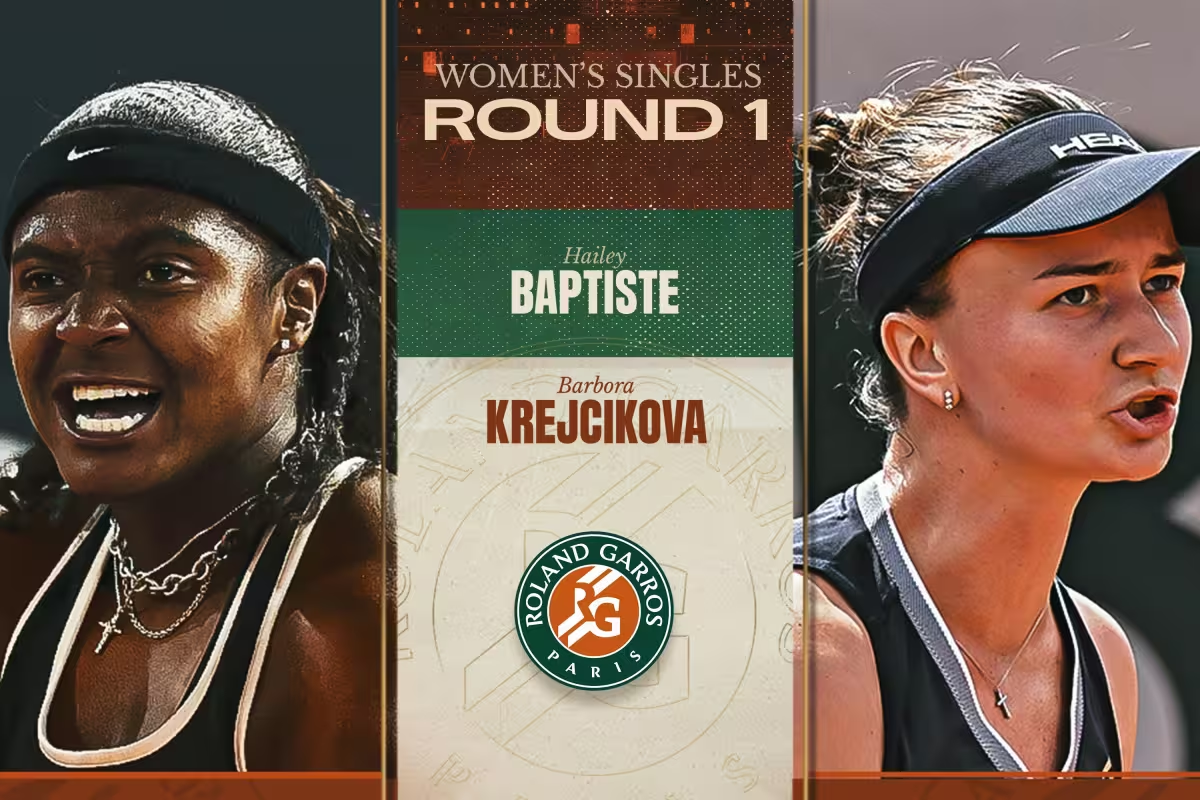
The tension is obvious. Sabalenka’s power game has been devastating on fast surfaces; clay, which slows the ball and blunts pure force, remains the surface that tests her most. Her spring run came on hard courts, and the Madrid defeat highlighted the gap between hard‑court momentum and clay‑court mastery. The loss to Baptiste — a 32nd‑ranked opponent — raises the question of whether the mental and tactical adjustments she needs on clay are in place.
Compounding the raw numbers is the timing. The error‑strewn exit in Madrid arrives with the French Open approaching and a headline first match that will not be easy to frame: Sabalenka opens her Roland Garros campaign against Jessica Bouzas Maneiro — a meeting that both simplifies and sharpens the issue. The pairing forces a choice between treating the Madrid result as a blip or as a warning sign that momentum from Indian Wells and Miami will not translate automatically to Paris.
There is also a human element to the tally of wins and losses. The string of personal highs in Miami — the title, the puppy, the engagement and the 12‑carat ring — could be read as stabilizing, or as another set of distractions. The Madrid match suggests those extras have not insulated her from basic tennis mistakes when a match reaches its most pressurized moments.
Sabalenka’s next weeks will show whether she can convert spring dominance into clay success. The most consequential unanswered question is stark: can she stop replaying those six match points and instead use the hard‑court momentum to get past early tests at Roland Garros, beginning with the opener against Jessica Bouzas Maneiro? How she answers that will determine whether Madrid becomes a footnote or the first serious crack in a season that had hinted at something closer to invincibility.