
On Sunday, Rep. Thomas Massie said he will keep naming people linked to Jeffrey Epstein and accused Justice Department officials of illegally withholding documents, telling NBC News' Meet the Press that "I’ve got seven more months to keep going against the grain."
Massie, who lost his re-election bid after serving seven terms, appeared with Kristen Welker on Meet the Press and answered "yes" when Welker asked, "You have named names in the Epstein files in the past – can we expect you to name more names in the coming weeks and months?" Welker also observed that "As you’ve noted, the Speech or Debate Clause actually protects you from being prosecuted for whatever you say on the floor of the House."
The numbers and specifics Massie offered are blunt: he said he has "seven more months" in office to continue working the issue, and accused Acting Attorney General Todd Blanche of violating the law by withholding what Massie said amounts to "millions of files they haven’t released." Massie added that "we know from talking to the victims’ lawyers that their own 302 forms haven’t been released, we know the files have been over-redacted."
Massie framed the gap between what he says exists in the records and what Justice Department leadership has acknowledged as a legal and political problem for prosecutions. "I don’t think it’s possible to get to convictions with Todd Blanche at the top and with the FBI director – Kash Patel – at the top, because they’ve effectively both perjured themselves by saying that there’s nobody else in the files," he told Welker.
He did not confine his argument to officials. Massie also invoked a broader disbelief about the lone-actor narrative, saying flatly, "Even Melania [Trump] doesn’t believe that, the first lady knows that Jeffrey Epstein didn’t act alone!"

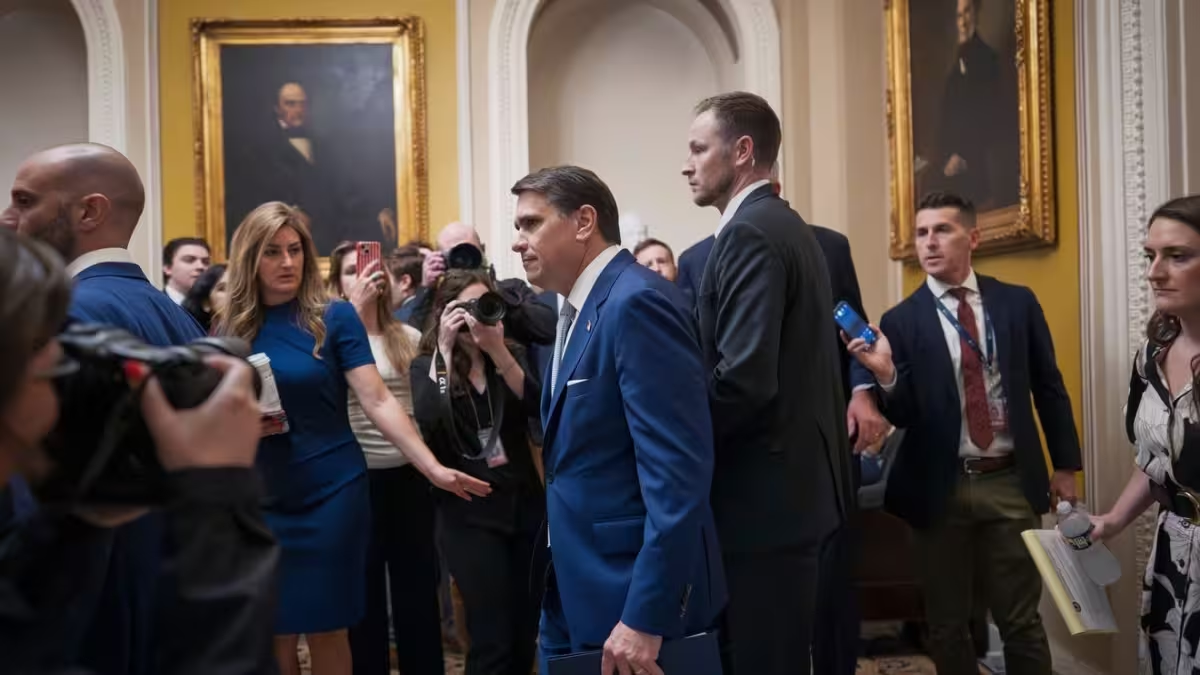

Massie said he and Rep. Ro Khanna have previously identified people cited in the records, and he signaled he will continue to make names public while he remains in office. That posture follows a pattern Massie described on the program: press, publish, and force accountability by public disclosure, using the protections Welker noted around House-floor speech.
The context is a long-running fight over Justice Department handling of material tied to Jeffrey Epstein: which documents exist, which have been released, and whether redactions and withheld reports — including FBI 302 forms — are concealing additional names or leads. Massie's central charge is that the executive branch has not only failed to disclose material but has misled the public and Congress about the scope of what it holds.
The tension in Massie’s account comes down to credibility and consequence. If his claim that millions of pages remain unreleased and that key interview reports are missing is accurate, prosecutions and public reckoning could be hamstrung; if senior Justice Department figures have in fact sworn there are no other names, then Massie is alleging a direct legal breach by those officials. That contradiction—between Massie’s portrayal of voluminous, over-redacted records and official statements denying additional culpable figures—drives the dispute.
For readers tracking how this will play out, the next act is procedural and political: Massie has seven months to press his case publicly, to name individuals he believes are implicated, and to press congressional or legal avenues for unredacted disclosures. He has told viewers he will use that time; he said, "yes" to the question of naming more names and vowed to continue "against the grain."
There is also a cultural echo to the debate: the Epstein records and who is named in them have become a touchstone beyond courtrooms, turning up in comment and satire alike — even prompting celebrity observations and late-night jokes, as noted in coverage like Robert De Niro Jokes About Epstein Files on Colbert’s Star-Studded Farewell Episode ( Massie’s appearance reframed the dispute as immediate and enforceable, not merely fodder for commentary.
Massie’s closing line on Meet the Press left no ambiguity about his intent: "I’ve got seven more months to keep going against the grain." That is the timetable for new revelations he promises, and for the test of his allegation that key Justice Department leaders have concealed material that could change the public record on Epstein.