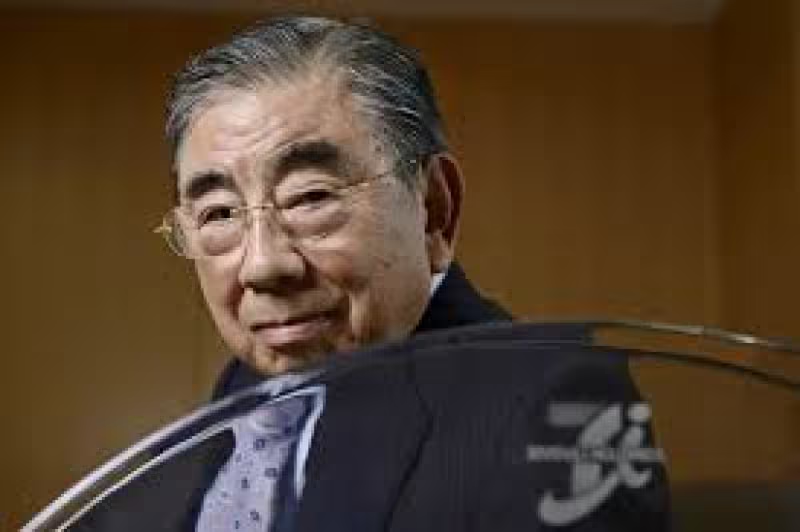
Toshifumi Suzuki, the former chairman and CEO of Seven & i Holdings Co. and the former president of 7-Eleven, died on May 18 at his Tokyo home of heart failure. He was 93.
Suzuki was credited with creating the 7-Eleven convenience-chain global retail empire, a business that began in Japan under a franchise agreement with the U.S. 7-Eleven in 1973. The first store opened in Japan in 1974, and the chain has since grown to more than 80,000 outlets worldwide.
He founded the Japanese unit that operates 7-Eleven stores in Japan, which is now the biggest convenience-store chain in the country. After The Southland Corp. ran into financial difficulties in the 1990s, the Japanese company bought a majority stake, and in 2005 it made the American counterpart its 100% owned group company.
That long shift left Suzuki at the center of one of the most unusual corporate reversals in global retail: the Japanese side that once licensed the brand eventually controlled the U.S. parent. He later served as an honorary adviser at Seven & i Holdings, remaining linked to the company that grew out of the expansion he helped drive.
Suzuki’s death comes as the scale of what he built is easier to measure than the arguments that surrounded it. Alimentation Couche-Tard sought to take over Seven & i Holdings several years ago, but dropped the effort in 2024, saying negotiations showed a lack of constructive engagement. The fight underscored how valuable the company had become and how deeply 7-Eleven had become embedded in Japanese retail.
For the man who helped turn a franchise into a worldwide network, the legacy is now fixed in the numbers: a chain with more than 80,000 stores, a dominant position in Japan, and a corporate structure that ended up running in the opposite direction from the one that started it all.